


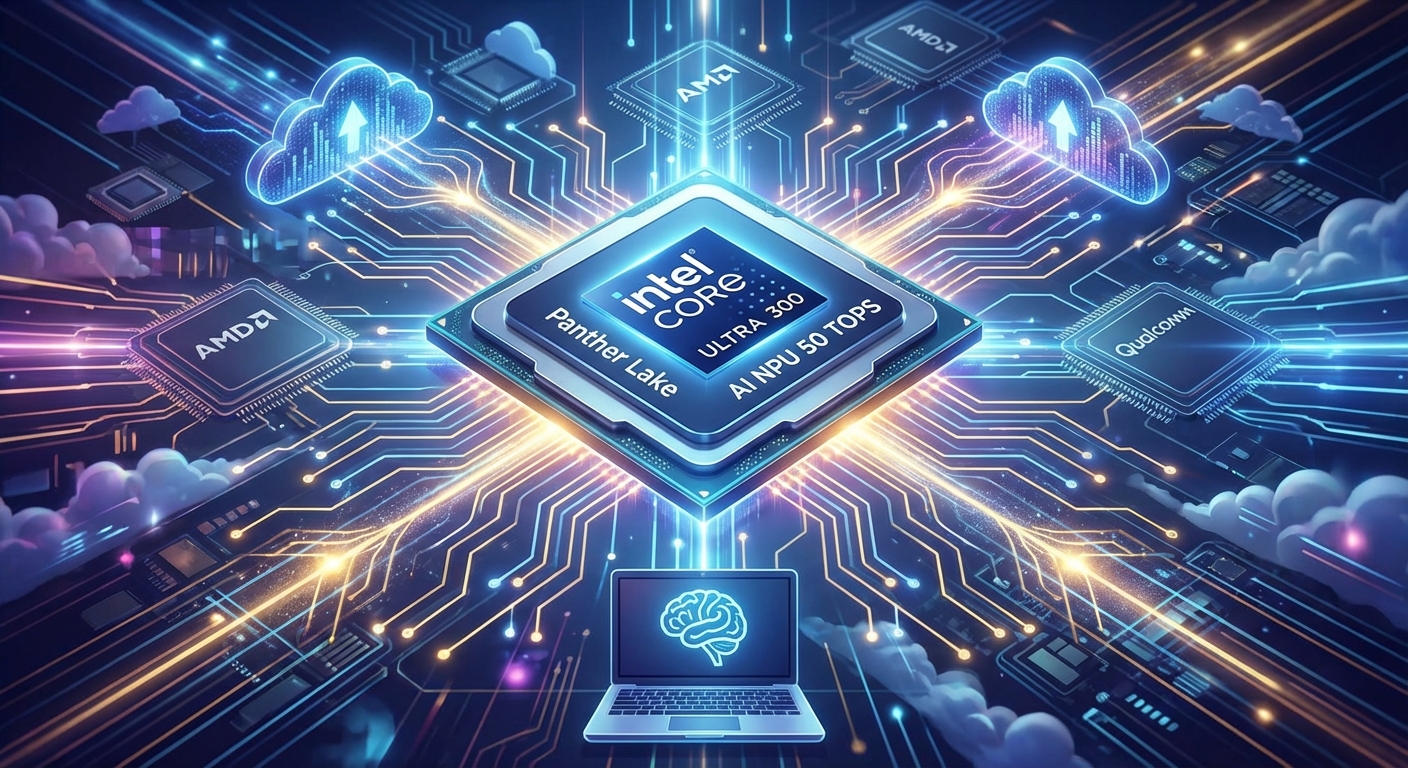

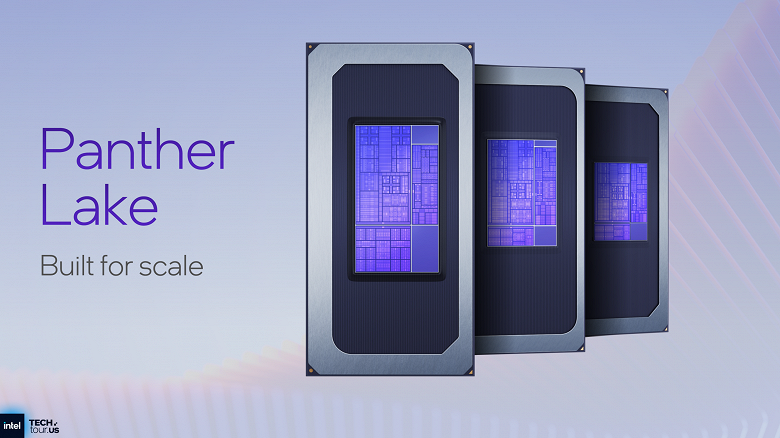
Intel has launched its Panther Lake mobile processors, officially branded as the Core Ultra 300 series, signaling a major push into the burgeoning AI PC market. The company anticipates that systems with AI support will constitute half of the laptop market in the near future. The new processors feature a powerful Neural Processing Unit (NPU) delivering 47 to 50 TOPS (Trillion Operations Per Second), comfortably exceeding the requirements for Microsoft’s Copilot+ PC designation. This launch marks a critical moment for Intel, providing a mainstream platform to accelerate the adoption of AI-enabled laptops.
Intel’s New Heavyweight: The Core Ultra 300
The Panther Lake architecture represents a significant step forward for Intel’s mobile offerings. At its core is a new NPU, dubbed NPU5, which is specifically designed to handle sustained AI workloads efficiently. This capability is crucial for meeting the Copilot+ PC standard, which mandates an NPU with at least 40 TOPS performance, alongside 16 GB of RAM and a 256 GB SSD. By clearing this threshold, Intel’s new laptops can run advanced AI features locally, such as real-time translation and enhanced creative tools, without relying on the cloud. This move follows the more limited release of its previous Lunar Lake processors, giving Intel a much broader and more competitive portfolio to challenge rivals.
Navigating a Competitive Landscape
Intel’s entry with Panther Lake comes at a time of fierce competition. AMD has already established a strong presence with multiple generations of mobile APUs featuring capable NPUs. Its latest Ryzen AI 300 series, for instance, boasts an NPU that delivers up to 50 TOPS, placing it in direct competition with Intel’s new chips. Similarly, Qualcomm made significant inroads with its Arm-based Snapdragon X Elite processor, which offers 45 TOPS from its NPU and was a key part of the initial Copilot+ PC launch. With Intel now matching or exceeding the AI performance of its main competitors, the playing field for Windows-based AI laptops has been leveled, offering consumers more choice and driving innovation across the board.
The Real Driver: Performance and Efficiency
Interestingly, Intel acknowledges that the immediate surge in AI PC adoption won’t necessarily be driven by consumer demand for specific AI features. Instead, the primary motivators are the foundational benefits these new processors provide: superior performance and extended battery life. By offloading AI and other background tasks to the highly efficient NPU, the main CPU and GPU are freed up, resulting in a faster, more responsive system that consumes less power. In essence, consumers are purchasing AI PCs for their enhanced traditional computing capabilities, with the on-device AI functionality being an added, future-proof benefit.
A Look to the Future: The AI PC Takes Over
Market analysts share Intel’s optimism. According to forecasts from firms like Gartner and Counterpoint Research, AI PCs are projected to surpass 50% of all PC shipments by 2026. This rapid adoption is seen as a “supply-side push,” where manufacturers are building a strong hardware foundation in anticipation of future software developments. As these powerful, NPU-equipped laptops become the standard, it will incentivize software developers to create compelling AI-native applications. This will gradually shift the consumer focus from the underlying performance gains to the unique and indispensable experiences that only an AI PC can offer. For Intel, whose strategy is increasingly focused on winning in “edge AI,” the Panther Lake launch is a crucial step in building that future.