






Modern data centers generate massive amounts of heat, requiring substantial water resources for cooling. A new innovation from the Danish Technological Institute and Heatflow, in collaboration with partners from Belgium and Germany, presents a solution by redirecting this heat for further use.
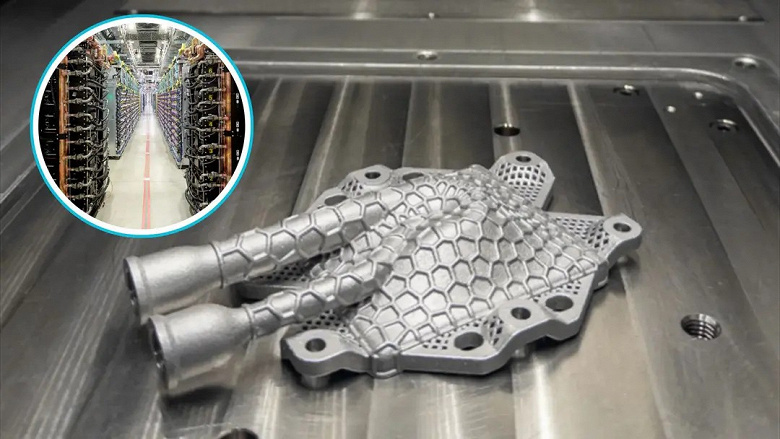
As part of the AM2PC project, engineers have developed a 3D-printed aluminum component for the cooling system. This new system employs passive, two-phase cooling based on a thermosiphon principle. The coolant evaporates from the chip’s hot surface, rises naturally, condenses elsewhere releasing the heat, and then returns as a liquid under gravity. This method eliminates the need for pumps or fans.
Remarkably, this approach dissipates heat more efficiently than air or single-phase liquid cooling, without extra energy consumption for heat transfer. Initially, engineers estimated the solution could dissipate up to 400 watts of power, but tests showed it supports up to 600 watts.
The system operates effectively at temperatures from 60-80 degrees Celsius, significantly higher than conventional systems. This allows excess heat to be directly integrated into district heating networks without extra energy costs.
Enhancements in cooling technologies like these are increasingly vital as data centers expand. Beyond energy efficiency, they also offer environmental benefits. For instance, in December 2025, another project demonstrated a system capable of reducing water usage by up to 20% while boosting cooling efficiency. These technological advances not only cut operational costs but also align with global sustainability goals.