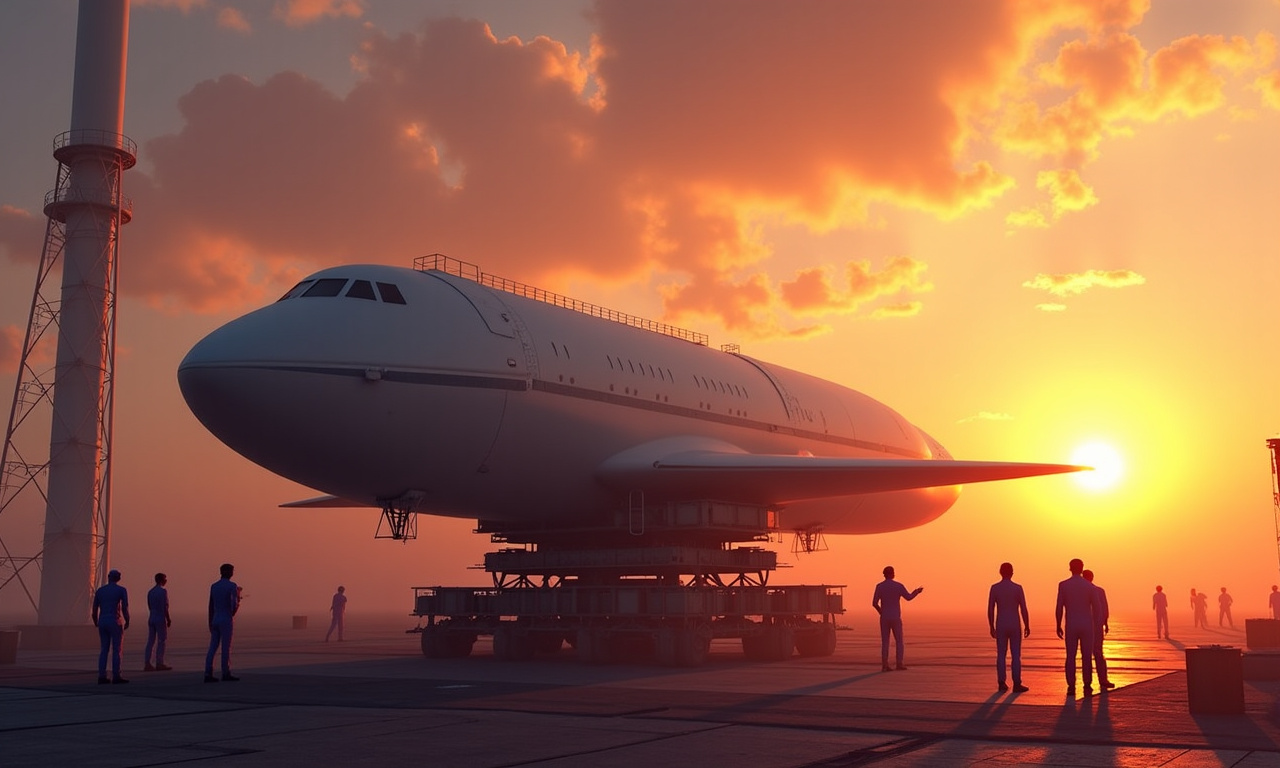

The Indian Space Research Organisation (ISRO) has revised the schedule for its national manned program Gaganyaan. According to the updated plan, the first unmanned test flight – mission HLVM3 G1/OM1 – is set to occur by the end of the first quarter of this year, i.e., by March. This will be the first comprehensive test of the entire manned flight architecture, including launch, entry into low Earth orbit, atmospheric reentry, splashdown, and retrieval of the descent module. For this mission, an unsealed version of the spacecraft will be used. The human-rated launch vehicle is expected to deliver the spacecraft into orbit, after which the complete return cycle will be tested. This launch is seen as a key step towards future manned missions.
Despite the lack of an actual launch so far, ISRO has completed a significant number of tests. The crew escape system engines were tested for various flight stages, the heat shield of the descent module was checked, and the complex parachute system designed for a safe splashdown underwent thorough evaluations. These tests included standard and extreme scenarios, including integrated aerial drops.
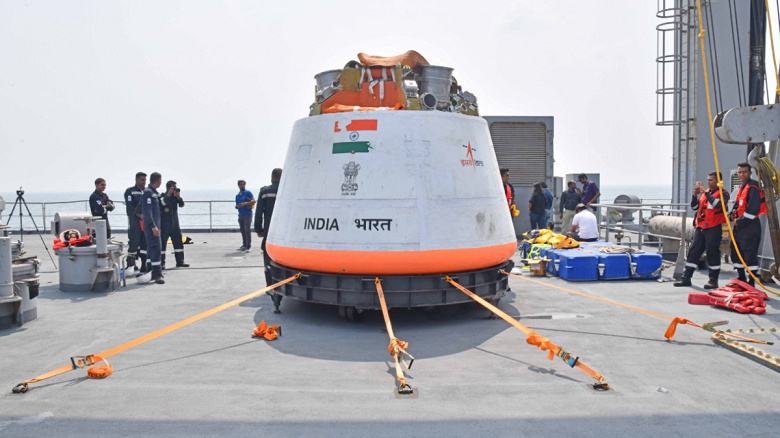
The Human-Relevant Space Certification Board (HRCB) has approved several astronaut-designed elements, including emergency survival kits, supply containers, and individual dosimeters. Also, Gaganyaan’s first analog experiments were conducted, while communication systems, onboard computers, and robots intended for future unmanned missions have undergone individual testing. Originally, the program included three flights – two unmanned and one manned. In 2024, it was expanded to eight missions: six unmanned and two manned.
This plan also included the delivery of the first module of the Bhariatiya Antariksh Station, India’s national orbital station, previously planned for 2028. According to the current schedule, the first manned Gaganyaan flight might take place by the end of 2027 or early 2028, implying further delay in other program phases. Nevertheless, ISRO again has announced an extremely dense launch itinerary for the coming year, including several launches of PSLV, GSLV, and SSLV rockets, as well as the first fully industrial version of the PLSV.
The Gaganyaan program was first announced by India’s Prime Minister Narendra Modi in 2018, with the first manned flight slated for 2021 – marking the 75th anniversary of the country’s independence. However, the pandemic, disruptions in supply chains, and manufacturing difficulties led to repeated postponements. In subsequent years, ISRO repeatedly revised its commitment to the number of launches, including periods when no missions were officially planned in the program. The Gaganyaan campaign officially began in December 2024. During this period, the assembly of the rocket’s first stage started, the integration of descent and service modules began, and by January, elements of the propulsion system and crew module system were installed before further assembly stages.