

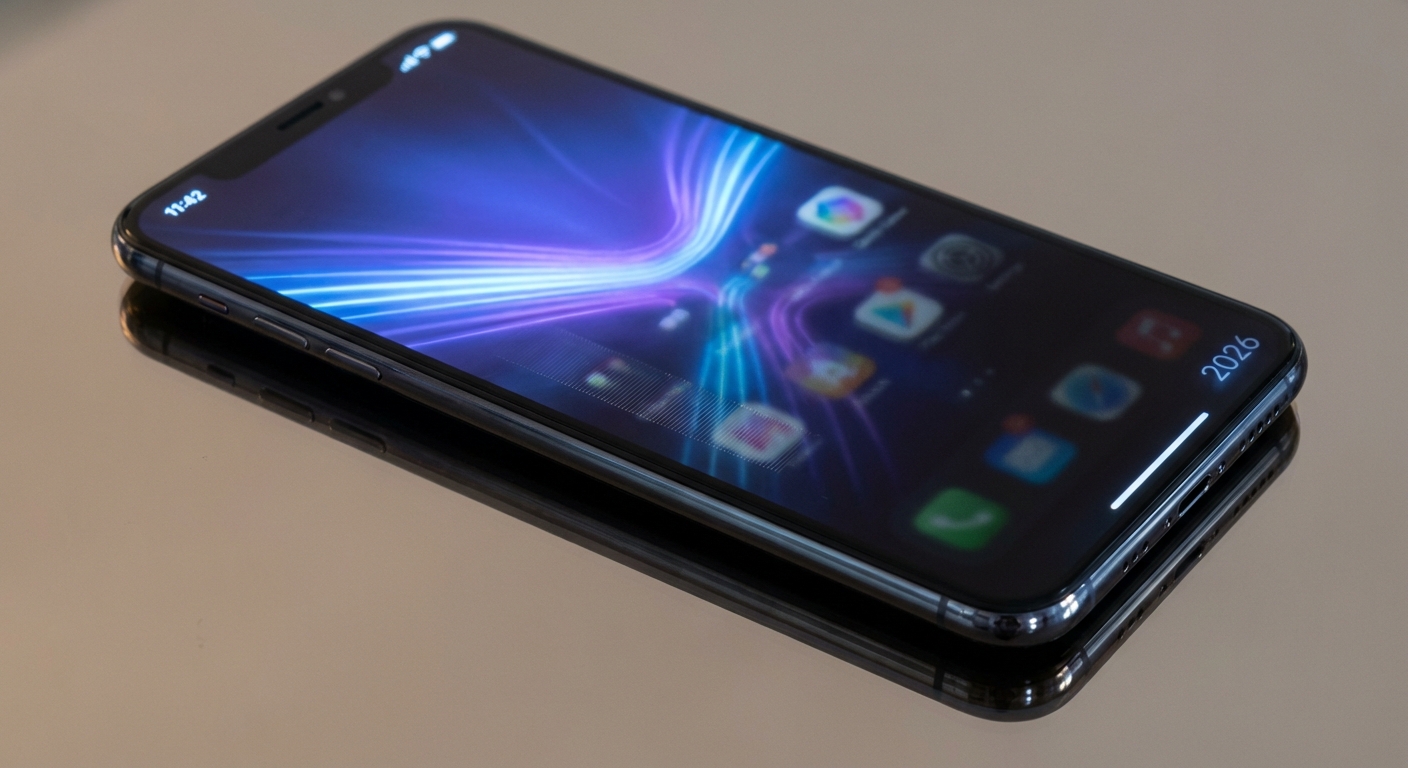

In the ongoing battle for user privacy, Chinese smartphone manufacturers are reportedly testing a hardware-level “anti-spy screen” technology, with an expected debut in flagship models around September 2026. According to well-known insider Digital Chat Station, this involves a “native protection at the hardware level” designed to ensure information confidentiality without requiring additional software. This move is seen as a direct response to a similar feature, dubbed “Privacy Display,” rumored to be a highlight of the upcoming Samsung Galaxy S26 Ultra.
A Technological Arms Race in Privacy
The core of this new technology relies on a sophisticated two-part system. Microscopic “louvers” are integrated into the lower part of the display, while an optical “refractive ramp” is placed in the upper section. Together, these components create a privacy screen effect, making the content unreadable when viewed from an angle, effectively preventing shoulder surfing. This integrated approach is a significant step up from current solutions, such as privacy-filter screen protectors, which often degrade image brightness and clarity.
Samsung’s Countermove: The Privacy Display
This development from Chinese brands doesn’t exist in a vacuum. Samsung is also heavily invested in screen privacy, with its own “Privacy Display” feature expected to be a key selling point for the Galaxy S26 Ultra. Leaks and even official teasers suggest the S26 Ultra’s screen will darken for side viewers, with some reports indicating it can selectively obscure parts of the screen, like notifications or password fields, while leaving the rest visible to the user. This feature is expected to be part of the One UI 8.5 software and is based on an OLED technology called Flex Magic Pixel, which controls the direction of light at the pixel level. While Samsung’s feature may debut sooner, the Chinese alternative is described as a purely hardware-based solution, potentially offering a different set of advantages.
The Future of Display Technology
The push for integrated privacy screens signifies a new direction for the premium smartphone market. As users become increasingly conscious of data security in public spaces, a built-in, hardware-level solution that doesn’t compromise the viewing experience could become a standard feature for flagship devices. This innovation goes beyond simple software tweaks, embedding privacy directly into the display matrix itself. While the initial rollout is expected for top-tier models from manufacturers like Xiaomi, OPPO, and vivo, the technology could eventually trickle down to more mainstream devices, fundamentally changing how we protect our personal information on the go.