







Physicists from the Stevens Institute of Technology and Yale University have launched an experimental program aimed at detecting gravitons – hypothetical quantum particles of gravity. The project’s goal is to bridge the longstanding gap between Einstein’s General Theory of Relativity, which describes gravity as a curvature of spacetime, and quantum mechanics, describing the discrete nature of the subatomic world. Discovering gravitons was considered experimentally impossible until recently. In 2024, it was stated that advancements in modern quantum technology could make this a reality.
Path to Graviton Discovery
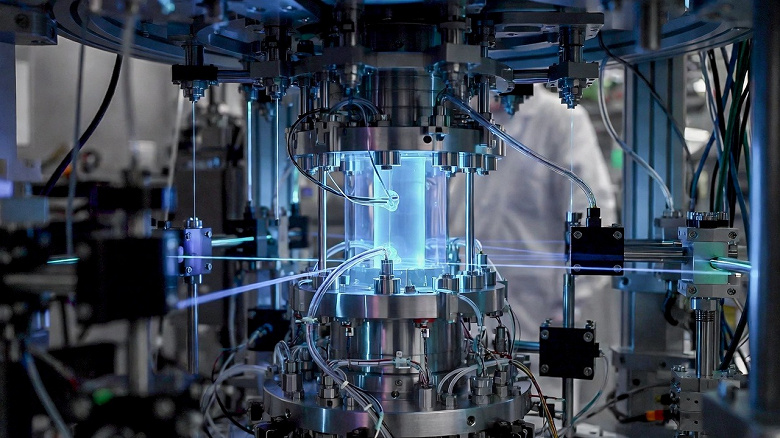
The path to discovering gravitons lies in the fusion of gravitational-wave astronomy with quantum engineering. An experiment led by Jack Harris (Yale) uses a centimeter-scale resonator filled with superfluid helium. Helium is cooled to a quantum ground state, becoming perfectly still. The theory suggests that when a gravitational wave passes through the laboratory, it will impart a “tiny amount of energy” onto the cylinder – a single graviton. The resonator converts this gravitational energy into a phonon. With high-precision lasers, the team will be able to measure this vibration, counting the gravitons passing through the room.
Scale and Sensitivity
Although gravitons rarely interact with matter, scaling quantum detectors creates a sufficiently large “target” to capture and resolve these elusive particles. This project marks the transition from theoretical prediction to the creation of a tangible “gravitational trap” necessary for observing a graviton for the first time.
“We already have the necessary tools. We can detect individual quanta in macroscopic quantum systems. Now it’s a matter of scaling,” says Harris.
By successfully scaling this technology while maintaining extreme sensitivity, the team has taken a step towards developing future, larger detectors capable of the definitive observation of gravitons.
Unique Properties of Superfluid Helium
Superfluid helium at temperatures below 2.17 K (-270.98 °C) transitions to a special quantum state characterized by the absence of viscosity. This allows it to flow without friction, climb walls, and exhibit other unusual properties. These qualities make it an ideal medium for experiments requiring minimal interference from external factors. Superfluid helium’s unique traits are pivotal in enhancing detector precision, potentially unlocking new insights into the fundamental forces of the universe.