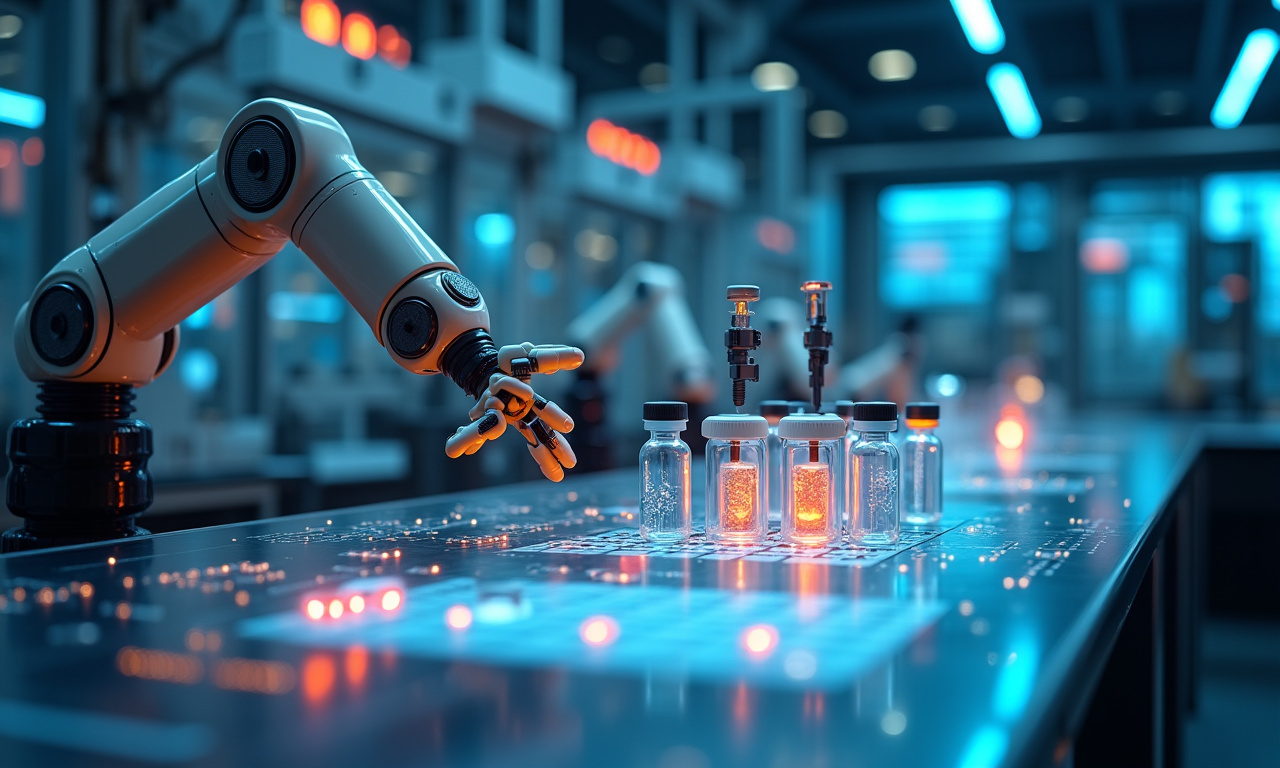

OpenAI, collaboratively with the robotic platform Ginkgo Bioworks, has showcased that the language model GPT-5 can directly operate an automated laboratory to optimize biochemical processes within a closed loop of experiments. The system managed to reduce the cost of cell-free protein synthesis by 40% compared to the best previous level.
In this experiment, GPT-5 was connected to Ginkgo Bioworks’ cloud laboratory-an automated complex where robotic setups conduct ‘wet’ biological experiments and transmit results via a software interface. The model designed experiment series, which the lab executed; then the data was returned to the AI for the preparation of the next round. As a test task, the authors chose cell-free protein synthesis (CFPS). This method produces proteins without growing living cells, using a special mix containing a DNA template, cell lysate, and a set of biochemical components, including energy sources and salts. This approach is widely used for rapid prototyping and testing in biology and biotechnology.
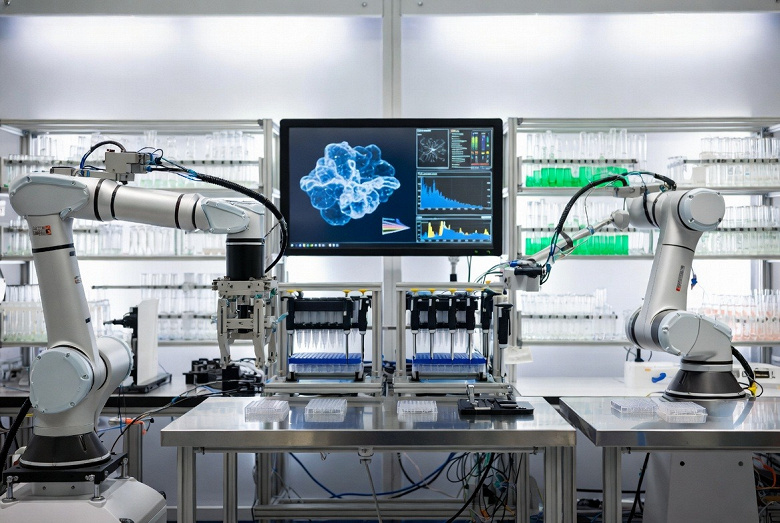
Over six cycles of closed-loop experimentation, the system tested more than 36,000 different CFPS reaction compositions on 580 automated microplates. After gaining access to a computer, browser, and scientific publications, GPT-5 required 3 rounds of experiments and about 2 months to establish a new record: the cost of protein production decreased by 40%, and reagent costs by 57%.
The authors emphasize that the scale of the experiments is of fundamental importance for biology, where individual measurements are often accompanied by high levels of noise. A large number of repetitions allows for identifying persistent patterns and filtering out random effects. During the work, the model detected component combinations that maintain efficiency under high-throughput automation conditions.
Special attention was given to differences between manual laboratory experiments and mass reactions in microplates. In automated formats, volumes are smaller, oxygen levels are lower, and mixing is worse, which usually reduces protein yield. GPT-5 proposed reaction compositions resistant to these limitations, including variants that work well under reduced aeration. Additionally, the system found that small changes in buffer solutions, energy regeneration systems, and polyamine concentrations disproportionately affect product yield, given the low cost of these components. Such parameters rarely become a priority during manual optimization, but with high throughput, they can be systematically tested.
Cost structure analysis showed that the main cost contributors to CFPS are cell lysate and DNA. Therefore, increasing protein yield per unit of these materials remains a key factor in price reduction. Enhancing efficiency at this level provides a greater impact than isolated savings on secondary reagents.
Experiments were conducted on one protein-super fluorescent green protein sfGFP-and within one CFPS system. The possibility of transferring results to other proteins and platforms has not yet been confirmed. The authors also note that laboratory work still requires specialist involvement for protocol control and reagent handling. Going forward, the team plans to apply closed ‘model-laboratory’ systems to other biological processes, while also evaluating risks, including those related to biosecurity.