



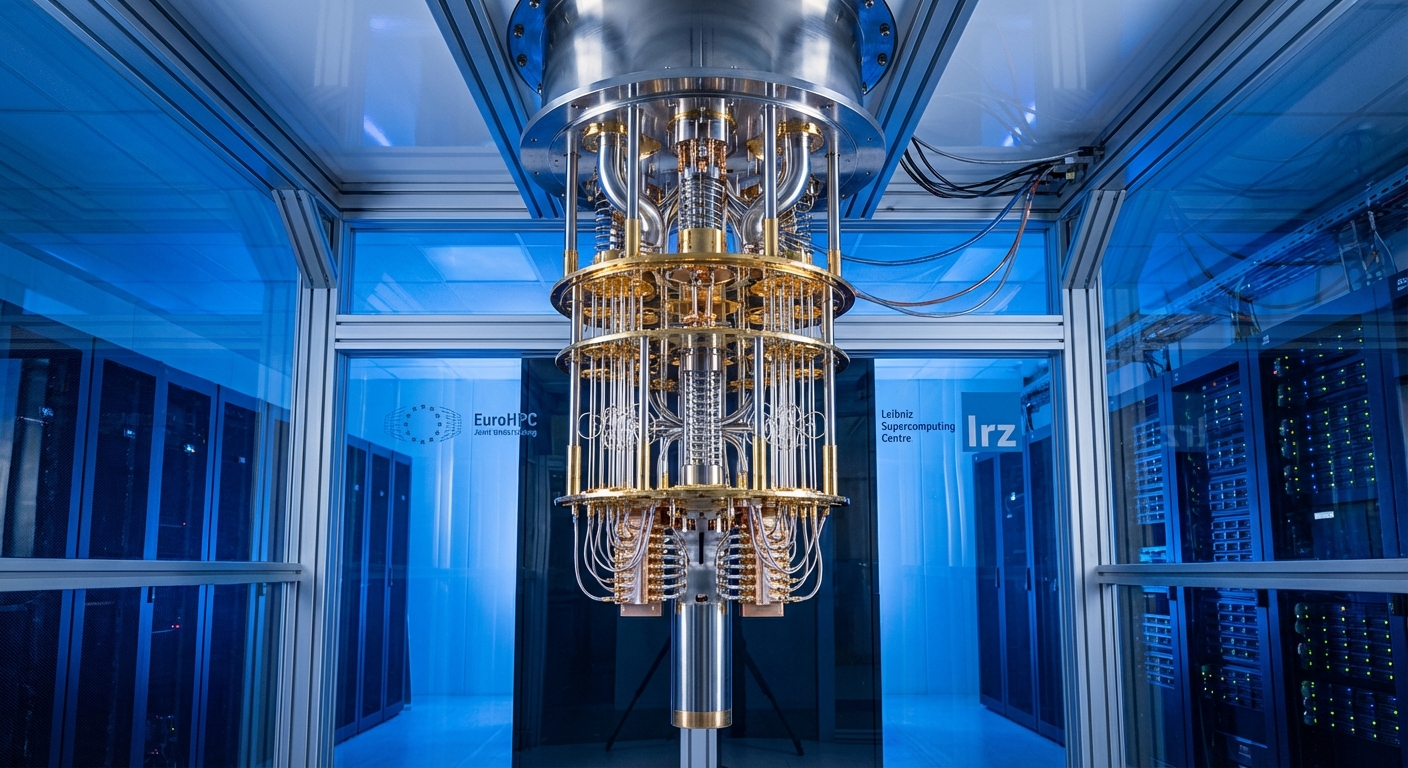

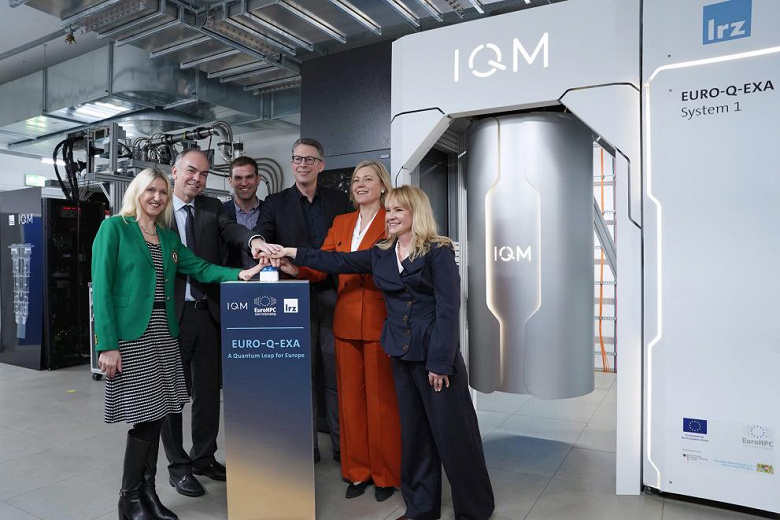
The Leibniz Supercomputing Centre (LRZ) in Garching, near Munich, has officially unveiled Euro-Q-Exa, the first quantum computer deployed in Germany under the pan-European EuroHPC Joint Undertaking (EuroHPC JU) initiative. The system, built on the Radiance platform from Finnish firm IQM Quantum Computers, currently operates with 54 superconducting qubits. Its launch marks a significant milestone in Europe’s strategic push to establish a sovereign and world-class digital and quantum computing infrastructure.
A Strategic Leap for European Sovereignty
The deployment of Euro-Q-Exa is a cornerstone of the EuroHPC JU’s broader strategy to create a federated, cutting-edge quantum computing ecosystem across the continent. This initiative aims to ensure Europe’s technological independence in a critical future industry, reducing reliance on non-European tech giants. Euro-Q-Exa is one of six quantum computers being integrated into Europe’s leading supercomputing centers, with other sites located in Czechia, France, Italy, Poland, and Spain. This network is designed to provide European researchers and industries with coordinated access to diverse quantum resources, fostering sovereign innovation and scientific discovery.
The Technology Powering Euro-Q-Exa
At the heart of the new system is IQM’s Radiance platform, which utilizes high-fidelity superconducting qubits arranged in a square lattice topology. This architecture is engineered for deep integration with high-performance computing (HPC) environments to support complex hybrid workflows. Ambitious plans are already in place for a significant upgrade, with a second, more powerful processor with over 150 qubits scheduled for installation by the end of 2026.
Access and Applications for European Users
As of February 13, Euro-Q-Exa is available to European users already utilizing other quantum resources at the LRZ. In the coming weeks, access will be expanded to new users across Germany and Europe via the Munich Quantum Valley portal and the official EuroHPC JU access portal. The system will be integrated with LRZ’s existing SuperMUC-NG supercomputer, allowing researchers to tackle complex problems in materials science, drug discovery, and financial modeling by combining classical and quantum approaches.
“With Euro-Q-Exa, we are combining the strengths of quantum and supercomputing. This gives researchers the opportunity to test new approaches and implement groundbreaking calculations, opening up new scientific dimensions using European technology,” stated Prof. Dieter Kranzlmüller, Chairman of the Board of Directors at LRZ.
Future Outlook: Integrating Quantum with High-Performance Computing
While the initial 54-qubit count is a significant step, the European strategy focuses less on winning the qubit race and more on the deep integration of quantum processors with classical supercomputers. The long-term vision is to create a powerful hybrid computing environment where quantum systems act as accelerators for traditional HPC, unlocking new computational capabilities. This pragmatic approach could provide a more direct path to solving real-world problems and solidifies Europe’s position as a key player in the global quantum race.