



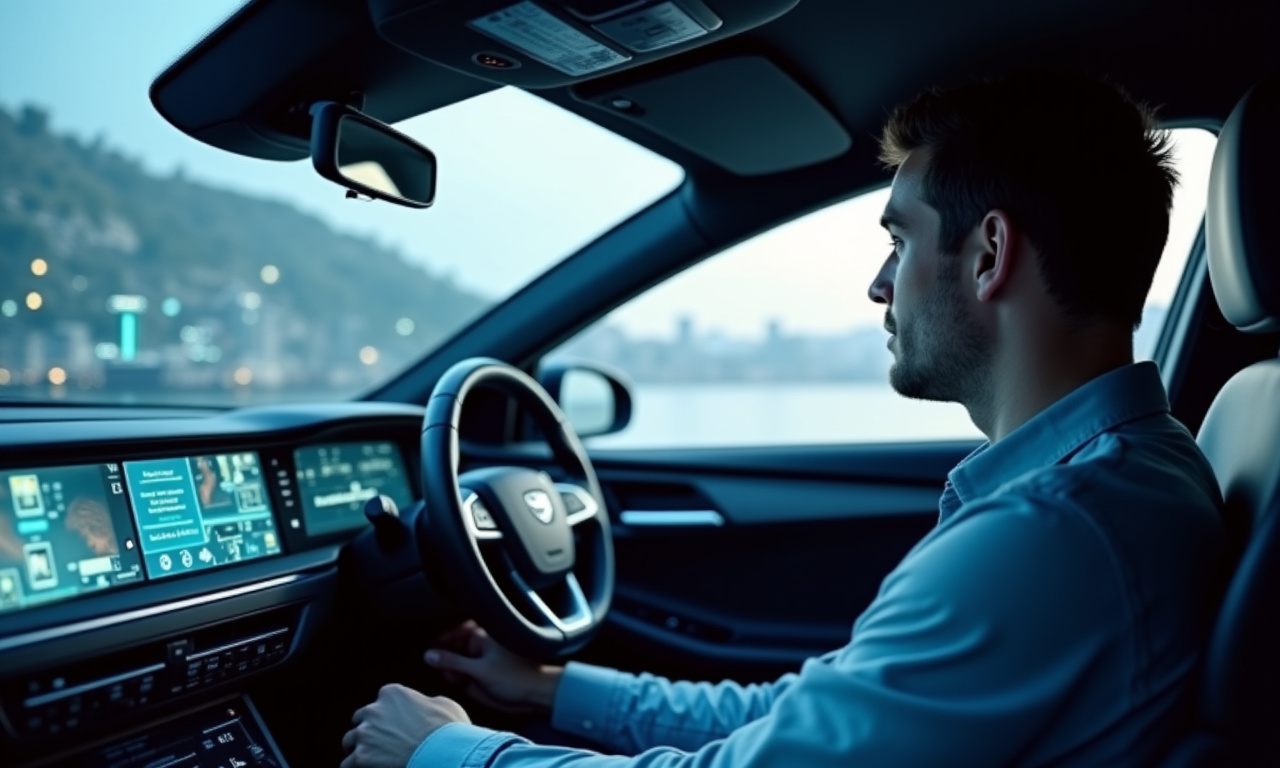

General Motors has patented a technology that allows a car to automatically change lanes based on the driver’s gaze direction. The patent application was published on January 1st. The system uses an in-cabin camera to track the driver’s head and eye movements. Then, analyzing the visual data, the car deduces whether the driver genuinely intends to change lanes or is merely glancing around. If external sensors confirm an available space for maneuvering, and the algorithm concludes a lane change intention, the car executes the lane change.
It is expected that the system will utilize existing technologies applied in hands-free driving modes, including external sensors (cameras, radars, lidars, GPS) and in-cabin cameras, which are already used to monitor driver attention.
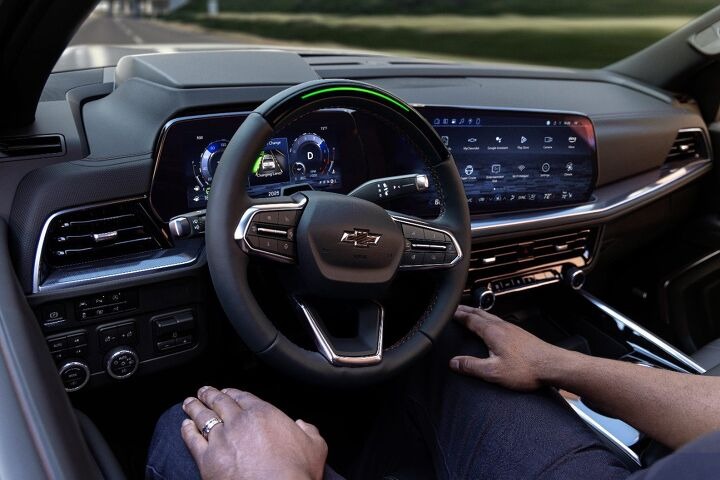
Despite its ambitious nature, the practical value of this new technology raises questions. Existing driver assistance systems (ADAS) already enable lane changes to adjacent lanes using turn signals or automatically overtaking slow-moving vehicles. It remains unclear how gaze control would be more convenient and safer for the majority of drivers.
However, this technology may find real application for drivers with physical limitations, who find it challenging to perform ordinary maneuvers.
In recent years, the automotive industry has seen significant advancements in autonomous vehicles. From increasing levels of automation to sophisticated driver assistance systems, these trends highlight the industry’s ongoing evolution towards greater autonomy. The introduction of gaze-controlled technology by General Motors could represent another step towards fully autonomous driving.
This time frame aligns with recent developments where companies like Tesla have already implemented more advanced hands-free driving systems. Notably, Ford has also been active, advancing its BlueCruise system, which further emphasizes the competitive dynamics in the automotive tech market.