
Ford has announced plans to repurpose its battery production facilities into a new business direction focusing on energy storage systems. This decision comes in light of the company’s strategic shift regarding the production of large electric vehicles. Rather than abandoning battery production altogether, Ford intends to utilize these batteries for creating energy storage systems aimed at powering data centers and stabilizing power grids, utilizing affordable lithium iron phosphate (LFP) batteries.
Production of these energy storage systems is slated to commence in 2027, with an ambitious goal to ramp up annual production capacity to 20 GWh. The company is set to invest approximately $2 billion into this new venture over the next two years, retrofitting existing facilities at its Kentucky plant. This site will manufacture LFP batteries using licensed technology from the Chinese company CATL, as well as energy storage system modules and 20-foot DC container systems.
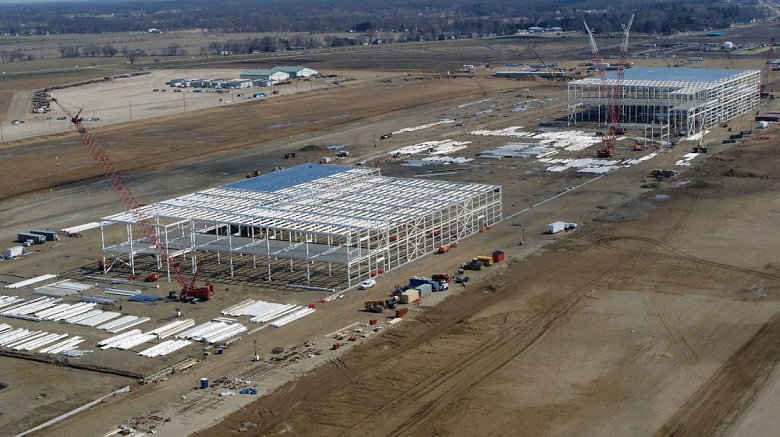
Source: Ford Ford will join a host of automakers already working or planning to enter the energy storage market. Tesla has been selling similar products for over a decade, deploying around 10 GWh quarterly. General Motors also offers energy storage solutions for both home and commercial use. For Ford, the primary market for this new business will be commercial consumers tied to power grids. Data centers will serve as a secondary market, with future offerings extended to private homeowners.
The company also noted that construction of the BlueOval Battery Park Michigan plant in Marshall, where LFP battery production is set to begin in 2026, is proceeding as scheduled. These batteries, also employing CATL technology, will be used in Ford’s forthcoming mid-sized electric pickup truck. Additionally, the Michigan facility will produce smaller-capacity batteries for use in residential energy storage systems.