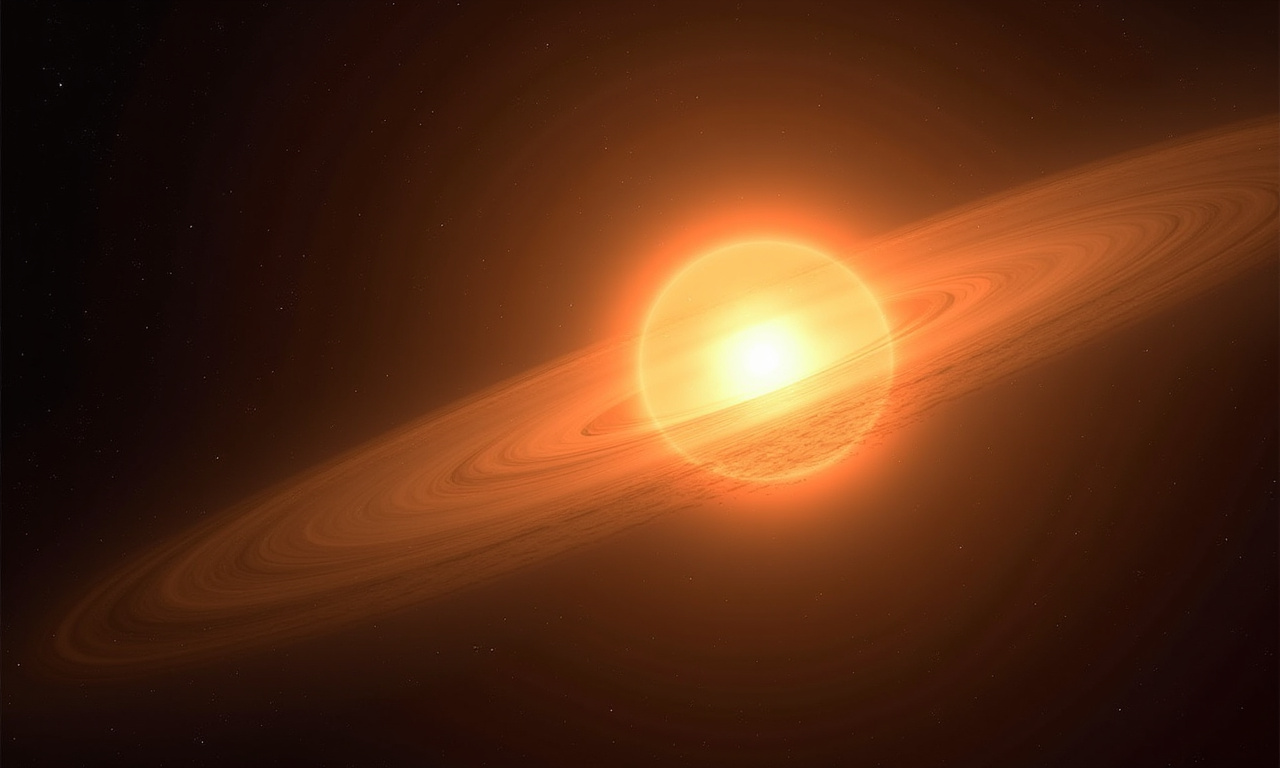

The Hubble Telescope has detected signs of collisions in the planetary system of the star Fomalhaut, located 25 light-years from Earth. Scientists have noted the emergence of two significant debris clouds formed from the collisions of massive objects. Fomalhaut, situated in the constellation of Piscis Austrinus, is much more massive and brighter than the Sun. Several dust and debris belts orbit the star, making this system intriguing for studying planetary formation processes.
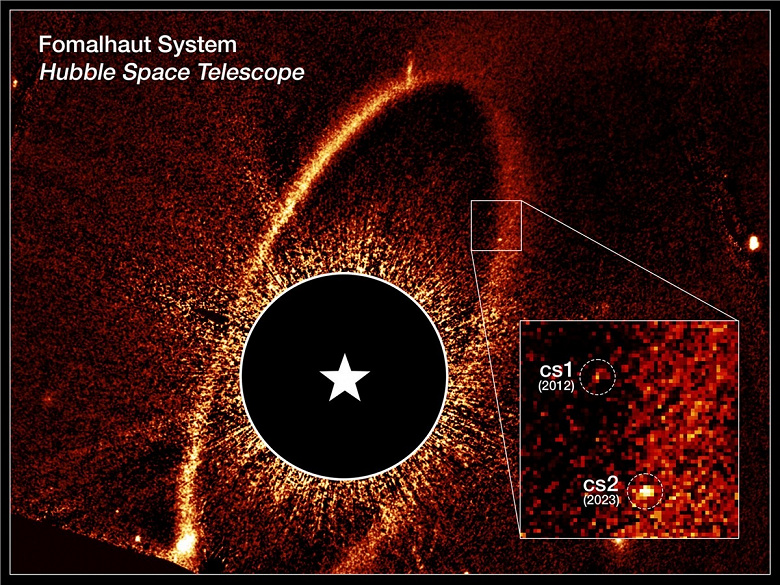
In 2008, Hubble discovered a potential planet candidate in the Fomalhaut system, named Fomalhaut b. Subsequent observations, however, revealed this object, identified as cs1, to be a cloud of dust formed by colliding planetesimals. When searching for Fomalhaut b in new Hubble images, scientists unexpectedly discovered another object, dubbed cs2. The proximity of these two debris clouds raised questions among astronomers. Theoretically, asteroid and planetesimal collisions should occur in random regions, yet cs1 and cs2 are located close together along the inner part of Fomalhaut’s outer debris disk.
Another mystery is the frequency of these collisions. Scientists previously believed such events occurred once every 100,000 years or less. However, two such occurrences have been documented in the Fomalhaut system in the past 20 years. Astronomers have secured Hubble observing time to monitor cs2 over the next three years. They plan to study changes in its shape, brightness, and orbit. The James Webb Space Telescope’s Near Infrared Camera (NIRCam) will also be utilized to observe cs2, providing insights into the dust particles’ size and composition, and determining whether the cloud contains water ice.
Recent discussions emphasize the puzzling dynamics involved in the frequent occurrence of such celestial collisions, sparking debates regarding existing theories of planet formation. Some astronomers suggest these findings could indicate more robust planet formation activity than previously thought, potentially offering a fresh perspective on how planets emerge and evolve in similar star systems. The James Webb Space Telescope continues to play a vital role, offering unparalleled analytical capabilities that promise to enhance our understanding of these distant worlds.