


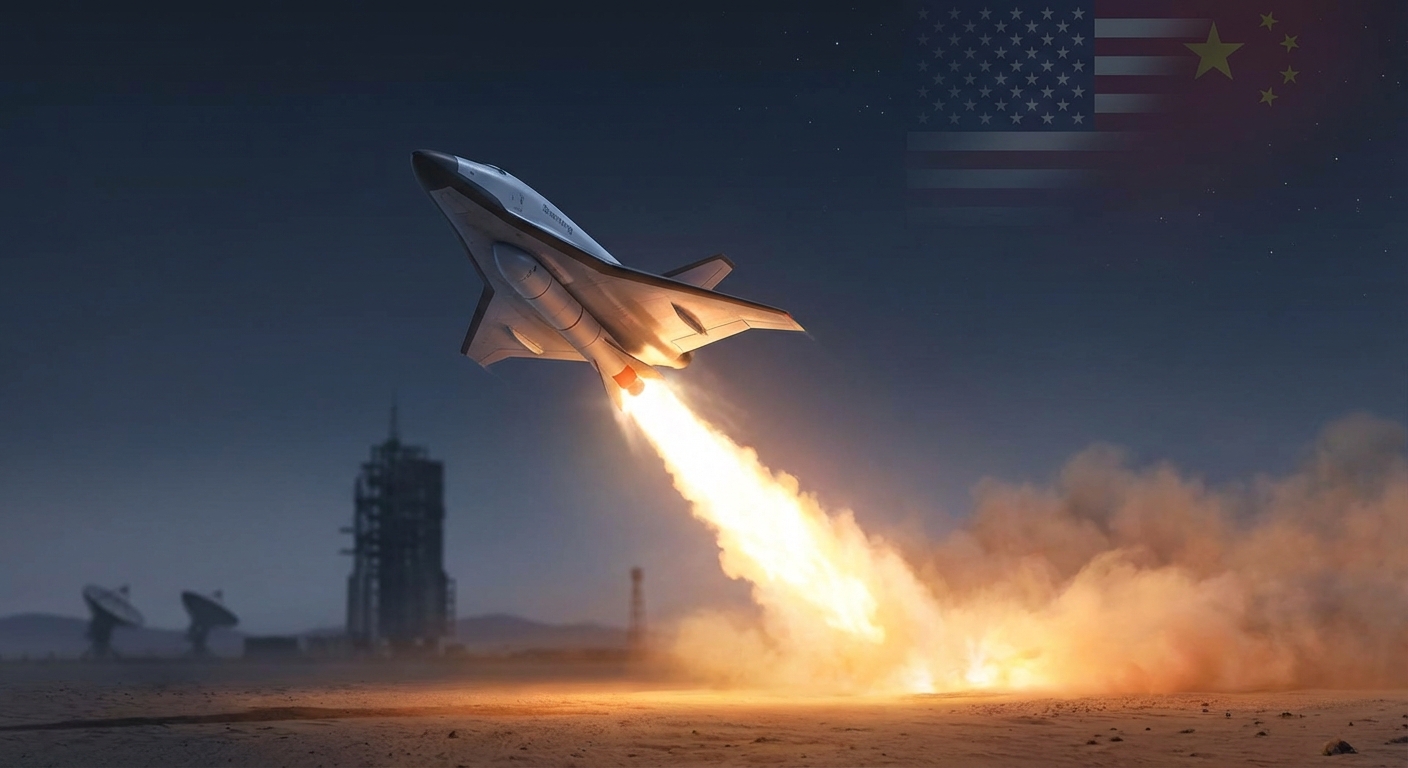


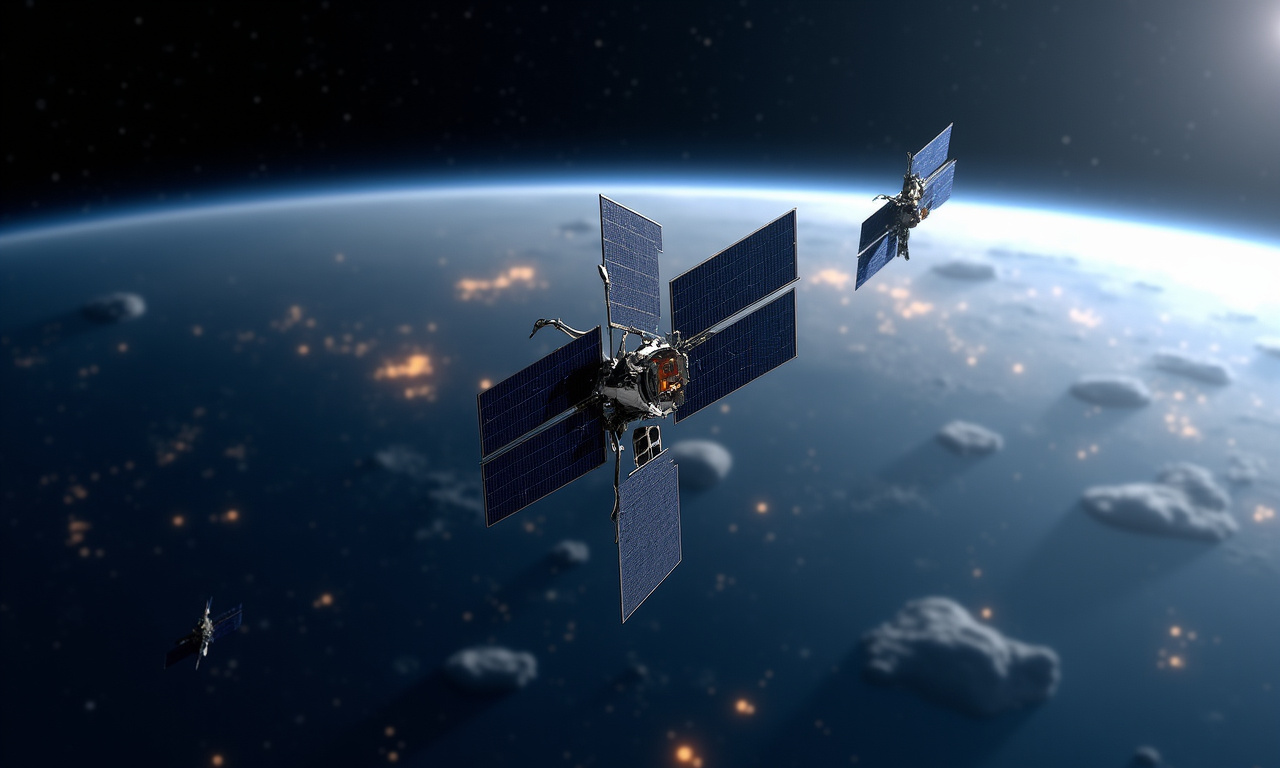

China actively develops its space program but very passively shares data even where it is needed for safety. Reportedly, due to this, yesterday a Chinese satellite from the company CAS Space almost collided with a Starlink object. One of SpaceX’s senior executives recounted the near-catastrophe. 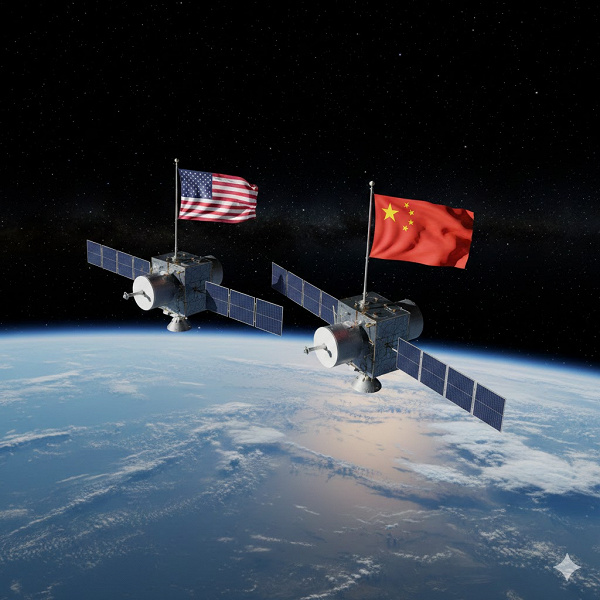 Created by Gemini When satellite operators don’t exchange ephemeris data for their satellites, dangerous proximity can occur in space.
Just a few days ago, nine satellites were launched from the Jiuquan Satellite Launch Center in northwest China. As far as we know, coordination or conflict prevention with already operational satellites was not carried out, causing one of the launched satellites to approach STARLINK-6079 (56120) at an altitude of 560 kilometers, coming as close as 200 meters.
Most of the risk in space operations is linked to the lack of coordination between satellite operators – this needs to change. Two hundred meters in space, and even in Earth’s orbit, are incredibly small distances. A safe distance is considered to be at least more than 1 kilometer. Collisions in space are dangerous because after such events, thousands of debris pieces remain in orbit for a long time, flying at high speeds and posing a threat to other satellites and the ISS.
After the incident, CAS Space announced that it was in contact with SpaceX. Interestingly, the company commented on the situation as if it wasn’t at fault. We believe responsible use and joint application of space is a priority.
These kinds of situations are why countries should cooperate in space, building mutual understanding rather than dividing developing nations. Moreover, they stated that they are unaware of the fate of the equipment after launch, noting,”As a launch service provider, our responsibility ends after placing the satellites in orbit, which means we do not control satellite maneuvers.” Nonetheless, it is in the interests of all parties to avoid collisions, so CAS Space will assist in any way possible.
Recently, China has conducted successful satellite deployments, focusing on enhancing its space capabilities and building a robust space station. Meanwhile, SpaceX’s Starlink network keeps expanding, with Elon Musk pushing for improved global communication systems to prevent space congestion.