




Breakthrough in OLED Technology
Engineers from Drexel University and Seoul National University have developed a new type of organic light-emitting diode (OLED) capable of stretching up to 200% of its original size without loss of brightness. This achievement is based on the use of MXene-a class of two-dimensional materials with metallic conductivity, discovered by one of the project leaders, Yury Gogotsi.
Traditional OLED displays are composed of several layers, including a cathode, organic layers, and an anode made of indium-tin oxide (ITO). ITO allows current to pass through but is a brittle material, limiting the display’s flexibility. The new development replaces ITO with a film made of MXene and silver nanowires, which boasts high transparency, conductivity, and flexibility.
Technical Specifications and Benefits
The MXene film, only 10 nanometers thick, can bend and stretch due to its structure of multiple two-dimensional sheets sliding relative to each other. Furthermore, chemical modification of the MXene surface enhances electron transfer into the light-emitting layer, increasing display brightness.
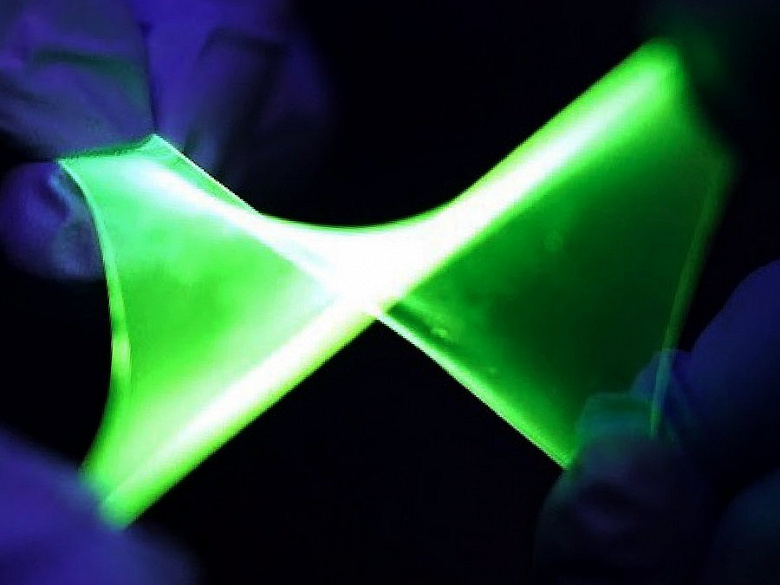
The new material is not only more flexible but also increases the display’s brightness by nearly an order of magnitude. Developers have also added two additional organic layers: one to direct positive charges, and another to recycle lost energy. As a result, a record external quantum efficiency of 17% for stretchable OLEDs has been achieved-a measure of how efficiently the device converts electricity into light.
Future Applications and Challenges
According to scientists, such displays will find applications in wearable electronics, medical diagnostics, industrial automation, and robotics. Flexible OLED displays could be embedded in clothing, used in wearable electronics for health monitoring, and create foldable and rollable devices. However, commercialization of the technology requires solving problems of stability and protection against moisture and oxygen, as well as minimizing image distortion during stretching.
Emerging Trends and Industry Insights
In the fast-evolving tech industry, OLED technology is facing competition from MicroLEDs and Quantum Dot displays, which are praised for their superior brightness and energy efficiency. Yet, the stretchable property of the new OLEDs offers a distinctive edge for applications in emerging markets like smart textiles and advanced robotics, where flexibility is crucial. Experts suggest that overcoming the current challenges could lead to significant commercial success, potentially revolutionizing sectors such as medical equipment and wearable technology.