
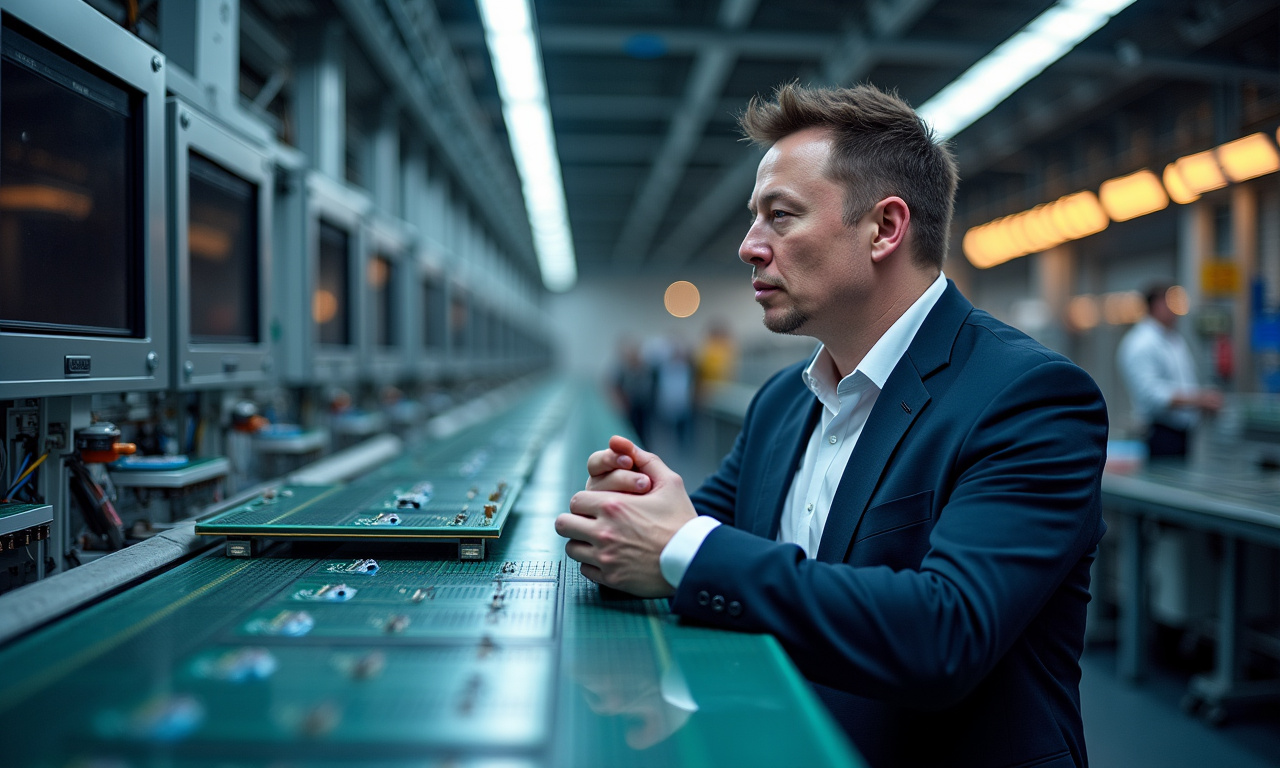

Elon Musk publicly questioned the necessity of using cleanrooms in chip production plants-a key element of modern semiconductor manufacturing. At the Moonshots event, in conversation with Peter Diamandis, Musk stated that Tesla’s future factory, tentatively named TeraFab, could produce 2-nanometer chips, while he himself “doesn’t understand the concept of cleanrooms.” Moreover, the billionaire noted that in such a factory, he could eat a cheeseburger and smoke a cigar.
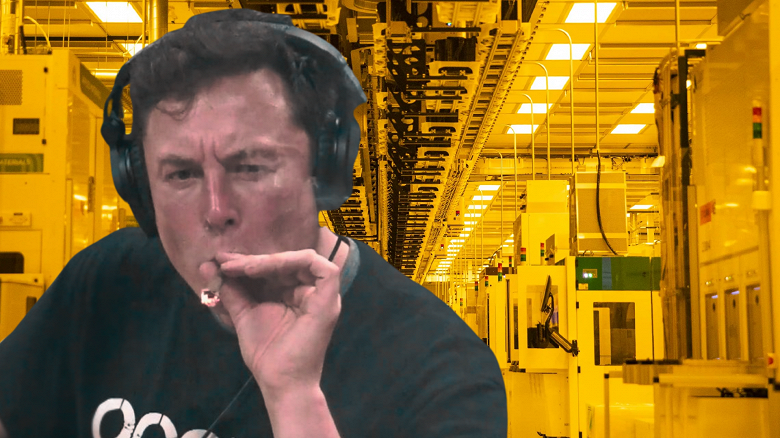
“I think that modern factories misunderstand cleanrooms. I’d bet that Tesla will have a 2-nanometer factory, and I can eat a cheeseburger and smoke a cigar right on the production floor,”
– Musk said. Previously, Musk had already raised the topic of creating his own chip production at the Tesla shareholders’ meeting, calling it a necessary step to meet the growing demand for custom processors. Simultaneously, the company is expanding cooperation with Samsung, specifically in the manufacture of AI5 and AI6 chips.
Cleanrooms are critically important to any modern microchip production: they ensure control over the tiniest pollution particles, which directly affect the yield of viable chips. Companies like TSMC and Intel invest billions of dollars in HEPA and ULPA filtration systems, and the staff work in hermetically sealed protective suits. The possibility of smoking a cigar in a production area, to put it mildly, casts doubt on the real yield and quality indicators of chips.
Regarding the 2-nanometer process technology, Tesla is unlikely to master such complex production on its own, but Samsung already has a working production line, so here Samsung might come to Elon Musk’s company’s aid. Meanwhile, Musk noted that the demand for microchips turned out higher than expected: according to him, Tesla might need 100–200 billion chips a year, much sooner than anticipated. Against the backdrop of a global semiconductor shortage and explosive growth in demand from the AI sector, the idea of its own semiconductor factory looks strategically important for Tesla.
Adding to the complexity of chip manufacturing, especially at a 2-nanometer scale, is the industry’s reliance on ultra-clean environments to mitigate any form of contamination which jeopardizes yield rates. This evokes questions about Tesla’s unique approach and whether such innovations could indeed reshape the norms in chip production. Navigation of this landscape without traditional cleanliness levels, especially amidst a partnership venture with Samsung, becomes pivotal in understanding the trajectory and potential success of TeraFab.