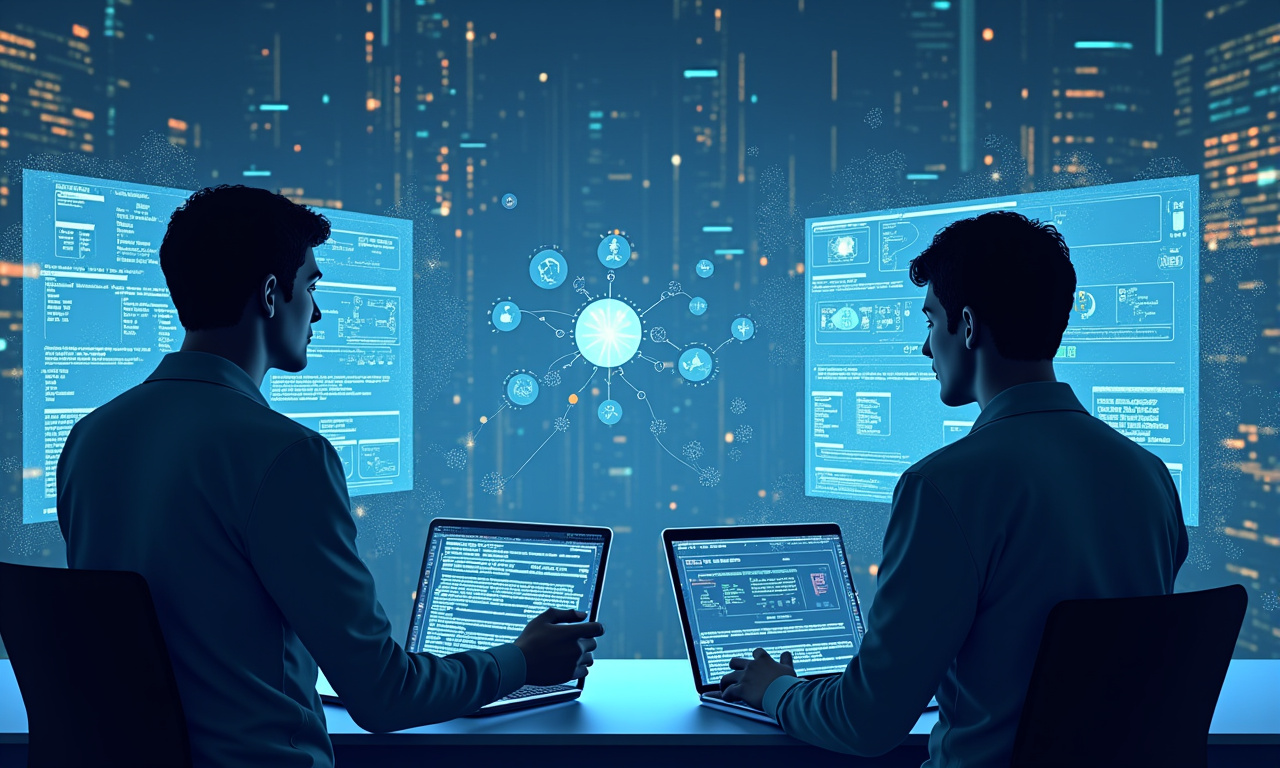


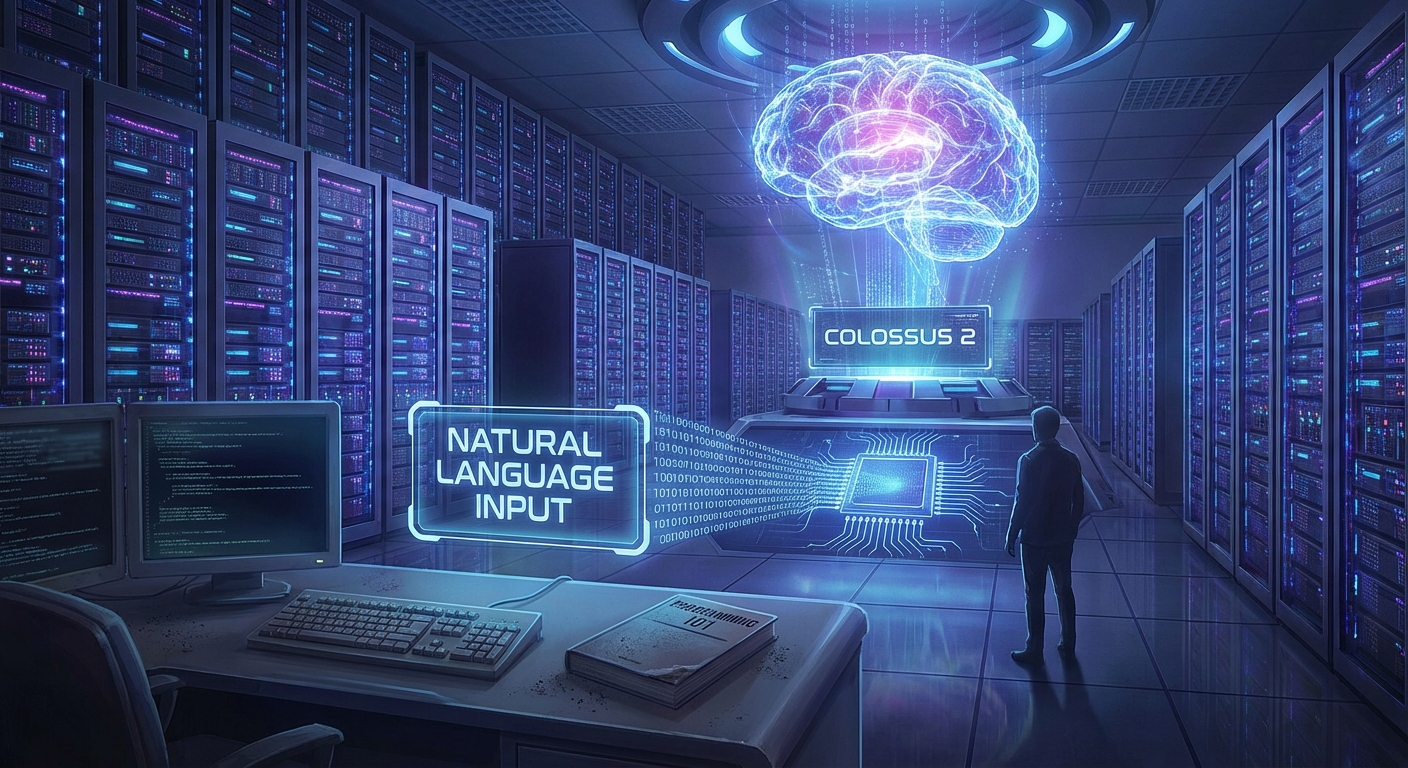

Elon Musk has stated that his xAI supercomputer, Colossus 2, will be fully operational this June, setting the stage for his AI model, Grok, to surpass competitors like Anthropic’s Claude in programming tasks. In a bold prediction, Musk anticipates that by the end of 2026, the profession of programming will become obsolete as artificial intelligence will handle all coding directly. He suggests that the advancement will be so significant that distinguishing between top-tier AI models will be difficult, as they will all perform with near-perfect accuracy.
The Race for AI Supremacy
According to Musk, the progress is accelerating, with significant improvements expected by April and even more substantial results by June when Colossus 2 is fully commissioned. His vision extends beyond AI merely assisting coders; he predicts a future where AI generates highly optimized binary code directly from natural language prompts, bypassing the need for human-written source code and compilers entirely. This claim comes at a time when models like Anthropic’s Claude 3 have set high benchmarks for code generation and pair programming.
Colossus 2: The Gigawatt Engine of Ambition
The foundation for these ambitious goals is the Colossus 2 supercomputer, which officially began operations in January. It was introduced as the world’s first AI cluster designed for a power consumption of 1 gigawatt (GW)-more than the peak energy usage of San Francisco. Musk confirmed plans to increase the system’s power to 1.5 GW by April. Recent reports indicate an even more massive scale, with the Memphis-based facility potentially expanding to a 2 GW capacity, housing hundreds of thousands of NVIDIA GPUs to train future iterations of Grok.
The End of Programming as We Know It?
Musk’s prediction that programming as a profession could soon disappear has ignited debate across the tech industry. While the idea of AI handling all coding is transformative, many experts offer a more nuanced perspective. The consensus is that AI will more likely augment programmers rather than replace them entirely. The role of the developer is expected to evolve, shifting away from writing routine code towards higher-level responsibilities such as system architecture, creative problem-solving, and providing oversight and validation for AI-generated solutions. Artificial intelligence will handle everything.
A Glimpse into the Future
In the long term, the industry is bracing for a paradigm shift. If Musk’s predictions hold true, even partially, the nature of software development will fundamentally change. Developers may transition into roles as AI supervisors or prompt engineers, guiding powerful AI systems to build complex software. While entry-level coding tasks may be automated, the need for human ingenuity in defining problems, ensuring ethical implementation, and managing complex systems will likely remain critical. The coming years will reveal whether programming will disappear or simply be redefined in the age of hyper-intelligent AI.