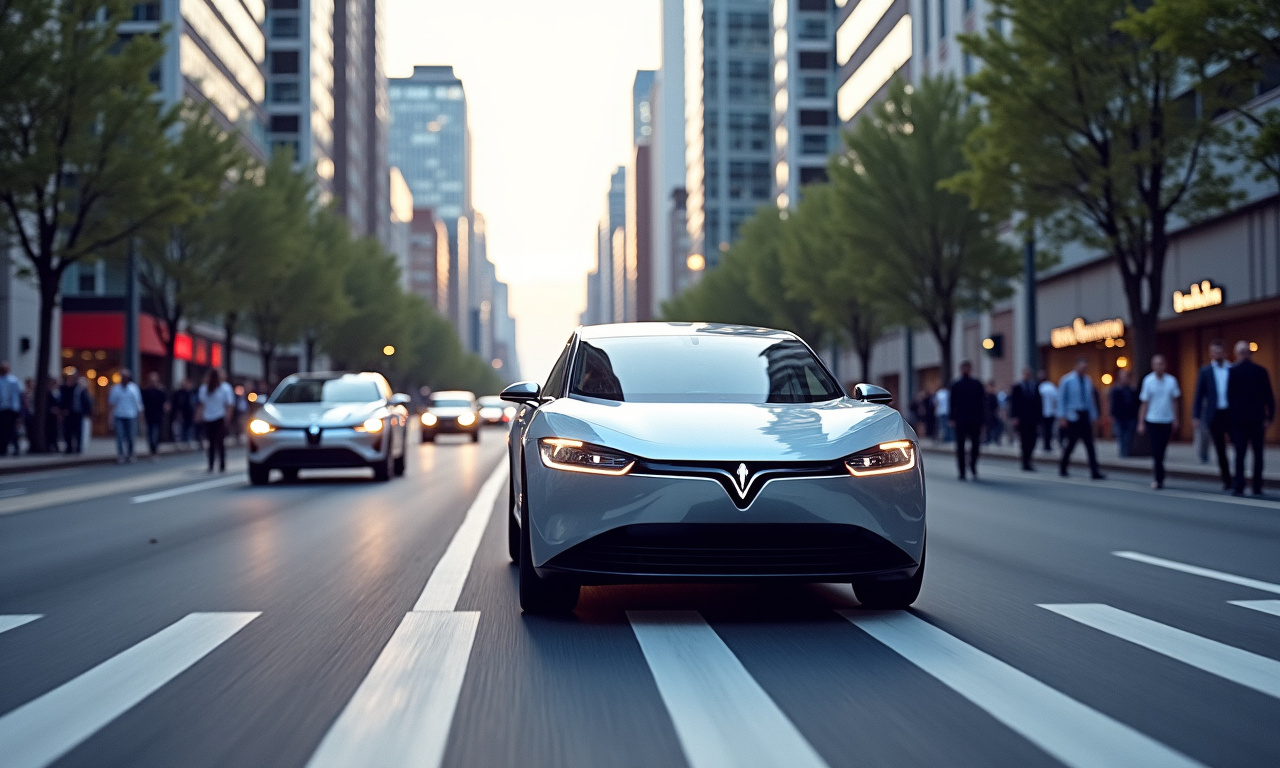

Electric Vehicles and Pedestrian Safety: The Latest Insights
A new study counters fears about the heightened danger of electric vehicles (EVs) to pedestrians. Scientists from the University of Leeds reviewed data on road accidents in the UK from 2014 to 2023 and concluded that the injury rate for pedestrians when involved in incidents with electric cars is statistically indistinguishable from that involving internal combustion engine (ICE) vehicles during the rapidly growing adoption of EVs between 2019 and 2023.
Safety concerns regarding EVs were primarily linked to two factors: their quieter operation, which could make them less audible to pedestrians, and their greater mass, potentially contributing to more serious injuries upon collision.
Mitigating Risks with AVAS and Smart Technology
In 2019, the European Union introduced the Acoustic Vehicle Alerting System (AVAS) to address the issue of insufficient audibility of EVs at low speeds. This system emits a sound mimicking engine operation. Recent upgrades in 2025 to AVAS in the EU have further enhanced pedestrian safety significantly.

The study’s authors suggest that despite the heavier weight of EVs due to battery packs, they are often equipped with more advanced safety systems, such as automatic emergency braking. These systems help prevent collisions or reduce the impact force, potentially offsetting the risks associated with the heavier weight of EVs.
Past Concerns and Future Directions
Previous research by the London School of Hygiene & Tropical Medicine pointed out that pedestrians were twice as likely to be injured in collisions with EVs compared to ICE vehicles, correlating this with the lesser audibility of EVs amidst urban noise.
The authors of the new study emphasize the need for further research to evaluate the safety of EVs and hybrids, considering the safety systems used and understanding long-term trends in road safety with the increasing numbers of EVs on the roads. These findings are crucial for shaping an objective assessment of EVs and their impact on traffic safety.