






Finnish startup Donut Lab, which announced the launch of the “world’s first mass-produced fully solid-state battery,” declared its capability for gigawatt-hour level mass production and readiness for global company supplies. An employee of Donut Lab stated that the main materials and manufacturing processes of the battery could not be disclosed, and specific technical details will not be published yet, as these are patented technologies of the company. The employee also announced that this battery contains no rare-earth elements and does not use lithium. It employs a completely different technological approach compared to traditional solid-state batteries, allowing cost parity with lithium iron phosphate batteries while ensuring fast mass production. The current production capacity is approximately 1 gigawatt-hour, with plans to increase it to 20-30 gigawatt-hours by the beginning of next year.
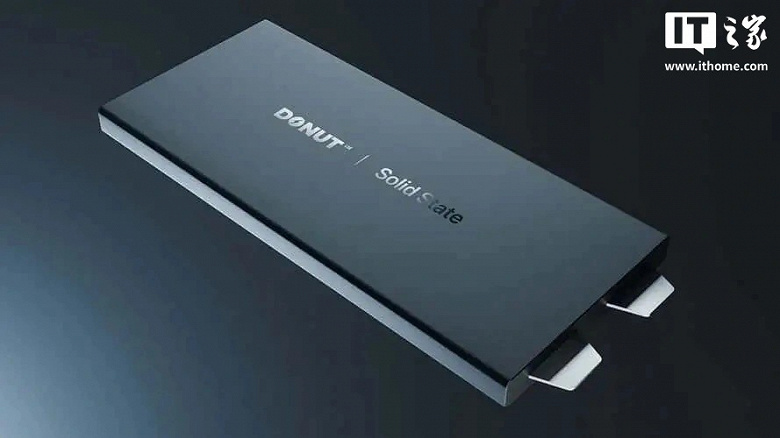
Another employee, communicating with representatives of an automotive company, informed media that the battery is undergoing independent external verification, and test results are expected to be published in two weeks. According to official data published by Donut Lab, this solid-state battery has an energy density of 400 Wh/kg, supports full charging in 5 minutes, and allows multiple full discharges without capacity degradation. It shows minimal capacity decline after 100,000 charge cycles and maintains more than 99% of its capacity across temperatures ranging from -30°C to over 100°C. However, none of the publicly available authoritative reports from independent laboratories have confirmed these claims, leading to widespread skepticism.
Major Competitors and Market Context
Donut Lab should be considered alongside major competitors like QuantumScape, Toyota, and Solid Power, who are also making various technological and production capability claims. While Donut Lab claims a 5-minute full charge time, competitors like QuantumScape tout similarly rapid charging advancements. As solid-state batteries gain traction, the industry sees significant progress in electrolyte materials, which enhance battery performance, including charge speeds and longevity. These advancements focus on safety, particularly the development of non-flammable and stable materials.
Skepticism and Industry Impact
The global skepticism surrounding Donut Lab’s claims impacts market trust and investment. Industry experts remain cautious, pointing out the lack of verified independent reports to support such strong claims. However, there remains optimism for the potential of solid-state technology to revolutionize energy storage once genuine breakthroughs are independently validated. Strategic commercial partnerships between battery manufacturers and sectors like automotive and electronics aim for faster market entry, leveraging these technological advancements.
Future Developments and Industry Prospective
Continuous developments in solid-state battery production forecast an ambitious expansion horizon. Companies in this space, including Donut Lab, are prioritizing scalability with projected increases in production capacities over the next few years. These advancements are likely to significantly impact the energy storage market, with expectations that disruptive technologies could realistically influence commercial applications by the late 2020s.