





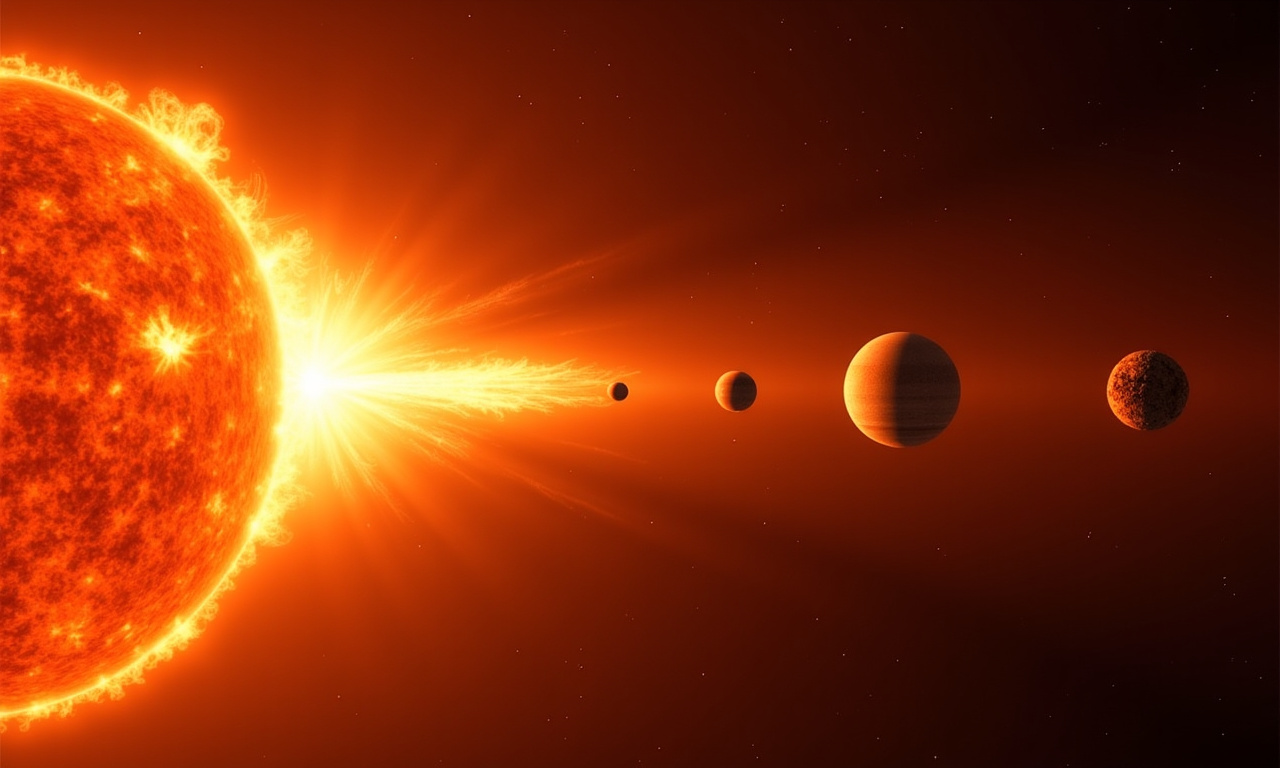

Last night, a significant double explosion occurred on the far side of the Sun, according to the Solar Astronomy Laboratory of the IKI and ISZF. There are no direct observations of this event-no satellites are operational on that side of the star, leaving scientists to analyze indirect data and construct hypotheses. Remarkably, until recently, experts believed this area of the Sun was almost inactive.
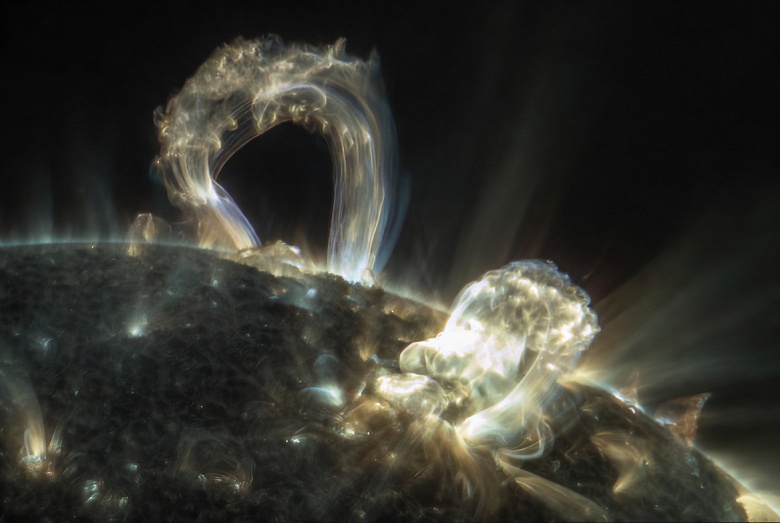
Following the flare, three planets continue to visually ‘neighbor’ the Sun. Venus and Mercury are to the left of the sun, while Mars is on the right. Venus and Mercury are now far behind the Sun, on the side opposite to Earth, whereas the plasma ejections moved significantly sideways and are not directed directly at them. If the hypothetical centers of activity that caused this explosion persist for about five days, they will become visible from Earth. During this time, the Sun will rotate, and the active regions will appear on its left edge.
Recently, increased solar activity has been noted, with frequent solar flares and coronal mass ejections (CMEs). These phenomena raise concerns as they may impact Earth’s magnetosphere, potentially affecting satellite operations and power grids. However, such events can also lead to stunning auroral displays, enhancing natural sky phenomena. Scientists strive to predict these solar events to minimize technological disruptions and protect infrastructure.