




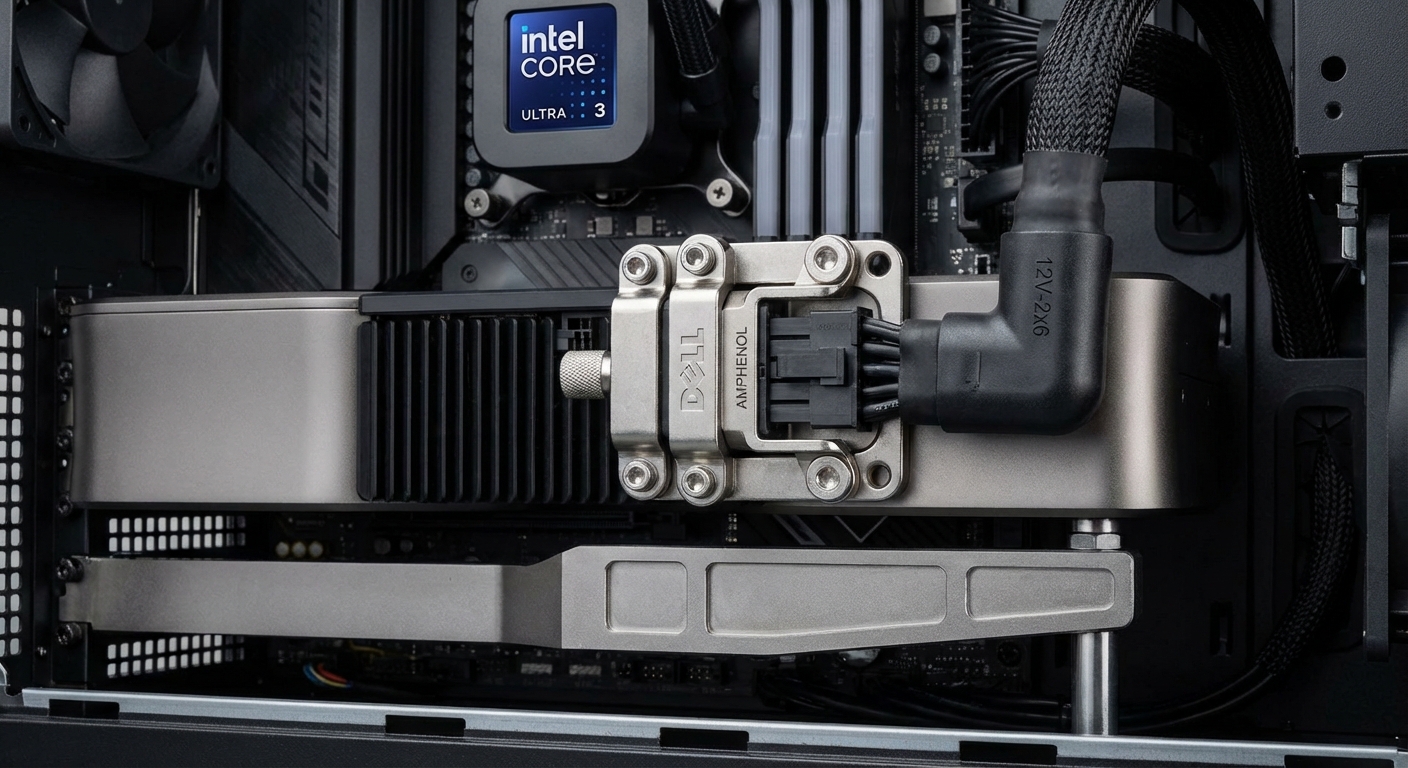

In a significant hardware revelation, a teardown of Dell’s new Tower Plus EBT2250 prebuilt computer in Japan has uncovered an aggressive and decisive solution to the persistent problem of melting 16-pin GPU power connectors. Dell has engineered a system that uses mechanical clamps and bolts to physically lock the connector in place, a move designed to eliminate the user-error-related failures that have plagued high-power graphics cards.
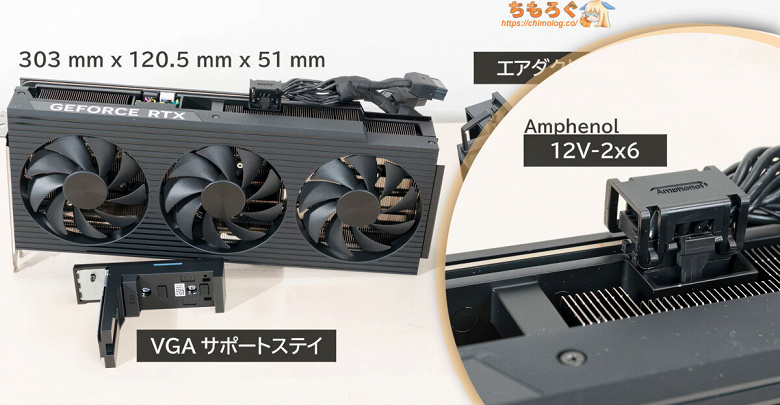
The system, which appears to be a partnership with major interconnect manufacturer Amphenol, was found inside a machine running next-generation hardware: an Intel Core Ultra 7 265K processor and an NVIDIA RTX 5070 Ti graphics card.
The Root of the Problem: A Connector’s Achilles’ Heel
The primary issue with modern GPU power connectors, both the original 12VHPWR and the updated 12V-2×6, has been their sensitivity to incomplete insertion. If the cable is not fully seated or is inserted at an angle, the electrical resistance at the contact point increases dramatically. This leads to a rapid build-up of heat, which can cause the connector and the graphics card to melt, creating a significant fire hazard. While the revised 12V-2×6 connector made improvements, such as recessing the sense pins to ensure a full connection is made before delivering maximum power, the fundamental risk from an improper connection remains.
Dell’s Engineering Fix: Brute Force Meets Precision
Dell’s solution, revealed in the teardown, tackles the problem head-on by removing the possibility of user error. Instead of relying on a simple plastic latch, the power connector is secured by a robust, custom-designed mounting system from Amphenol. This hardware physically bolts the connector into place, ensuring it cannot become dislodged or misaligned during shipping, setup, or long-term operation.
Further enhancing the design, the connector itself is L-shaped. This right-angle design allows the power cables to be routed without sharp bends, which is a critical factor for safety and longevity. The recommended minimum bend radius for these cables is 35 mm (approximately 1.4 inches), a standard that is often difficult to meet in the tight confines of a standard PC case. To complement this, the system also includes a powerful anti-sag bracket that supports the weight of the heavy graphics card, reducing physical stress on both the PCIe slot and the power connector.
A Glimpse into the Future: Next-Gen Hardware Revealed
The teardown also provided an unexpected preview of upcoming PC components. The Dell system was equipped with an Intel Core Ultra 7 265K processor, a part of the “Arrow Lake” architecture, paired with a motherboard based on the new Intel Z890 chipset. For graphics, the machine featured an unreleased NVIDIA RTX 5070 Ti with 16GB of memory, a card from the anticipated “Blackwell” generation of GPUs.
Market Implications and a Look Ahead
Dell’s proactive engineering could set a new standard for reliability in the high-end prebuilt PC market. By offering a system that guarantees a secure power connection, Dell provides peace of mind to consumers wary of the widely publicized melting issues. This move may pressure other major OEMs like HP and Lenovo to develop similar solutions for their own high-performance systems.
The bigger question is whether this robust, mechanical approach will influence the industry standard itself. While custom solutions from manufacturers like MSI and Segotep have emerged, Dell’s implementation in a mass-market product brings the issue to the forefront. It remains to be seen if NVIDIA or the PCI-SIG standards body will consider incorporating a more secure physical locking mechanism into future revisions of the 12V-2×6 connector design for all manufacturers.