




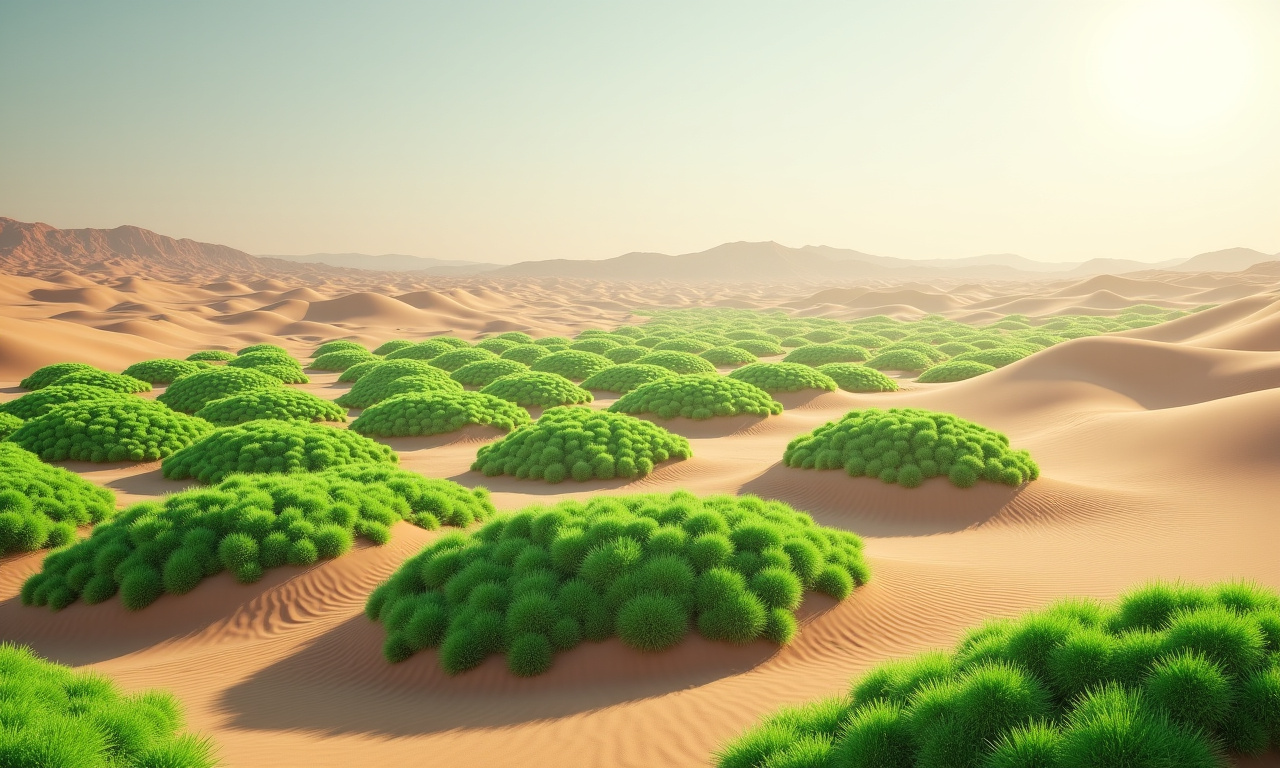

In China, a large-scale geoengineering project utilizing cyanobacteria has been launched with the goal of transforming barren dunes into stable, usable land. According to the South China Morning Post (SCMP), this marks the first instance of microorganisms being applied at such a scale to alter natural landscapes. Cyanobacteria, which have existed on Earth for billions of years, are photosynthetic microorganisms found in almost all environments, from oceans to soil.
The innovative “biological crust” technology was developed at the Shapoutou Desert Research Station, part of the Chinese Academy of Sciences (CAS). This cyanobacteria-based crust, capable of withstanding wind speeds of up to 22 mph (36 km/h), aims to restore up to 6,667 hectares of land over the next five years. Remarkably, this cost-effective and efficient technology could underpin global desertification recovery efforts and mitigate climate change impacts.
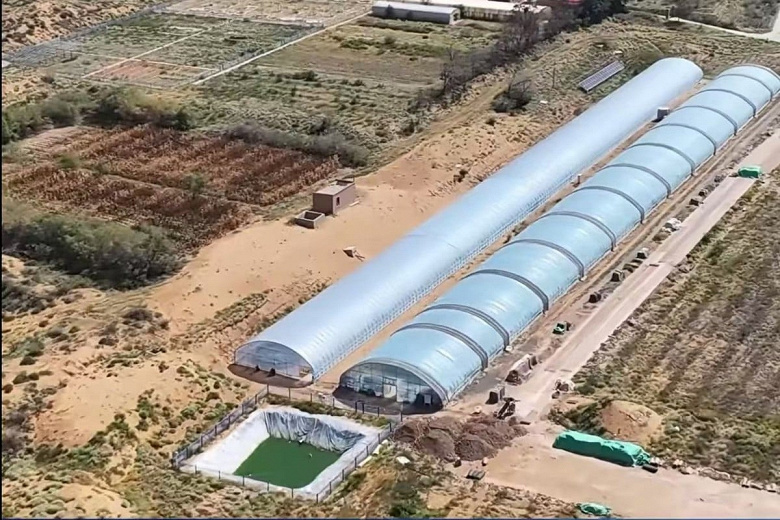
To create the “ecological skin,” seven key cyanobacteria strains were selected from over 300 species, mixed with organic substances into a nutrient-rich paste, and poured into hexagonal molds. The resulting “seeds” are portable blocks designed for survival in deserts and active growth upon arrival. Once dispersed across arid lands, these blocks await moisture. When rain falls, they begin growing, binding sand into a “resilient protective crust.”
In natural conditions, it takes 5 to 10 years to form stable desert crust. The new technology using drought-resistant algae reduces this time to one year.
This project is part of China’s “Great Green Wall” program against desertification. It goes beyond traditional tree planting and aims to address the root cause of desertification: sand migration. This same strategy is being scaled globally in Africa and Mongolia.