

A group of amateur radio enthusiasts operating at the Dwingeloo Radio Telescope in the northeastern Netherlands successfully picked up signals from Voyager 1, a spacecraft more than 25 billion kilometers (15.5 billion miles) away from Earth. It remains one of the most distant objects with which humanity maintains radio contact. The Voyager probes, launched by NASA in 1977, have spent nearly half a century exploring giant planets, their moons, and the outer reaches of our solar system.
Voyager 1 was the first spacecraft of this mission and is currently around 171 astronomical units from Earth-171 times the average distance between the Earth and the Sun, equivalent to approximately 15.9 billion miles. According to NASA calculations, by November 13, Voyager 1 will reach a distance of one light day from Earth. This means any radio signal will take about a day to travel each way, inevitably introducing a daily delay in communication with the spacecraft.
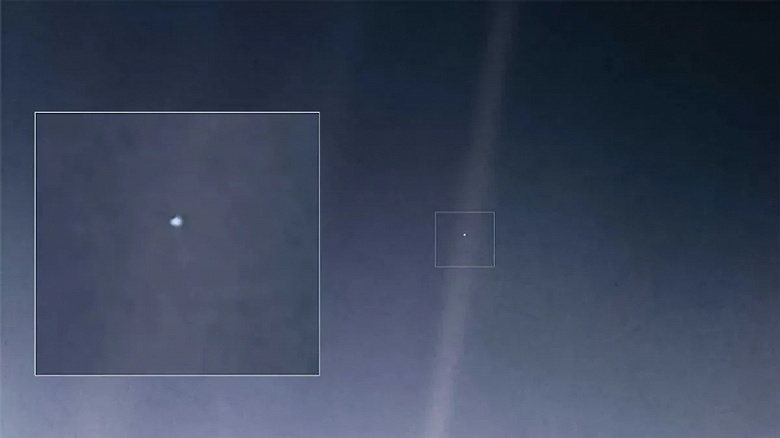
Despite mission successes, the age of the probe is beginning to show. With dwindling energy supplies, NASA has been forced to power down scientific instruments to maintain essential systems. In recent years, technical challenges have arisen as well: the craft transmitted distorted data for a while due to damaged memory and then switched off its primary transmitter altogether. In October 2024, engineers successfully restored communications by temporarily activating a backup transmitter that had been inactive since 1981.
Even under normal operation, transmitting data across such distances remains a massive challenge. According to NASA, Voyager 1’s signal power at Earth’s antennas is about 10^-16 watts-billions of times weaker than the power consumption of a typical electronic wristwatch. Hence, receiving telemetry requires enormous antennas and sophisticated signal processing. The success of the Amateur Radio in Space (AMSAT) team working with the Dwingeloo telescope is particularly noteworthy. In 2006, enthusiasts picked up Voyager 1’s signal, but at that time, the distance to the probe was about 14.7 billion kilometers (9.1 billion miles).
Nowadays, the spacecraft is almost twice as far, and its signal has weakened significantly. The design of the telescope itself adds to the challenge. Dwingeloo was originally designed to operate at lower frequencies than the 8.4 GHz used by Voyager 1. To receive telemetry, the team had to install an additional antenna. Moreover, at these frequencies, the reflective properties of the dish’s mesh surface are significantly poorer, reducing sensitivity.
To isolate the weak signal from noise, researchers used precise trajectory calculations for Voyager 1 and adjusted reception frequency considering the Doppler shift caused by both Earth’s and the spacecraft’s movement. This allowed them to detect the carrier frequency in real-time, and subsequent analysis confirmed it matched the probe’s signal.
Even though the Dwingeloo telescope is notably smaller than NASA’s Deep Space Network antennas, the team successfully received a signal, making it one of the few radio telescopes worldwide capable of directly registering Voyager 1’s operations.
However, the mission of the spacecraft is gradually nearing its end. Due to the depletion of Voyager 1’s energy resources, NASA predicts it will cease operation in the early 2030s. Following this, receiving its signal-be it for professional observatories or amateur radio enthusiasts-will become practically impossible.