







OpenAI has unveiled ChatGPT Health-a specialized space within its chatbot dedicated to health-related discussions. This new feature is available to users with ChatGPT Free, Go, Plus, and Pro plans outside the European Economic Area, Switzerland, and the United Kingdom. ChatGPT Health offers the ability to safely connect medical records and health applications such as Apple Health, Function, MyFitnessPal, Weight Watchers, AllTrails, Instacart, and Peloton. This allows users to receive personalized responses, interpret lab results, get nutrition advice, customized meal recipes, and workout recommendations.
Developers emphasize that ChatGPT Health is built on the reliable data protection mechanisms used in ChatGPT, supplemented with multi-level security measures designed specifically for healthcare. These include specialized encryption and service isolation to ensure the confidentiality and protection of medical consultations.
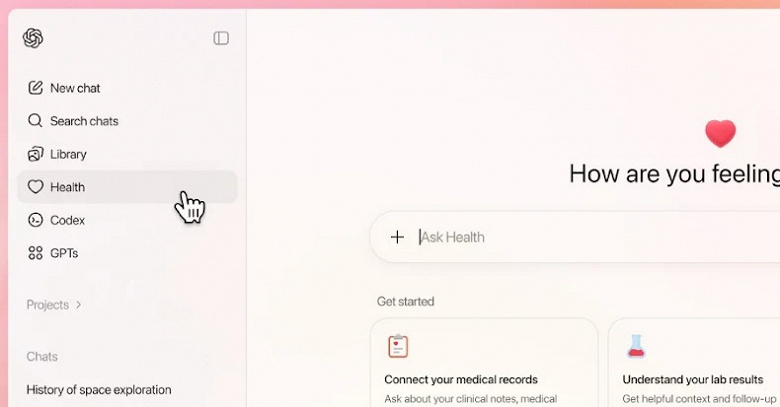
According to OpenAI, more than 230 million people worldwide reach out to the platform weekly with health and wellness questions. The company stresses that the tool is intended to support medical care, not to replace or act as an alternative to diagnosis and treatment.
Privacy and Security Features in ChatGPT Health
OpenAI has integrated a number of privacy and security features in ChatGPT Health:
- Health data is not used to train OpenAI’s base models.
- Health conversations in the regular ChatGPT redirect the user to ChatGPT Health.
- Health information and consultation history are not used for the context of other conversations.
- Applications can only connect to health data with the user’s explicit permission.
- All applications available in ChatGPT Health must adhere to OpenAI’s privacy and security requirements and undergo additional security verification.
OpenAI also conducted an assessment of the model underlying ChatGPT Health for clinical standards compliance using HealthBench-a benchmark introduced by the company in May 2025. HealthBench measures AI system capabilities in healthcare, focusing on safety, clarity, and escalation of medical care.
In recent developments, AI in healthcare has seen a significant surge in regulatory frameworks to ensure user data protection and system reliability, illustrating an escalated commitment to secure digital health solutions.