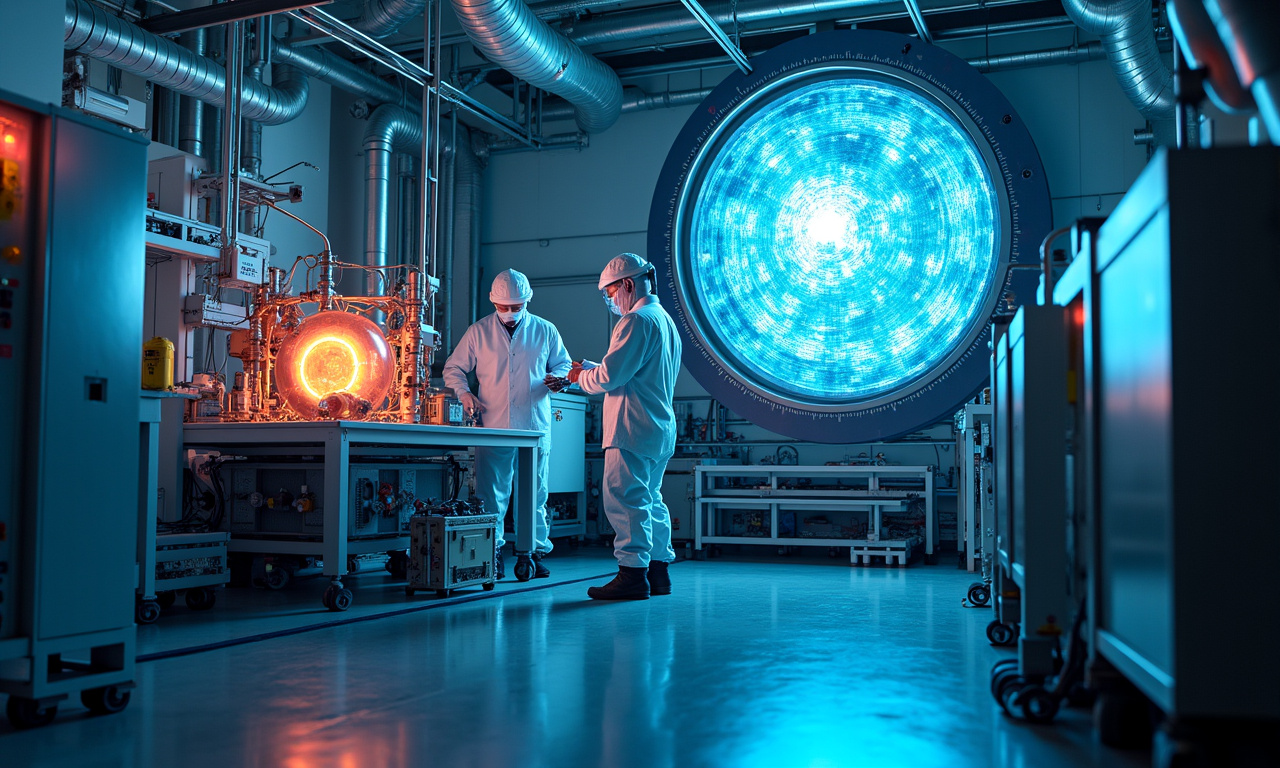

The UK’s flagship nuclear fusion facility, Mega Amp Spherical Tokamak (MAST) Upgrade, has officially launched its fifth scientific campaign, as announced by the United Kingdom Atomic Energy Authority (UKAEA). Over the course of six months, more than 200 scientists will conduct experiments aimed at developing the UK’s first nuclear fusion power station. The new campaign includes over 950 plasma ‘shots’, allowing scientists to better understand the processes necessary for nuclear fusion in a tokamak-a torus-shaped reactor.
MAST Upgrade will receive significant enhancements, including an electron Bernstein wave heating system set to be installed this year. This plasma heating technology is also planned for the STEP Fusion program, which aims to create a prototype of Britain’s first nuclear fusion power station.
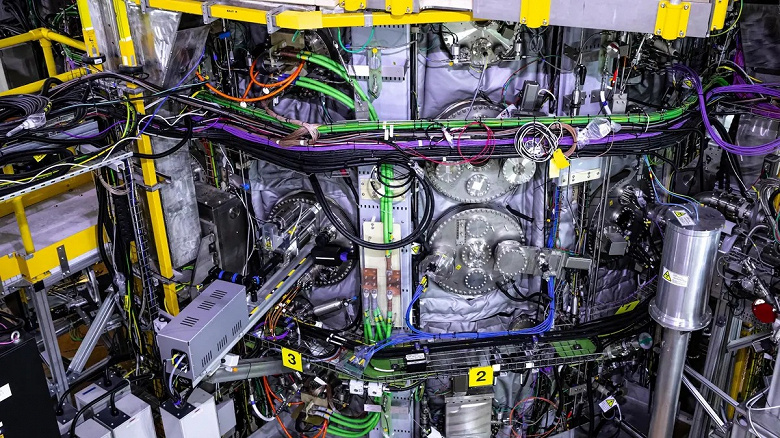
During 2026 and 2027, two additional neutral particle injectors will be added, doubling the heating power of MAST Upgrade. The fifth scientific campaign for MAST Upgrade will focus on four key areas: deepening understanding of high-pressure plasma, optimizing energy management and stability, enhancing divertor design, and testing tools for predicting plasma behavior. Enhanced divertors (devices for removing impurities from plasma) will enable the creation of more compact fusion reactors. Computer models will help predict plasma behavior and improve future designs.
“The upcoming upgrades enable the generation of hotter and more productive plasma, bringing us closer to the conditions of a future fusion power plant,” stated Andrew Thornton, Head of Operations for MAST Upgrade.
The fourth scientific campaign of MAST Upgrade, held from October 2024 to 2025, marked successful plasma management using magnetic coils.