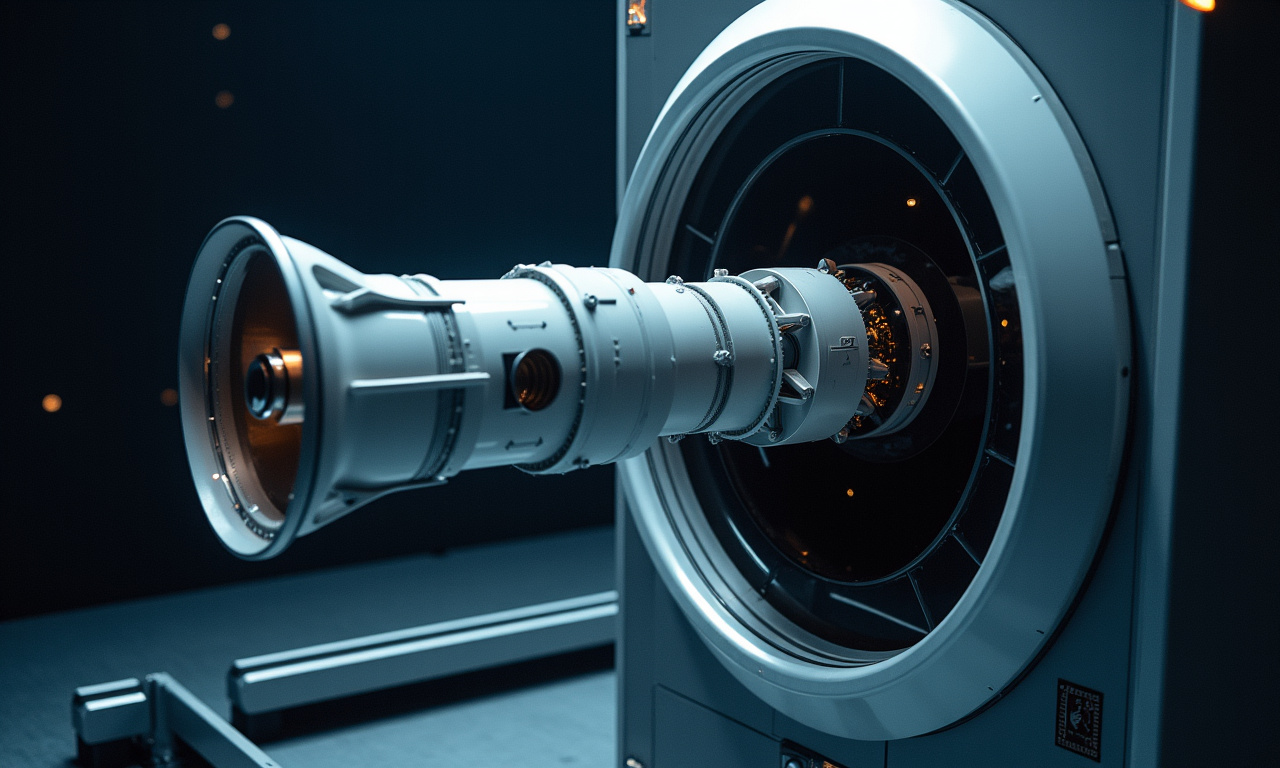

Benchmark Space Systems has announced the successful completion of a crucial testing phase for its Macaw engine, which operates on ASCENT fuel. The 10-minute continuous firing in vacuum conditions confirmed the technology’s readiness for orbital application. ASCENT (Advanced Spacecraft Energetic Non-Toxic) is a non-toxic fuel developed by the U.S. Air Force Research Laboratory (AFRL) as a replacement for toxic hydrazine, widely used in space engines.
According to Benchmark’s Executive Vice President, Peter Woodson, ASCENT boasts a 50% higher impulse density than other monopropellant fuels. This means that less mass and volume of fuel is required to achieve the same velocity change, allowing for an increase in the spacecraft’s payload capacity or additional fuel reserves.

In 2024, Benchmark secured an AFRL contract worth $4.9 million to develop engines and components based on ASCENT, including the Macaw engine with 22 Newtons of thrust. Following the successful 10-minute firing conducted alongside AFRL at the Edwards Air Force Base in California, Benchmark is preparing for Macaw’s qualification for orbital demonstration missions. During testing, the engine demonstrated stable operation and maintained full functionality.
The Macaw engine is designed for use on spacecraft weighing between 250 and 1,000 kilograms. Benchmark plans to collaborate with spacecraft component manufacturers and satellite integrators to further qualify and implement ASCENT-based engines. Recent industry trends showcase an increasing demand for environmentally friendly propulsion systems, driving innovations towards adopting non-toxic alternatives in spacecraft.