

Apple Inc. plans to produce certain chips for iPhones in India. The tech giant from Cupertino has already had preliminary talks with CG Semi, a company owned by Murugappa Group. This marks a significant shift as Apple has never engaged in the assembly or packaging of chips in India. However, it should be noted that this does not involve Apple’s A-series platforms or the new Apple C/N chips. Initially, they are expected to start with the production of basic display-related chips.
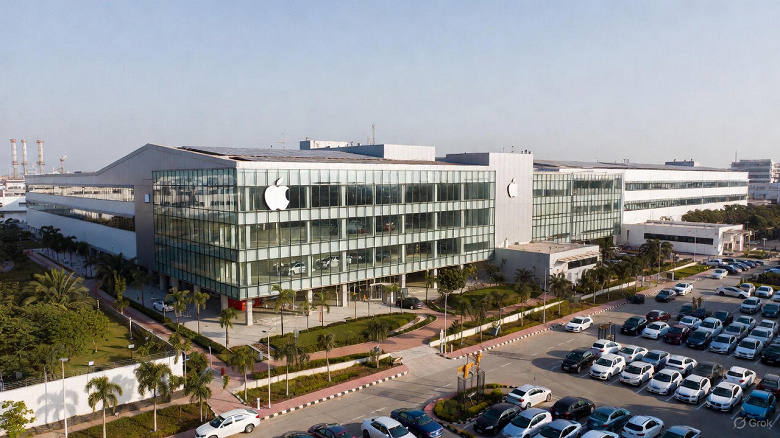
Created by Grok 
India developed its first dual-core 64-bit processor with a 1 GHz frequency. DHRUV64 is based on RISC-V architecture. Currently, Apple reportedly procures display driver integrated circuits (DDIC) from suppliers like Samsung, Himax, LX Semicon, and Novatek, all having manufacturing facilities in South Korea, Taiwan, or China. It is also reported that Apple is in talks with other companies regarding chip production in India, but details are scarce.
The Shift to Indian Manufacturing
The move aligns with Apple’s broader strategy to diversify its supply chain amidst global tensions and trade uncertainties. Establishing a foothold in India is not only strategic but also supports India’s ambition to become a global semiconductor manufacturing hub. This step could be pivotal in enhancing India’s technological capabilities and align with the Indian government’s push under the ‘Make in India’ initiative.
Semiconductor manufacturing in India has seen increased investments and interest from global tech companies. India’s government has offered incentives to attract chip manufacturers, aiming to reduce dependency on imports and boost domestic production capacity. Collaborations with international firms have been integral in upgrading India’s technological landscape, with the recent developments in RISC-V architecture marking a milestone in the country’s tech evolution.
Implications for the Global Supply Chain
By venturing into chip manufacturing in India, Apple might be setting a precedent for other companies thinking of expanding their manufacturing bases beyond traditional locations like China and Taiwan. This could potentially lead to a reduced concentration of chip production in a few regions, mitigating risks posed by geopolitical disruptions. For Indian businesses, this is an opportunity to build capability and reputation in high-tech manufacturing.