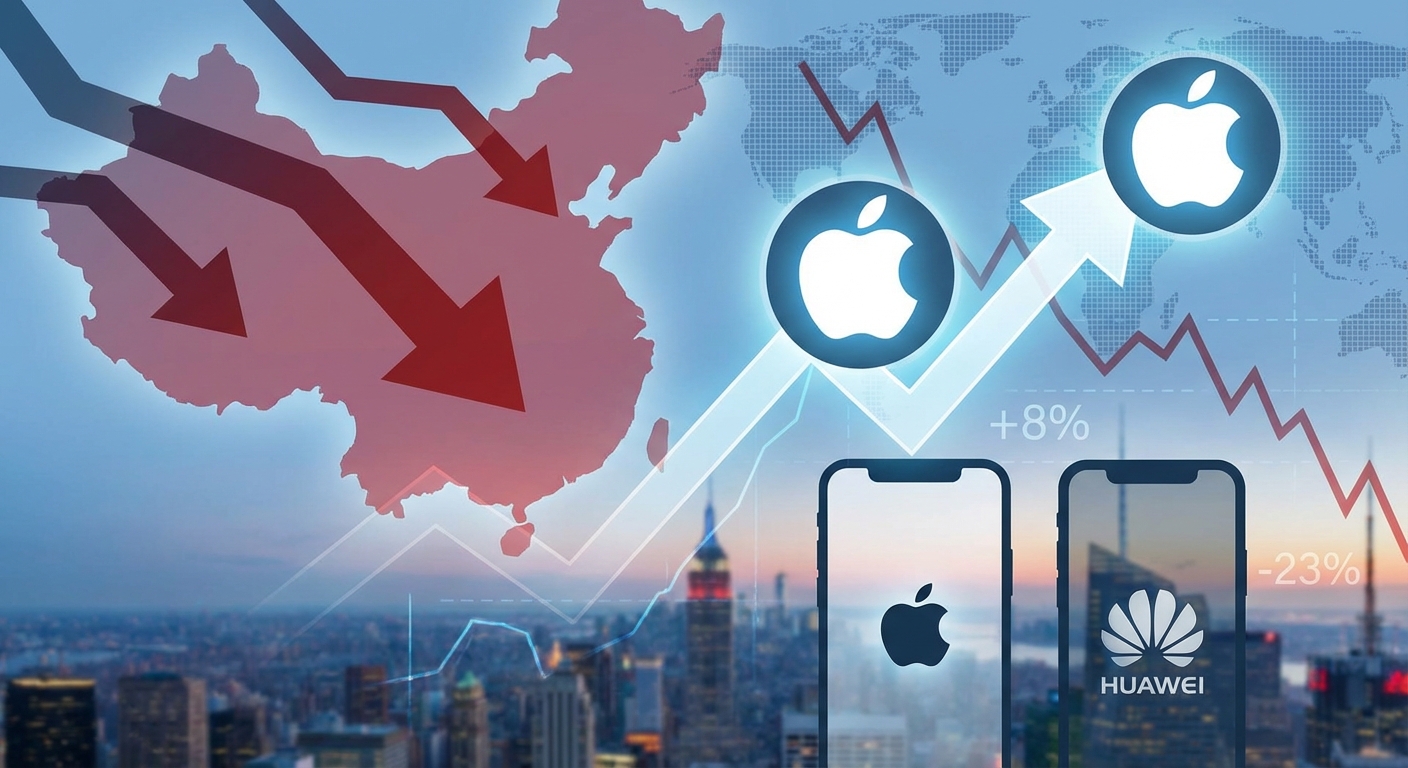

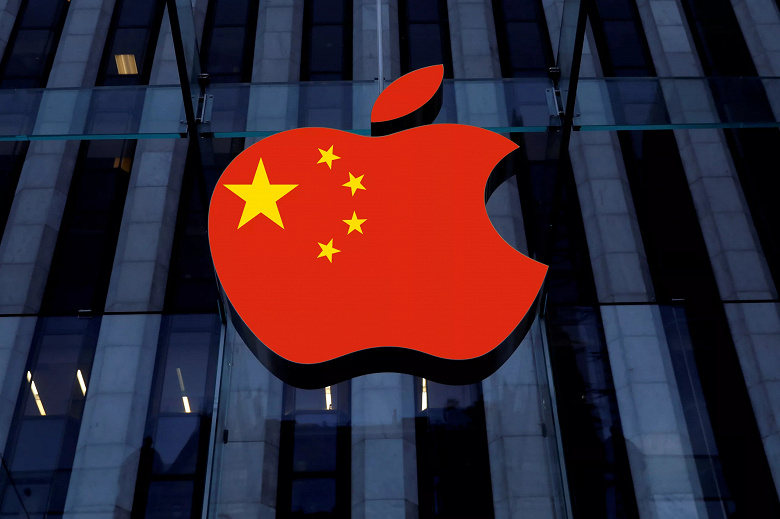
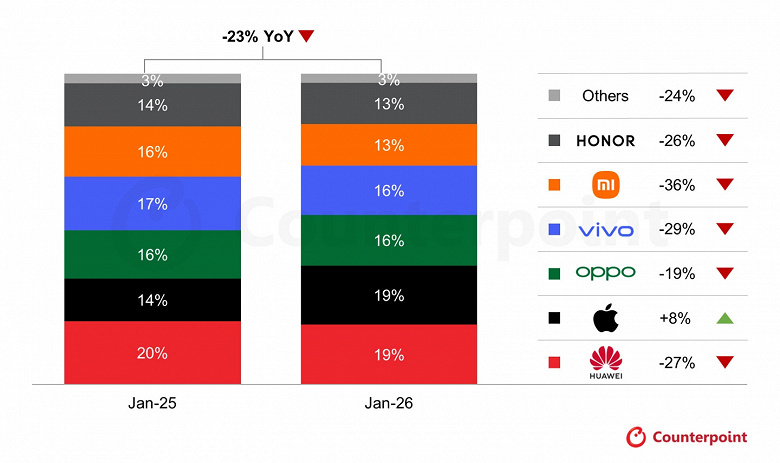
In a starkly contracting Chinese smartphone market that saw an overall sales decline of 23% year-over-year in January, Apple was the sole major brand to post positive growth. According to new data from Counterpoint Research, Apple’s sales grew by 8%, a remarkable feat that allowed it to nearly tie a resurgent Huawei for market leadership. Both tech giants now hold approximately 19% of the market share each.
The Subsidy Anomaly
The dramatic downturn for most brands has a clear explanation rooted in the previous year’s policies. In January 2025, the Chinese government launched a significant subsidy program to stimulate domestic consumption. Consumers purchasing smartphones and other electronics priced under 6000 yuan (about $833) could receive a subsidy of up to 500 yuan (about $69). This initiative, combined with the timing of the Lunar New Year promotions, created an artificially high sales base in January 2025 for most domestic manufacturers.
Apple, however, was less affected as it joined the subsidy program later in June 2025, and many of its premium models were not eligible initially. Now, as these subsidies are being phased out, the year-over-year comparisons paint a grim picture for brands that heavily benefited from the program, while Apple’s performance reflects more organic demand.
Huawei’s Resurgence and the Competitive Landscape
While Apple celebrates its growth, Huawei’s performance underscores its powerful comeback. Despite a 27% year-over-year decline against the high 2025 baseline, Huawei maintained its top position, driven by strong sales of its Mate 80 series. The intense competition between the two giants is set to define the premium market in 2026. Other major Chinese brands faced severe downturns in January, with Xiaomi experiencing the sharpest fall at 36%.
Sustained Momentum for iPhone 17
Apple’s success isn’t just a result of favorable comparisons; it’s also fueled by the sustained popularity of the iPhone 17 series. The strong demand has helped Apple achieve its highest January market share in China in the past five years. Notably, the base iPhone 17 model now qualifies for government subsidies, further boosting its value proposition and contributing to a 9% month-on-month sales increase. This performance contributed to what CEO Tim Cook described as the “best iPhone quarter in history in Greater China.”
A Challenging Road Ahead
Analysts remain cautious about the outlook for China’s smartphone market for the remainder of 2026. Market research firm IDC forecasts a potential year-over-year decrease of 2.2% for the full year, citing cost pressures and the need for brands to innovate beyond specifications. Apple’s strong start to the year provides a measure of stability for the company, for which the Greater China region accounts for a significant portion of its revenue. However, whether this momentum can be maintained against a backdrop of subdued consumer sentiment and fierce competition from a revitalized Huawei will be the key question for the months ahead.