






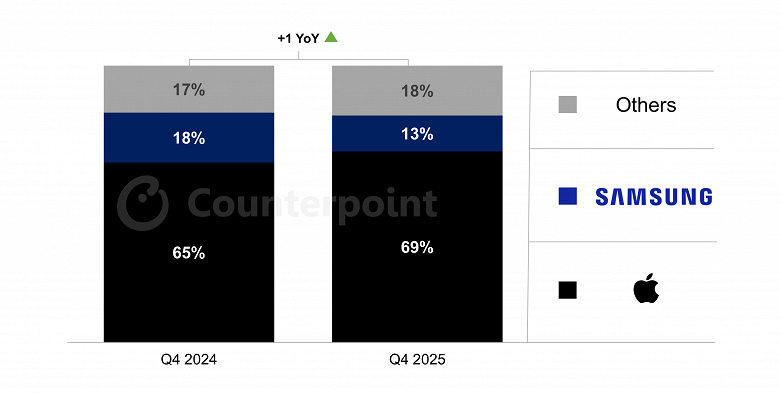
The US smartphone market has long been dominated by Apple, but according to Counterpoint, the Cupertino giant has outdone itself in the last quarter. The company’s market share has grown from 65% to 69% over the year, the highest Apple has ever achieved. Conversely, Samsung’s share has plummeted from 18% to 13%. Meanwhile, all other brands collectively hold 18%, up from 17% a year ago.
Simply put, those who were neither Samsung nor Apple buyers continued their previous patterns by the end of 2025. However, Samsung consumers significantly shifted towards the iPhone. Naturally, the reality might be more complex, but solely numbers-wise, this is indeed the picture painted.
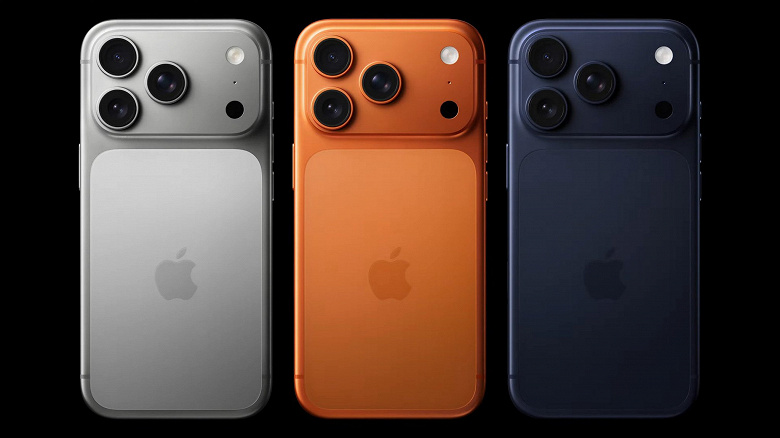
It’s worth noting that the iPhone 17 lineup became highly desired and set records across various markets. Consequently, Apple topped the smartphone market for the first time in many years, earning a record-breaking $144 billion in a single quarter.
Technological Innovations and Consumer Shifts
The iPhone 17 series was lauded for its cutting-edge innovations, including an advanced AI-powered camera system and unprecedented battery efficiency, contributing significantly to its popularity. These features resonated with a tech-savvy consumer base eager for the next big thing in smartphone technology.
Samsung’s Strategic Response
In light of Apple’s surge, Samsung has been recalibrating its strategy, focusing on innovations in its Galaxy series and broadening its ecosystem of services to entice consumers. Early 2026 reports suggest a rollout of more competitively priced models integrated with advanced connectivity features aimed at recapturing market share.
Industry Implications and Economic Influences
The smartphone sector witnesses shifting consumer preferences, notably towards units offering superior performance and intelligent features. This trend aligns with broader technological advancements anticipated in 2026, such as enhancements in augmented reality and personalization technology.
Economic conditions in 2026 present a mixed landscape for the industry, with potential impacts from fluctuating consumer spending patterns amid evolving global economic dynamics. Analysts anticipate these factors will play a crucial role in shaping the competitive landscape further.