





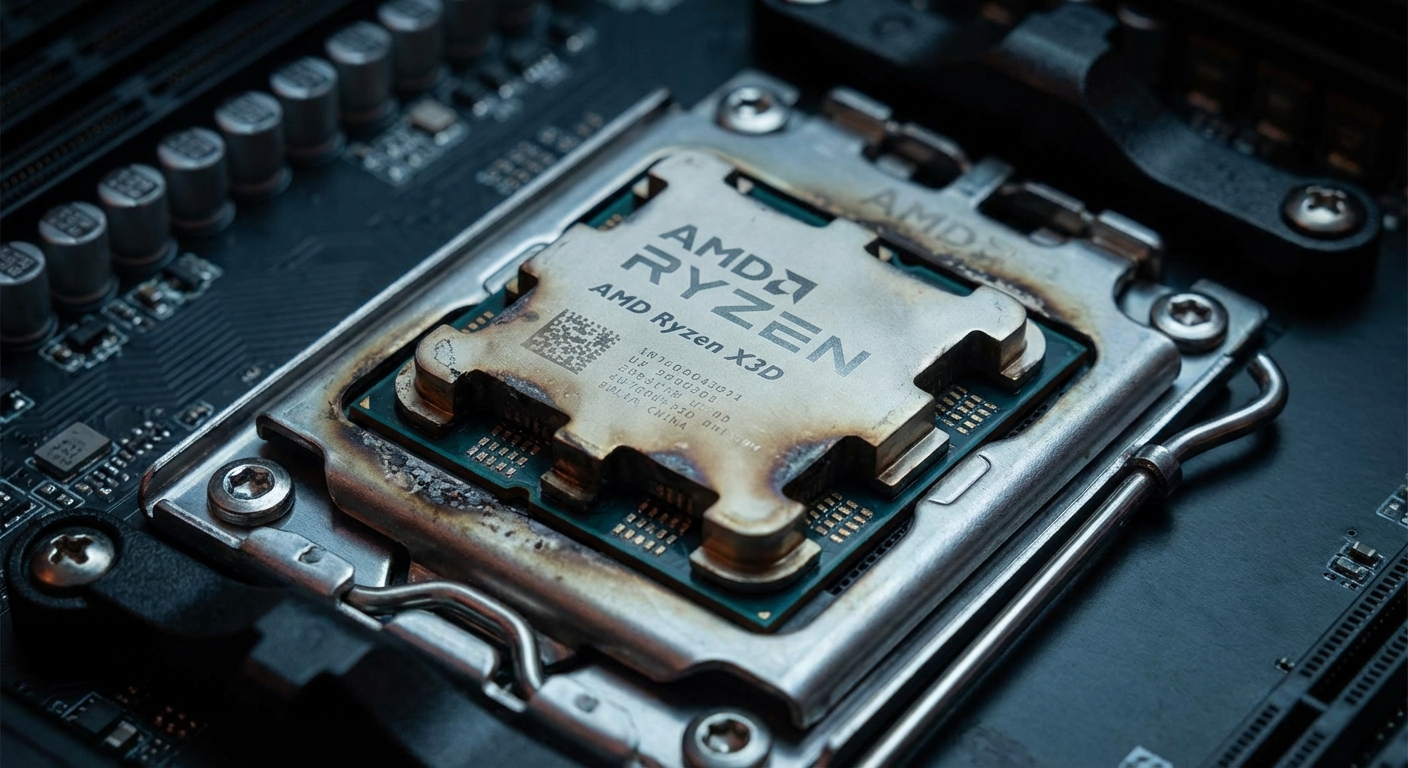

Reports of AMD’s high-performance Ryzen X3D processors failing continue to surface, often under perplexing circumstances that defy simple explanation. A recent case highlighted on Reddit involves a user whose Ryzen 7 9800X3D processor reportedly died after being left overnight with a minimal workload, reigniting concerns about the stability of the flagship gaming CPUs on the AM5 platform.
The user, posting under the alias seklay, detailed an experience where their PC, running only Google Chrome and minor background applications, was found frozen in the morning. Subsequent troubleshooting with a different CPU confirmed that the Ryzen 7 9800X3D, a premium processor based on the Zen 5 architecture, had failed. The system was built around an Asus TUF Gaming X870-PLUS WIFI motherboard, adding another data point to a growing list of failures predominantly seen on motherboards from ASUS and ASRock.
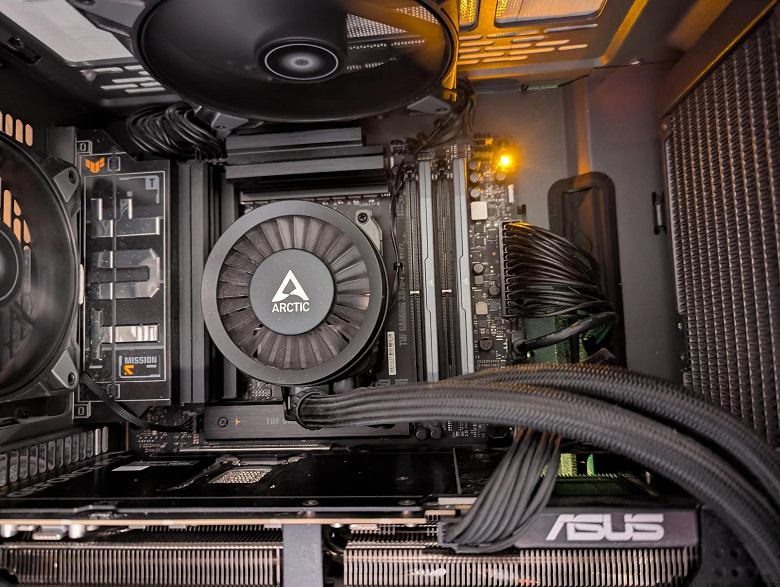
Last night I left the computer on with a very light load (Chrome + minor background apps, CPU load <1%). In the morning I found that the system was frozen.
A Disturbing Pattern of Burnouts
This incident is not an isolated one but rather the latest in a series of burnout issues that have plagued AMD’s 3D V-Cache processors since the previous Ryzen 7000 series. Reports from 2023 described similar failures with the Ryzen 7 7800X3D, where CPUs were physically damaged, sometimes taking the motherboard socket with them. The problem has persisted with the 9000 series, with community-led data collection documenting over 100 cases of failure, a significant majority of which occurred on ASRock motherboards, followed by ASUS.
The common thread in these failures often points to issues with voltage regulation. The 3D V-Cache technology, which gives these chips their gaming prowess, makes them more sensitive to high voltages and temperatures than their non-X3D counterparts. Investigations by both AMD and tech media have suggested that some motherboard BIOS versions were supplying unsafe voltage levels to the CPU, particularly the SoC voltage, leading to degradation and eventual failure.
The Search for a Cause and Solution
In response to the ongoing issues, AMD has stated that the root cause lies with motherboard firmware that does not adhere to the company’s recommended power and voltage specifications. The company has worked with its partners to distribute AGESA (AMD Generic Encapsulated Software Architecture) updates that implement stricter voltage limits, including a cap on SoC voltage at 1.3V, to prevent the CPUs from operating beyond their safe limits. Motherboard manufacturers, including ASRock and ASUS, have released numerous BIOS updates aimed at resolving these stability problems.
While overly aggressive Precision Boost Overdrive (PBO) settings and memory overclocking profiles (EXPO) were initially suspected as major contributors, many users who experienced failures reported running their systems at stock settings. This suggests the problem was rooted in the default behavior of some motherboards.
Looking Ahead: A Cautionary Tale for the AM5 Platform
For consumers, the situation presents a difficult choice. AMD’s X3D processors, including the Ryzen 7 9800X3D launched in November 2024, remain some of the best CPUs for gaming on the market. However, the persistent risk of sudden failure, however small the percentage of total units sold, has cast a shadow over the AM5 platform’s reliability. The primary recommendation for all owners of Ryzen X3D CPUs is to ensure their motherboard’s BIOS is updated to the latest version to incorporate the necessary safeguards. The ongoing incidents serve as a critical reminder of the delicate balance between pushing performance limits and ensuring long-term hardware stability.