


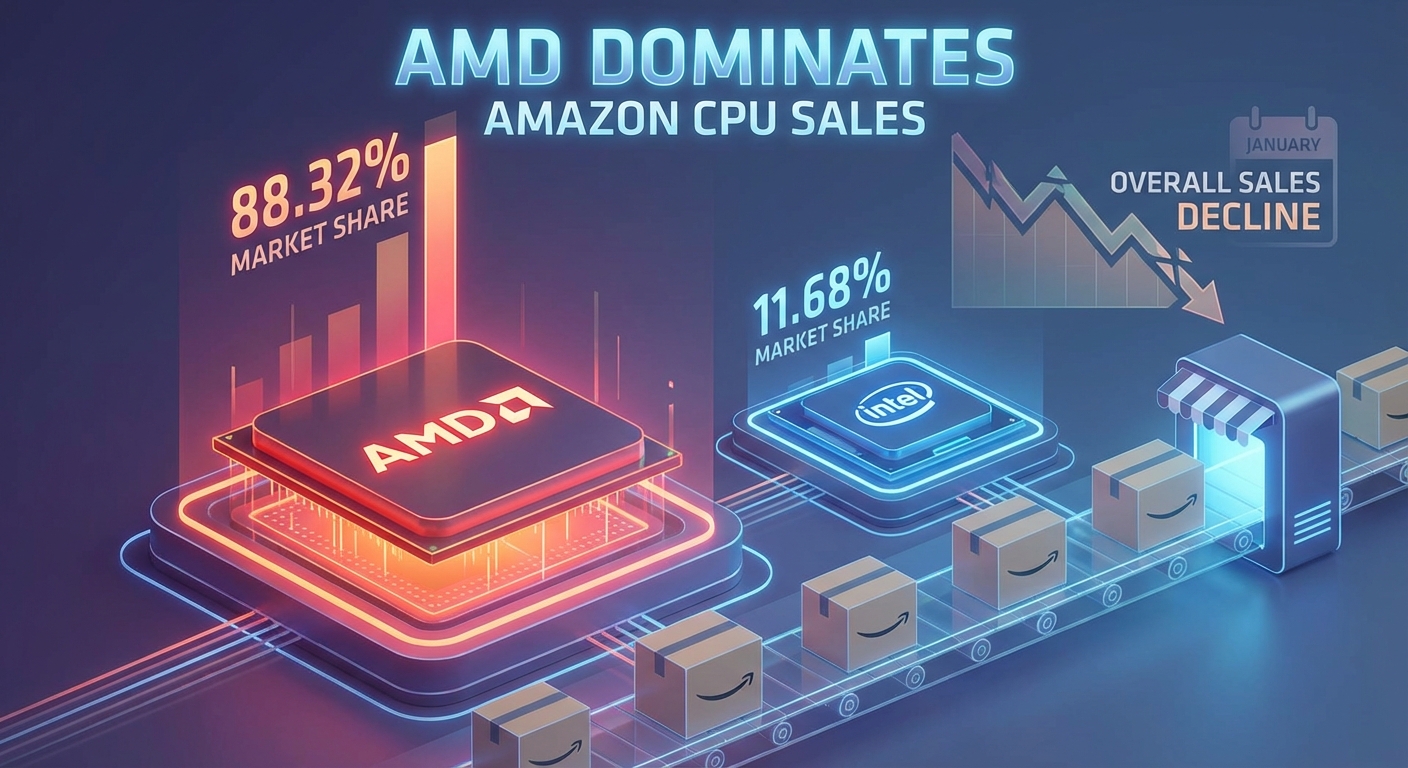

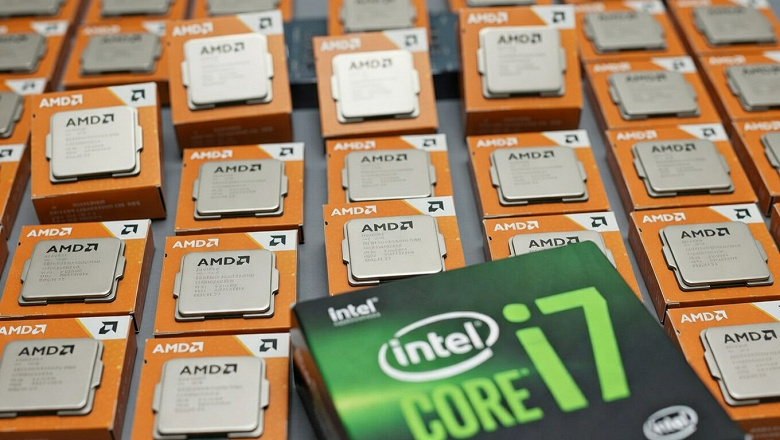
Despite a significant downturn in the overall PC components market, AMD continues to assert its dominance in the DIY sector, capturing a staggering 88.32% of CPU sales on Amazon in the US for January. This near-total market control comes even as total processor sales have plummeted, highlighting a challenging environment for the entire industry.
A Tale of Two Companies
The sales data reveals a stark contrast between the two major CPU manufacturers. In January, 23,050 AMD Ryzen processors were sold on the platform, compared to just 3,050 Intel CPUs. This translates to a unit share of 88.32% for AMD and 11.68% for Intel. The revenue split is nearly identical, with AMD taking 88.57% of the revenue, as the average selling prices for both brands were remarkably close-$312 for AMD and $305 for Intel.
The Champions of Sales: Gaming Powerhouse and Last-Gen Value
Leading the charge for AMD is the Ryzen 7 9800X3D, a favorite among gamers, which sold approximately 5,000 units. This single model accounted for nearly 20% of all CPUs sold on Amazon in January. Its success underscores the strong demand for high-performance gaming processors equipped with AMD’s 3D V-Cache technology.
Interestingly, the second best-selling processor was the older Ryzen 7 5800XT from the AM4 platform, with around 3,000 units sold. This highlights a significant trend: the rising cost of DDR5 memory is making the mature AM4 platform, which uses more affordable DDR4 RAM, a very attractive option for builders and upgraders seeking value. Other popular AMD models include:
- Ryzen 9 9950X3D
- Ryzen 5 9600X
- Ryzen 5 5500
Intel’s Uphill Battle
For Intel, the picture is less rosy. The company’s top-performing CPU, the Core Ultra 7 265K, sold only about 400 units, capturing a mere 1.53% of the total sales. This figure illustrates the significant challenge Intel faces in the enthusiast and DIY retail space, where AMD’s product mix appears to resonate more strongly across different price points and performance tiers.
Market Context and Future Outlook
The backdrop to these figures is a sharp contraction in the market. Overall CPU sales on Amazon in January saw a year-over-year decline of 51%, a concerning trend attributed to the soaring prices of other essential components like RAM and SSDs. With the cost of a full system upgrade becoming prohibitive for many, consumers are holding off on purchases. AMD’s dominance in this shrinking market is impressive, but the health of the entire PC building ecosystem depends on the stabilization of component prices. Intel is expected to respond with its upcoming Nova Lake architecture later in 2026, which could intensify competition, especially if memory and storage prices become more accessible.