





AMD has yet to delight users with new APUs featuring upgraded iGPUs like Intel has done. It’s now revealed that the current RDNA 3.5 architecture, utilized in Ryzen AI 300/400, will remain relevant for quite a long time. A new roadmap indicates that this architecture will be used in Ryzen APUs at least until 2029. This suggests numerous new processors across at least two to three new lineups will include iGPUs of the same tier as present.
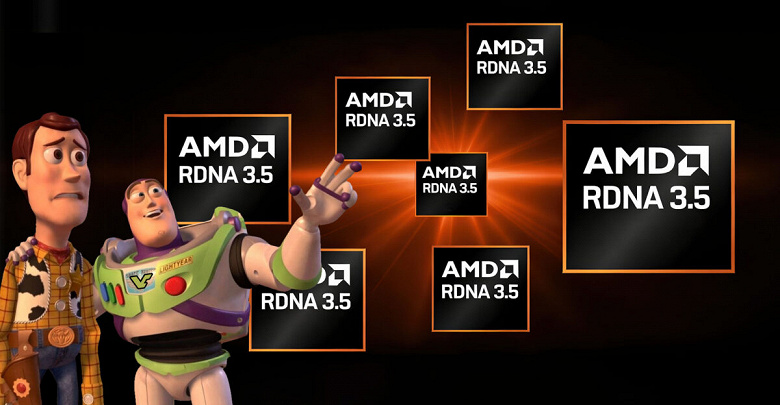
However, this doesn’t imply that AMD is neglecting advancement altogether. Development will focus on processors aimed at the lower market segment and high-performance CPUs targeting laptops with discrete graphics cards. Some of these will clearly be older models rebranded-a strategy long employed by both AMD and Intel. Premium segment processors will also be introduced. Though it’s unclear what these CPUs will be specifically, they will feature iGPUs with RDNA 5 architecture. Interestingly, it seems the company will not adapt the current RDNA 4 for iGPUs for unspecified reasons-indeed, there’s no mobile Radeon RX 9000 series either.
Unfortunately, it’s currently unknown when the first APUs with new iGPUs will emerge. Until their debut, Intel Core Ultra X processors will dominate the segment for CPUs with TDP up to 40-50 watts.
In the landscape of graphics processing, the extension of RDNA 3.5 architecture might seem like stagnation, but AMD’s strategic patience could translate into long-term benefits. Should RDNA 5 capitalize on its anticipated performance and efficiency leaps, AMD could once again attract consumers seeking advanced graphics solutions without external GPUs. In contrast, Intel’s updated offerings have set a competitive benchmark, prompting AMD to innovate or strategize around it.