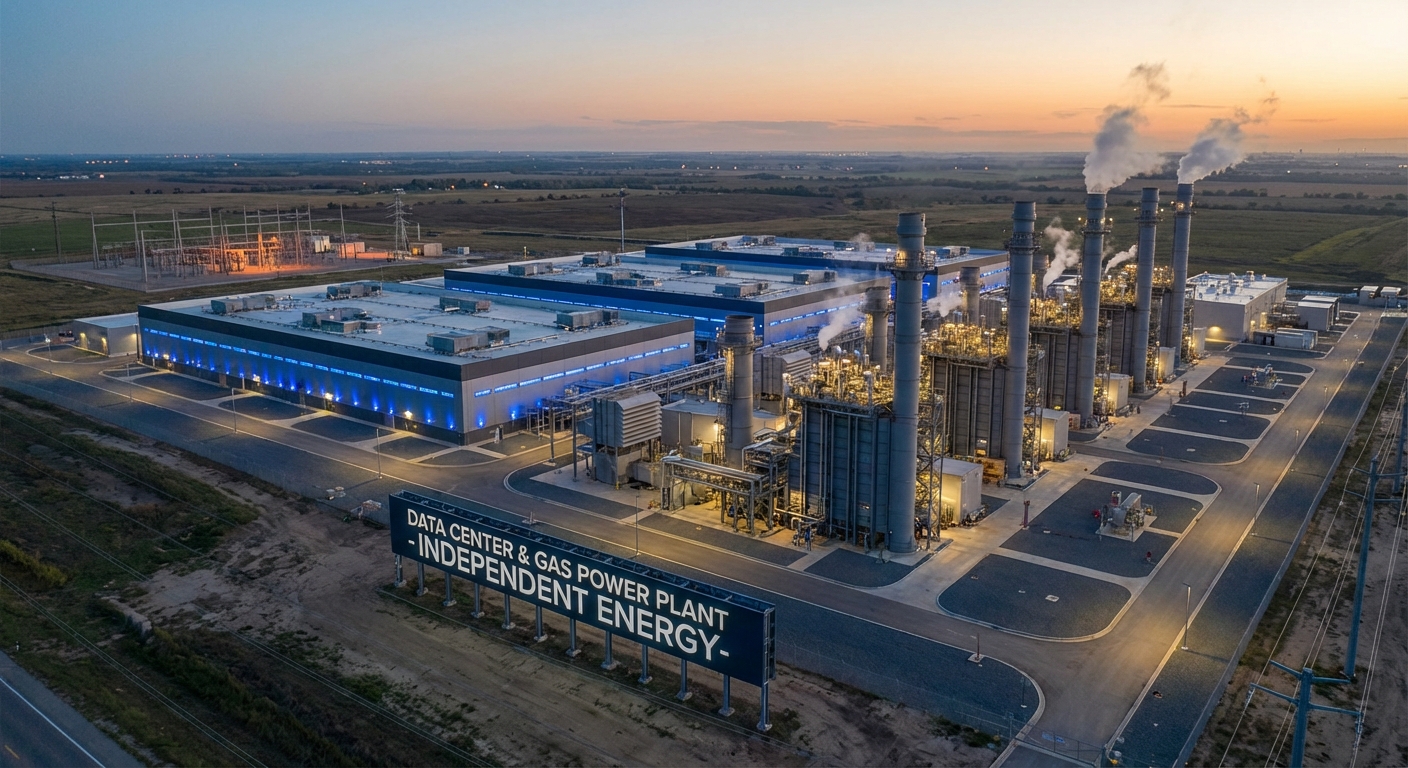

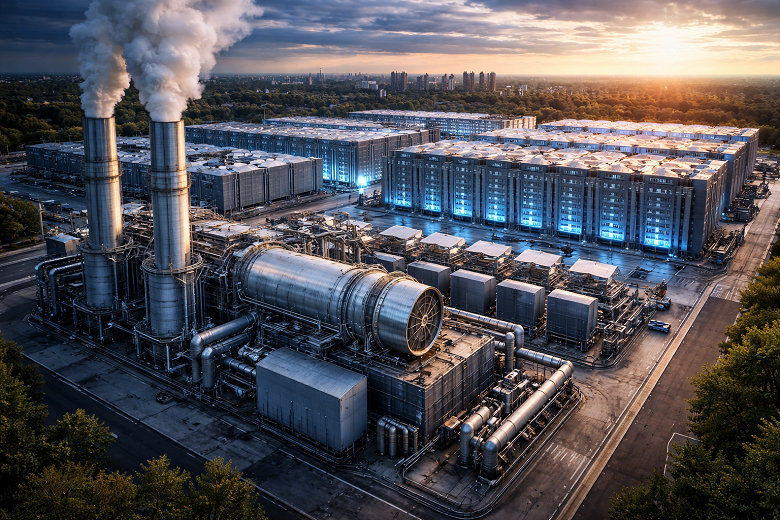
Key AI developers in the U.S. have encountered an “energy deadlock”: connecting new data centers to public power grids requires years of approvals and infrastructure modernization. To avoid losing time and falling behind in the AI race, technology companies have begun creating a “shadow power grid” by building their own power plants, primarily running on natural gas, directly on the server farm sites. This trend is driven by industry giants like Meta, OpenAI, and Oracle, who are sidestepping the strained public grid to power their energy-hungry operations.
The Scale of a New Power Infrastructure
According to a report from the analytics firm Cleanview, there are at least 47 large data center projects with autonomous power in the United States. The scale is impressive: the GW Ranch project in West Texas is permitted for up to 7.65 GW and will consume as much energy as the entire city of Chicago. In Mason County, West Virginia, the planned gas consumption for the Monarch Compute Campus is equivalent to the needs of 1.5 million residential homes, which is more than the total number of households in the state. Taken together, the off-grid projects already approved could power New York City several times over.
A “Catastrophe for Climate Goals”
The “shadow grid” is being called a disaster for the climate. Instead of transitioning to green energy, the AI industry is provoking a sharp increase in carbon dioxide emissions, locking in fossil fuel dependence for years to come. According to the International Energy Agency (IEA), natural gas and coal are expected to meet over 40% of the additional electricity demand from data centers until 2030. Cornell University researchers estimate that by 2030, the current rate of AI growth could add 24 to 44 million metric tons of CO2 to the atmosphere annually in the U.S. This surge is a direct contradiction to the net-zero pledges made by many of these same tech companies.
The initial claim that all suitable gas turbines in the U.S. are sold out until 2030 is nuanced. While large, heavy-duty turbines face significant backlogs, companies are adapting by using smaller, more readily available systems like aeroderivative turbines. However, there are still problems. Some gas turbines are not designed for the 24/7, 365-day operation required by neural networks, and some data center developers are even using outdated generators literally destined for the scrapyard.
The Regulatory Wild West and a Glimpse of the Future
A number of states have already amended their legislation, allowing companies to build private power units without the strict oversight of regulators. This has sparked public backlash from residents who feel decisions are made in secrecy. In response, a bipartisan bill, the GRID Act, has been introduced in the U.S. Senate to require data centers to use independent power sources, aiming to protect consumers from shouldering the cost of this new infrastructure.
Looking ahead, the insatiable energy demand from AI is unlikely to slow down. While the current shadow grid is being built on natural gas, many in the industry see it as a stopgap. The next frontier for providing reliable, carbon-free, 24/7 power is nuclear energy, specifically Small Modular Reactors (SMRs). Tech leaders like Google and Amazon are already investing in SMR partnerships, with the first nuclear-powered data centers expected to come online by 2030. This points to a complex future: a short-term fossil fuel boom to keep the AI race going, followed by a potential pivot to high-tech nuclear solutions to power the next phase of innovation.