




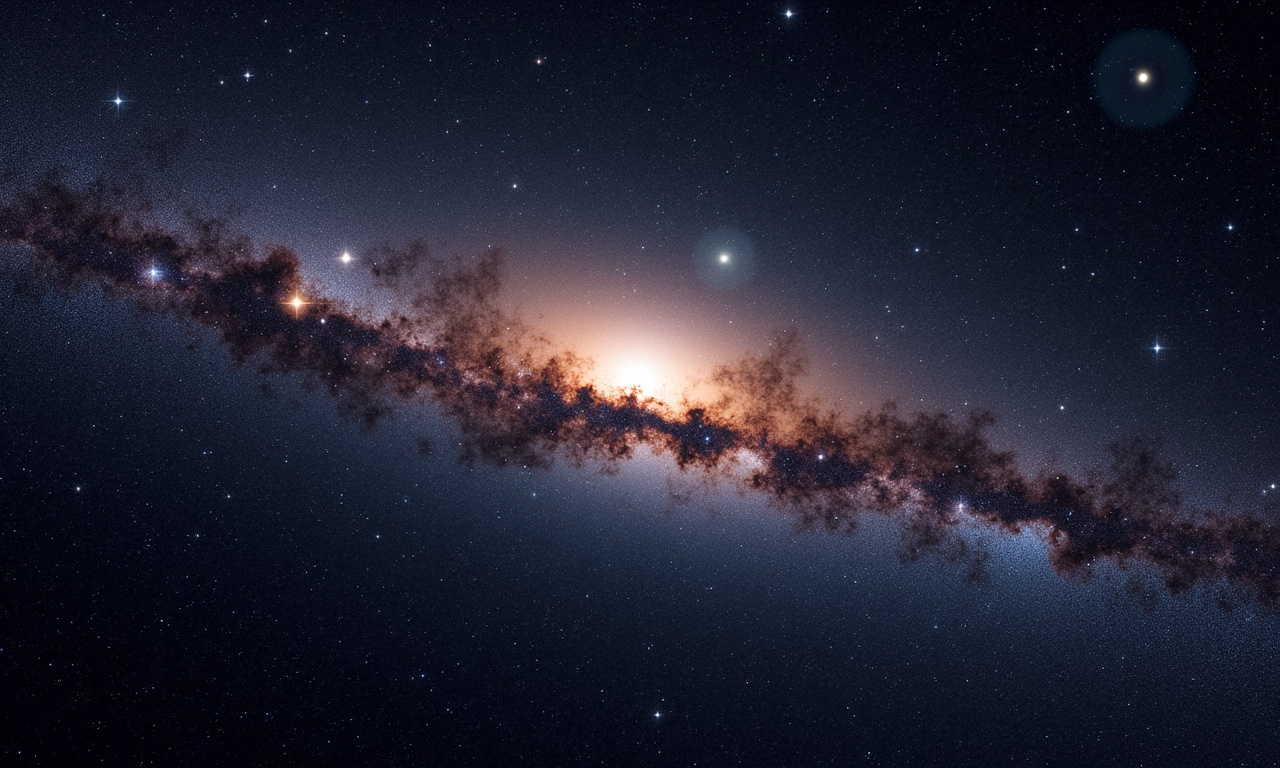

Globular clusters are often described as ancient, tightly bound “relics” of the early Milky Way. These dense star clusters were believed to remain unchanged for billions of years. However, new observations reveal that at least some of them are far from stable. Astronomers have recorded how cluster NGC 6569 is actively shedding its stars into the central bulge of the Milky Way (the bulge being the central, most dense region of a spiral galaxy). A detailed analysis of star spectra indicated that this 13-billion-year-old cluster is slowly breaking apart due to the galaxy’s gravity, “supplying stars” to the surrounding bulge at a measurable rate.
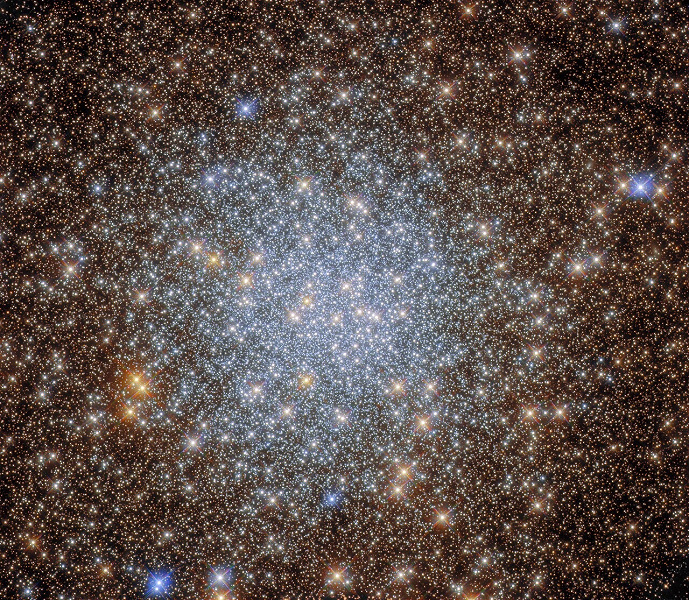
Source: ESA / Hubble & NASA, R. Cohen, CC 4.0
“We conducted the first wide-field spectroscopic survey of NGC 6569 at medium resolution. Our findings indicate that NGC 6569 is actively losing stars due to tidal stripping,” note the authors of the study.
NGC 6569 is located approximately 35,500 light-years from Earth, deep within the overcrowded central bulge of the Milky Way. It is relatively massive, about 230,000 times the mass of the Sun, and contains stars richer in heavy elements than many other globular clusters.

Source: Joanne Hughes, https://doi.org/10.48550/arXiv.2512.19074
Scientists used the Anglo-Australian Telescope (AAT) as part of the Milky Way Bulge Extra-Tidal Star Survey (MWBest) project. The aim of this survey is to understand how globular clusters disintegrate under the influence of the strong gravitational forces near the galaxy’s center. Spectra of medium resolution of 303 stars in and around NGC 6569 were collected. These spectra reveal both the chemical composition of stars and their motion speed. By combining this information with precise motion data, scientists were able to identify stars that once belonged to the cluster but are now drifting away from it.
The analysis showed that NGC 6569 loses stars at a rate equivalent to the mass of about one to one and a half Suns every million years, which amounts to about 5.6% of the cluster’s total mass over a billion years. Around 35% of nearby stars share the movement of NGC 6569, indicating that the cluster is immersed in its own detached material. Further studies using modeling based on observational data will refine the long-term evolution of the cluster and its contribution to the formation of the Milky Way’s bulge.