







A Reddit user, under the alias ComplexSupermarket89, unveiled an unconventional method of combating GPU overheating by replacing the thermal spreader with a heatsink from an old 100-watt car audio amplifier. While the construction was undeniably massive, it proved worthwhile: the GPU’s temperature decreased by 20 degrees. 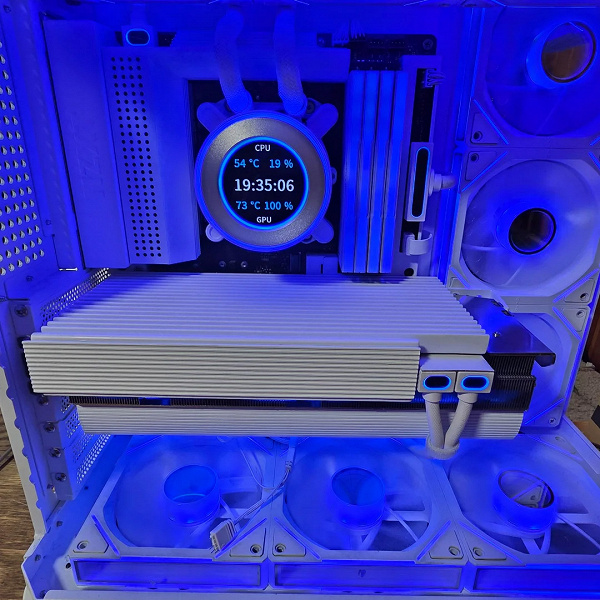 Photo: ComplexSupermarket89
The user trimmed an aluminum block to fit the GPU’s PCB dimensions and installed it instead of the standard backplate. For aesthetic purposes, the heatsink was coated with white automotive paint. 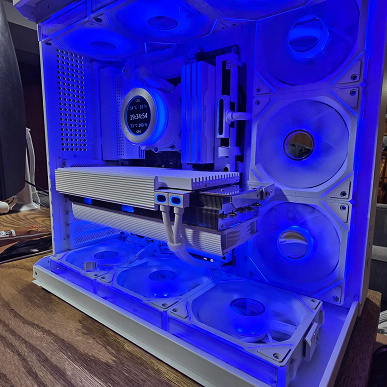 Photo: ComplexSupermarket89
 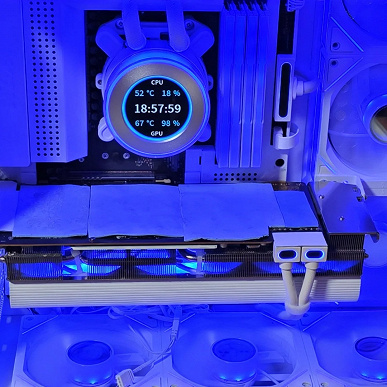 Photo: ComplexSupermarket89
In addition to the gargantuan passive cooling, the enthusiast replaced the original fans with three 92-mm Thermalright RGB fans. Consequently, the GPU’s weight increased by over 1.3 kg. To avoid damaging the PCIe slot or motherboard, a steel bracket was used to reinforce the structure. 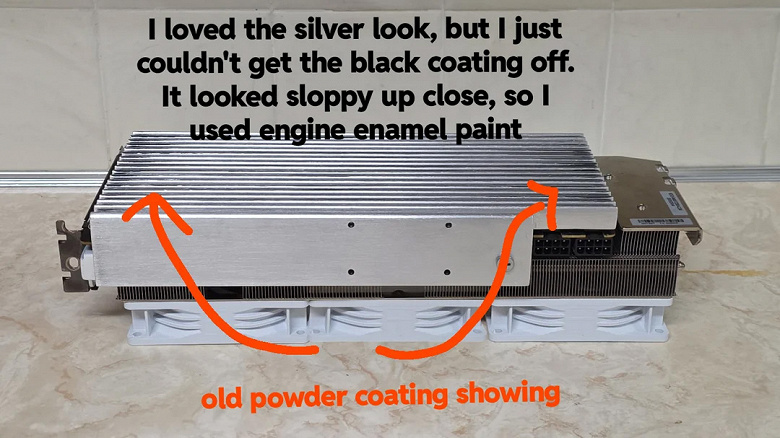 Photo: ComplexSupermarket89
 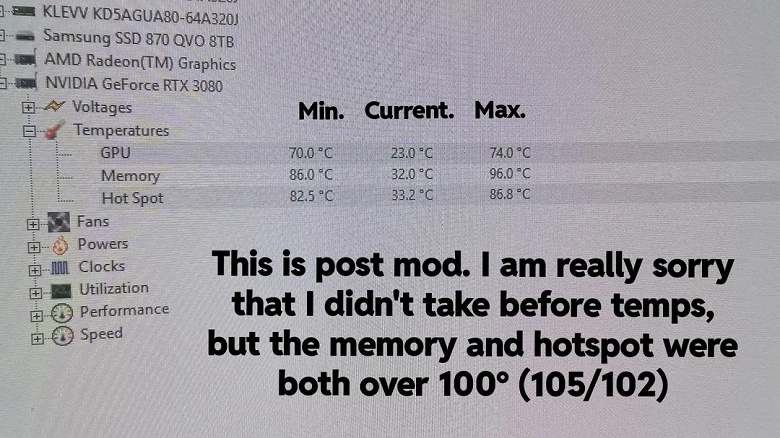 Photo: ComplexSupermarket89
 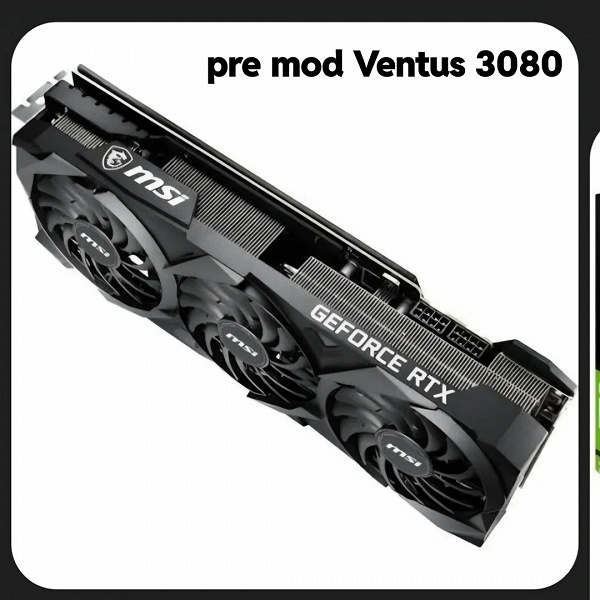 Photo: ComplexSupermarket89
The outcome justified the efforts: the GPU’s temperature (Hotspot) dropped by at least 20 degrees. The memory still heats up to 96-98 °C, but thanks to the large aluminum block’s heat capacity, this process takes significantly longer. The author described the project as a “labor of love” and acknowledged that the modification might appear somewhat foolish for an outdated card, yet it extended the GPU’s lifespan until a new one can be purchased.
Exploring Modern DIY and Commercial Cooling Solutions
In recent times, the focus on keeping GPUs cooler has intensified as manufacturers strive to improve thermal performance amidst increasing power demands and compact designs. Solutions such as advanced liquid cooling systems and hybrid air-liquid systems have surged in popularity. These offer significant advantages over standard air cooling by effectively reducing heat accumulation and allowing for higher throughput without thermal throttling.
Additionally, DIY enthusiasts continue to innovate, often repurposing materials at hand to create custom solutions. This trend not only provides a means to enhance performance but also offers a unique personal touch to the cooling process. Compared to commercial solutions, DIY methods such as the one shared by ComplexSupermarket89 may lack the polish and convenience but often yield comparable or superior thermal performance, especially in bespoke builds.