
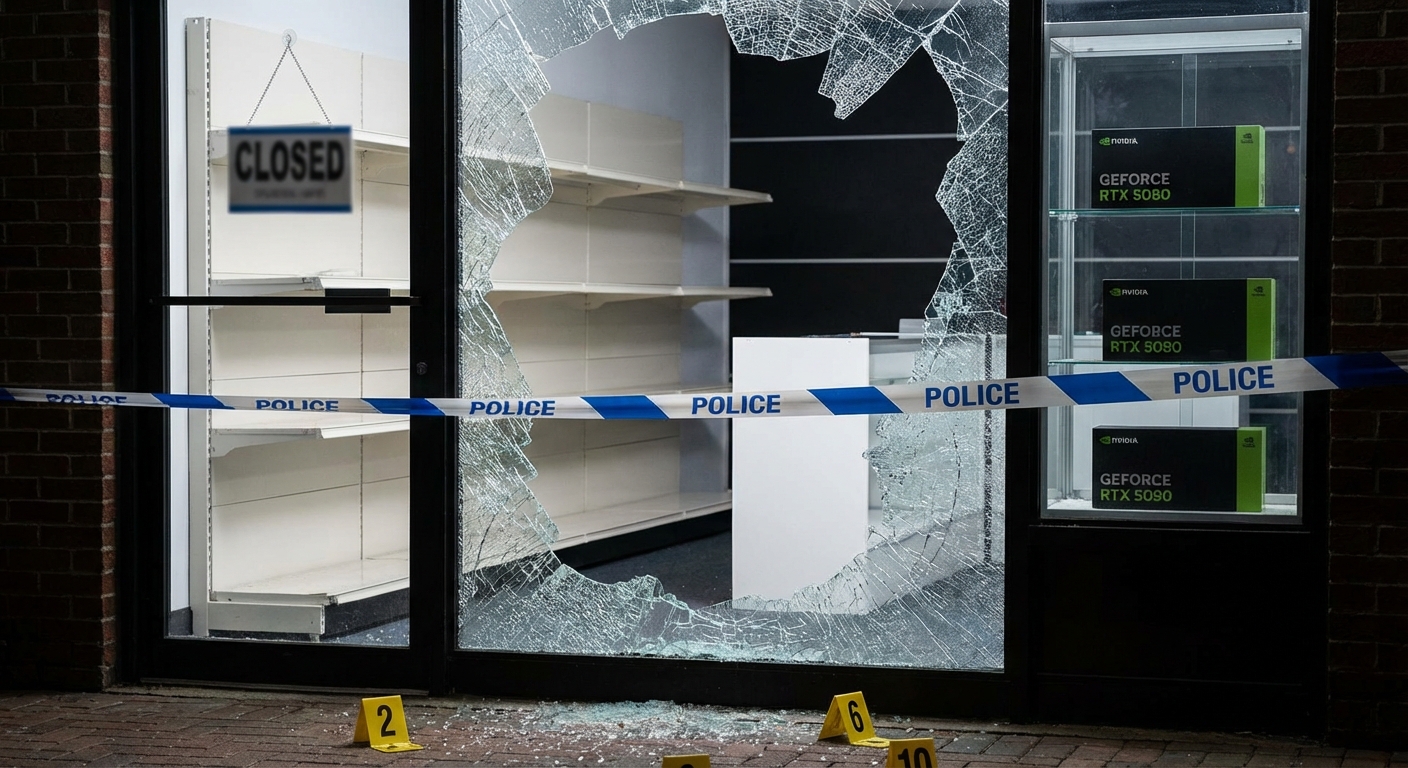



In a striking illustration of the soaring value of high-end technology, a thief in South Korea broke into a computer hardware store in the early morning and stole several next-generation graphics cards worth approximately 20 million won (about $15,000). The stolen goods were specifically NVIDIA’s highly sought-after GeForce RTX 5080 and RTX 5090 models. While police apprehended the suspect within a day, the incident highlights a growing trend of crime targeting PC components, fueled by a volatile global market where demand from the AI industry has pushed prices to unprecedented levels.
A Swift Heist for High-Value Goods
The incident occurred around 5:56 a.m. in Pyeongtaek, Gyeonggi Province, where a man in his 40s forced his way into a computer parts store. According to reports and surveillance footage, the thief specifically targeted the most valuable items available, making off with just three boxes containing the flagship GPUs. The sheer size of the graphics card boxes likely prevented the perpetrator from stealing more inventory. The owner of the store noted that the thief’s knowledge of which models to take suggested a familiarity with the high-value PC hardware market.
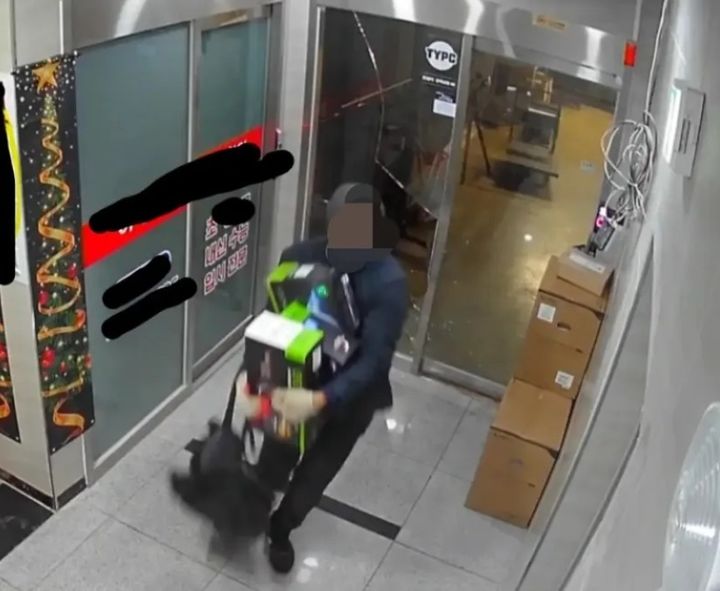
While a five-figure value for only three components might seem excessive, the market conditions of early 2026 make it entirely plausible. The GeForce RTX 5090, which launched with a manufacturer’s suggested retail price (MSRP) of $1,999, is now frequently sold for 65% to 75% above that price due to overwhelming demand from AI developers and persistent memory supply shortages. Similarly, the RTX 5080, with its $999 MSRP, now commands prices closer to $1,250 on the open market. Consequently, a combination of these premium cards can easily reach a retail value of $15,000.
The “Chipflation” Effect and a Burgeoning Black Market
This theft is a direct symptom of a phenomenon dubbed “chipflation,” where the soaring demand for semiconductors, largely driven by the AI boom, has led to a dramatic increase in the price of consumer electronics. Graphics cards, with their powerful processing capabilities, have become essential for more than just gaming, turning them into lucrative targets for criminals. This trend is not isolated, with reports of increasing thefts of valuable components like RAM and GPUs worldwide. Some large retailers have even begun removing these parts from display PCs to prevent theft.
The speed at which the thief began to liquidate the stolen assets is particularly telling. Police investigations revealed that within 24 hours of the crime, the suspect had already sold two of the three stolen graphics cards via an online marketplace. This rapid turnaround points to a robust and ready black market for high-end PC hardware, where buyers who are priced out of the official market are willing to purchase components with questionable origins.
A Look at the Broader Market and Future Implications
In the current GPU landscape, NVIDIA maintains a firm grip on the ultra-high-end segment. While competitors like AMD with its RDNA 4 series and Intel with its Battlemage cards offer strong value in the mid-range, the RTX 5090 remains largely unchallenged at the peak of performance. This market dominance, combined with external supply pressures, ensures that its flagship products remain both expensive and highly desirable.
This incident in South Korea serves as a critical warning for tech retailers globally. As the value of individual components continues to rise, stores may need to rethink their security strategies for storing and displaying high-end hardware. For the industry at large, it underscores the widespread consequences of the current supply chain dynamics, where the line between cutting-edge technology and high-value criminal targets is becoming increasingly blurred.