



A New Chapter in a Shadowy Saga
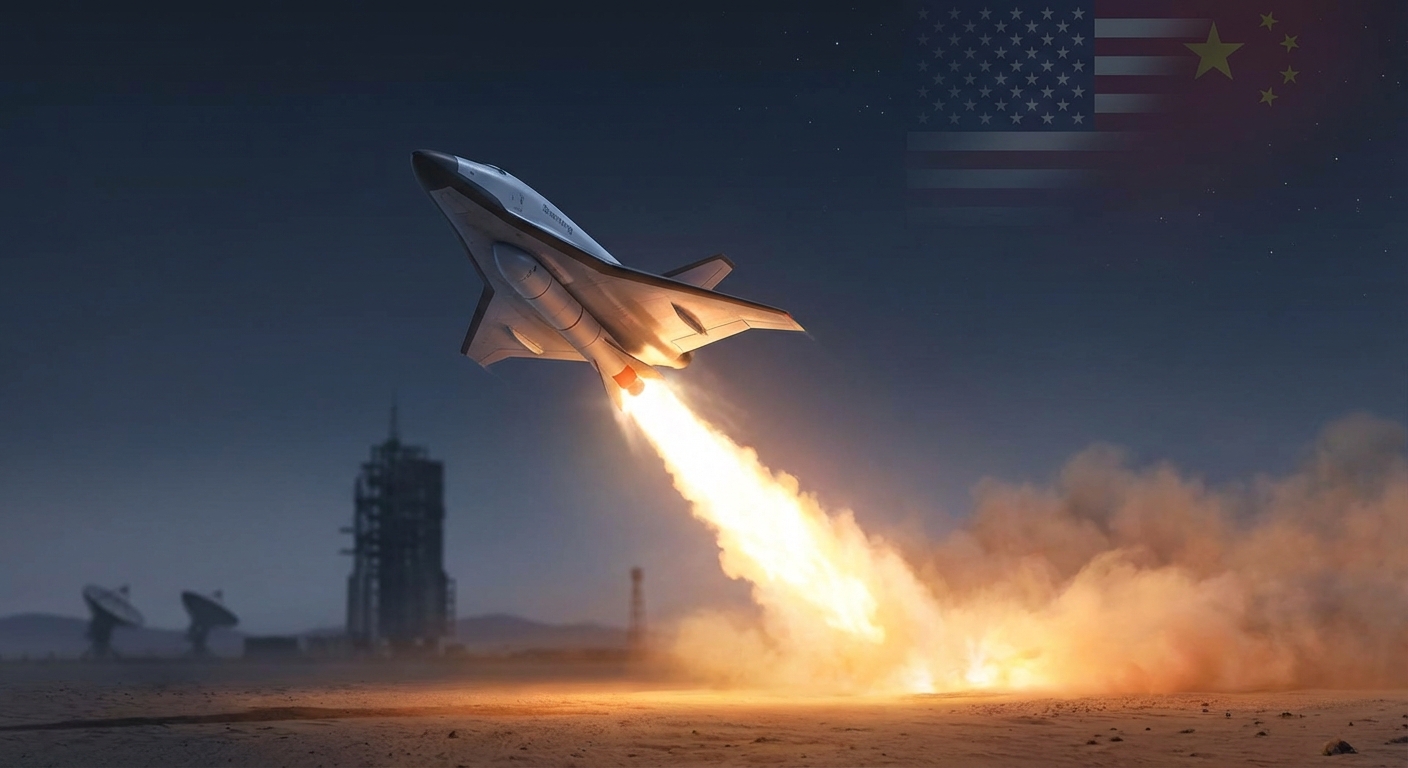
China’s reusable spaceplane, “Shenlong” or “Divine Dragon,” has once again ascended to low-Earth orbit, commencing its fourth clandestine mission. The robotic vehicle was launched on February 6 from the Jiuquan Satellite Launch Center in the Gobi Desert, continuing a program characterized by intense secrecy and speculation. While Chinese authorities have offered only vague statements about testing reusable technologies for the “peaceful use of space,” the program’s activities and its parallel with the U.S. Space Force’s X-37B have captured the attention of global space-watchers.
This fourth flight follows missions in 2020, 2023, and 2024, which have seen progressively longer durations, from an initial two-day trip to flights lasting over 260 days. The specifics of the current mission’s duration and objectives remain, as is tradition, unpublished. 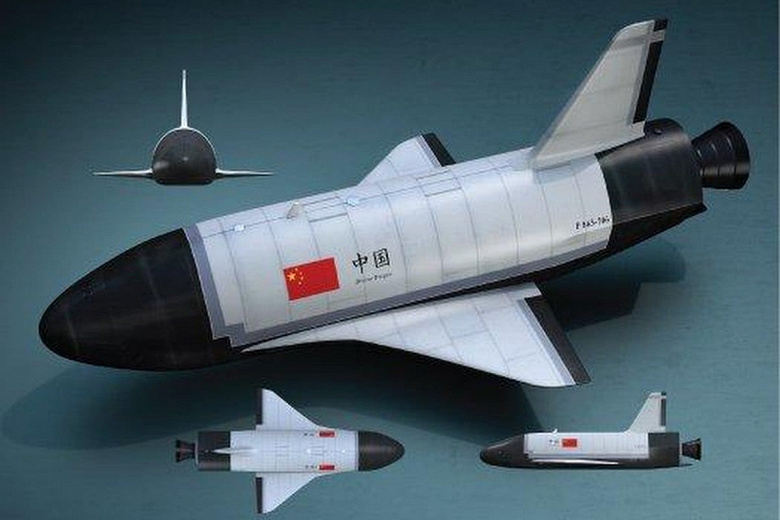
Orbital Maneuvers and Mystery Objects
A key focus of international observation has been Shenlong’s demonstrated ability to deploy smaller objects into orbit. This capability has been consistently noted across all its previous missions, not through official announcements, but via tracking by the U.S. military and amateur astronomers. These deployed objects, or sub-satellites, have shown increasing sophistication. According to the Secure World Foundation (SWF), the object from the first mission had transmission capabilities, while the second was believed to possess its own propulsion system.
Furthermore, Shenlong has been observed performing numerous rendezvous and proximity operations (RPOs), including close maneuvers and docking or capture operations with the satellites it deploys. This is a significant capability that has not been publicly demonstrated by its American counterpart, the X-37B. Such maneuvers are crucial for future space applications like on-orbit satellite servicing, inspection, and debris removal, but also raise concerns about potential co-orbital anti-satellite applications.
The X-37B: A Tale of Two Spaceplanes
It is impossible to discuss Shenlong without mentioning the U.S. Space Force’s X-37B. Both are reusable, uncrewed vehicles designed for long-duration missions, and both are shrouded in secrecy. The X-37B, which first flew in 2010, is slightly larger than Shenlong is believed to be, at 29 feet (8.8 meters) long. While the U.S. military also describes the X-37B’s purpose as testing new technologies, its payloads and most activities are classified.
Analysts see the parallel development of these two spaceplanes as a clear manifestation of the growing strategic competition between the U.S. and China in the space domain. The near-simultaneous launch windows of the two vehicles in late 2023 and early 2024 were noted by U.S. Space Force officials as likely not being a coincidence, highlighting the intense mutual interest in each other’s capabilities.
Future Implications: Technology and Transparency
The development of reusable spaceplanes like Shenlong and the X-37B promises to make space access more affordable and flexible. However, their dual-use nature presents a complex challenge. While the technologies being tested are vital for a sustainable future in space, including satellite maintenance and upgrades, they could also be adapted for military purposes.
Despite speculation, experts at the Secure World Foundation assess that the practical utility of either spaceplane as a kinetic orbital bombardment system is negligible due to payload and orbital limitations. The greater concern lies in their potential for on-orbit reconnaissance or interference with other satellites. This ambiguity is compounded by a lack of transparency; China has not registered Shenlong or its deployed objects with the United Nations, as required by the Registration Convention, leaving commercial and military trackers to fill the information void.