







The European Space Agency (ESA) has initiated the active development phase for its OMLET (Orbit Maintenance via Laser MomEntum Transfer) project, a groundbreaking technology designed to protect satellites from orbital debris. Unlike existing systems that merely track dangerous fragments, this new approach will allow for physical interaction with debris directly from Earth, altering their trajectories to prevent catastrophic collisions. This marks a significant paradigm shift from moving satellites to avoid junk, to moving the junk itself.
A Multi-Billion Dollar Problem: Why Orbit is Becoming a Minefield
The space around our planet is becoming increasingly congested. The number of active satellites is projected to skyrocket from around 12,000 today to over 40,000 by the early 2030s. This proliferation, coupled with millions of untrackable debris fragments left over from previous missions, has turned low-Earth orbit (LEO) into a high-risk environment. The annual economic damage from collisions with space debris is already estimated at $100 million and could exceed $1 billion by 2030. The ultimate threat is the Kessler Syndrome, a theoretical scenario where a single collision triggers a cascading chain reaction of further impacts, creating so much debris that it could render near-Earth space unusable for generations.
OMLET: Surgical Precision from the Ground
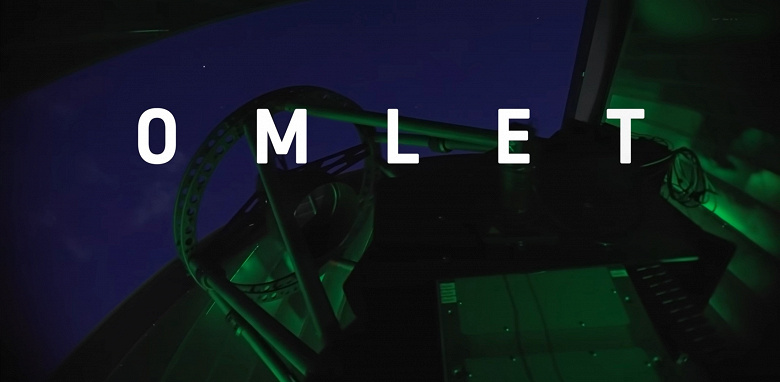
The OMLET system is a powerful ground-based laser platform equipped with adaptive optics and a high-precision guidance system. The facility generates a high-energy beam directed at a specific piece of space debris. The interaction of the laser with the object’s surface creates a minuscule but sufficient impulse-a gentle push from photon pressure-that slightly alters the fragment’s speed and direction. Even this minimal deviation is enough, over time, to ensure the debris safely misses an operational satellite, thereby preventing a potential disaster. The project has officially moved from the requirements definition stage to the design and implementation phase (Phase A/B1), with the work being led by the Institute of Technical Physics at the German Aerospace Center (DLR).
Not Just OMLET: The Race to Clean Up Space
ESA’s laser is not the only solution being developed to tackle the orbital debris problem. The approaches vary, ranging from direct contact to other forms of remote interaction. Among the most notable alternatives are:
- Robotic Janitors: ESA’s ClearSpace-1 mission, planned for 2028, will test an in-orbit solution by using a four-armed robot to capture a defunct satellite component and drag it down to burn up in the atmosphere.
- Harpoon and Net: The Airbus-led RemoveDEBRIS mission has successfully tested capturing debris with a harpoon and a net in orbit.
- Competing Laser Concepts: Japanese startup EX-Fusion is also developing a ground-based laser. Their approach aims to repeatedly pulse a laser at debris to slow it down, causing its orbit to decay until it re-enters and is destroyed by the atmosphere. A key advantage of ground-based systems like OMLET and EX-Fusion’s is the ease of maintenance and upgrades compared to space-based hardware.
The Future of Orbital Safety: Prevention Over Cure
The OMLET project is a critical component of ESA’s wider Zero Debris Charter, an ambitious initiative aiming to make space missions neutral in their debris impact by 2030. If successful, ground-based laser nudging could become a standard tool for a future space traffic management system, proactively clearing orbital paths rather than reactively maneuvering valuable assets. This shift towards prevention is vital, as ensuring the long-term sustainability of near-Earth orbit is not just a technical challenge-it is fundamental to the future of space exploration and the preservation of the critical satellite infrastructure that powers our communications, navigation, and weather forecasting.