





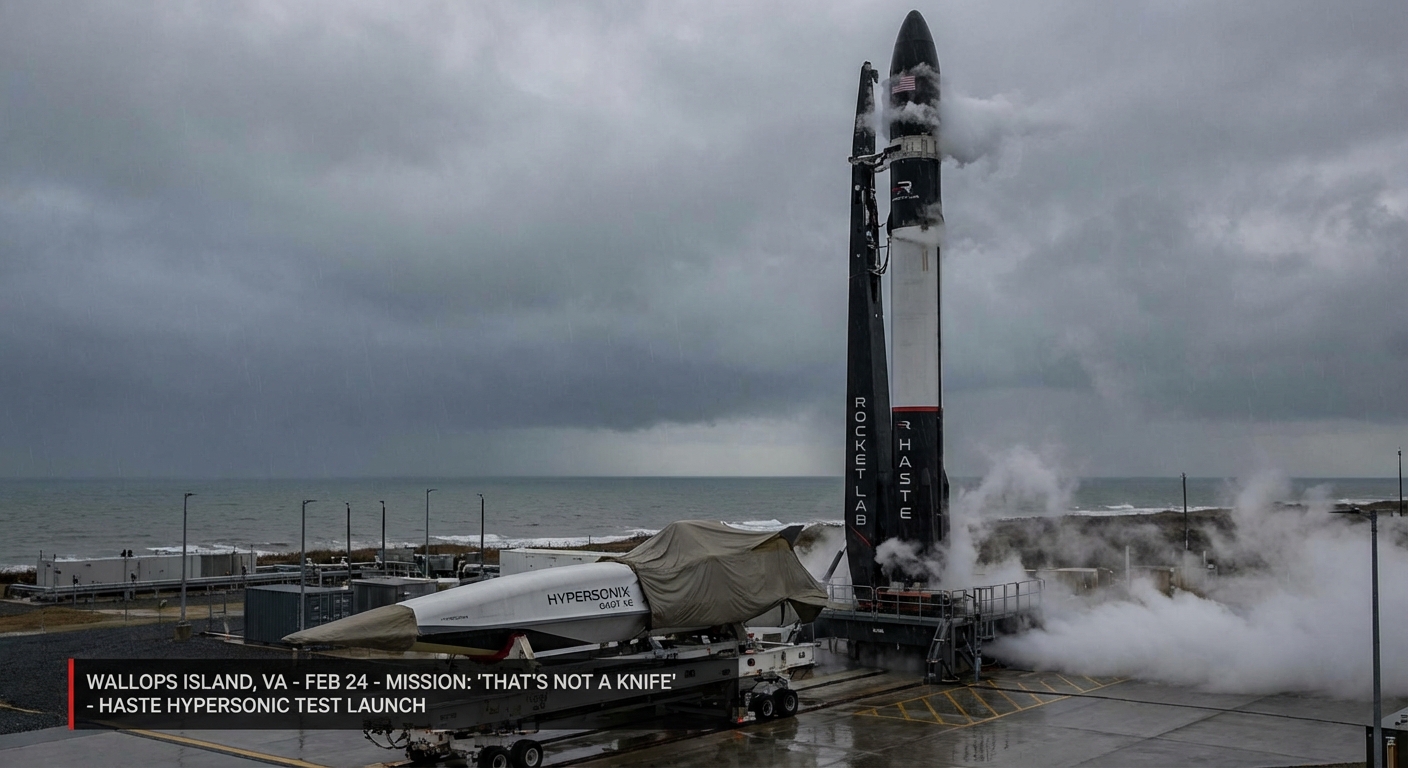

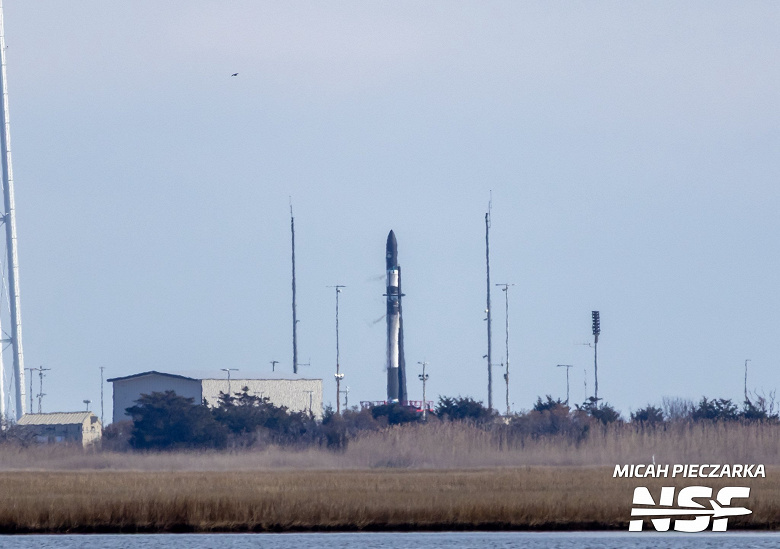
Rocket Lab’s HASTE rocket is poised for a significant launch from Wallops Island, Virginia, for a mission aptly named “That’s Not a Knife.” Despite the rocket being fully fueled and having completed its wet dress rehearsal, the mission faces a potential delay due to adverse weather, with forecasts predicting rain and possible blizzard conditions. The launch, originally anticipated for February 23, now has a window opening on February 24, pending clearer skies. This mission is set to deploy the DART AE hypersonic vehicle for the U.S. Department of Defense’s Defense Innovation Unit (DIU), marking a critical step in accelerating hypersonic technology development for the United States and its allies.
A Technological Breakthrough in the Sky
The primary payload, DART AE, is an advanced vehicle developed by the Australian company Hypersonix. It represents a leap in manufacturing and propulsion, featuring the world’s first fully 3D-printed airframe made from high-temperature alloys. The vehicle is 3 meters (approx. 9.8 feet) long and weighs 300 kg. At its core is the SPARTAN, a fifth-generation scramjet engine that is also 3D-printed. Unlike traditional rockets, this air-breathing engine ingests oxygen from the atmosphere and is powered by clean-burning hydrogen, producing zero carbon dioxide emissions. A key feature of the SPARTAN engine is its ability to be turned on and off multiple times in flight, allowing for non-ballistic trajectories and unique maneuverability. The mission profile involves the HASTE rocket boosting the DART AE to approximately Mach 5, at which point the scramjet will ignite and accelerate the vehicle to its target speed of Mach 7 over a range of up to 1,000 kilometers (approx. 621 miles).
HASTE: A Platform for a New Era of Testing
The HASTE (Hypersonic Accelerator Suborbital Test Electron) rocket is a suborbital variant of Rocket Lab’s proven Electron launch vehicle, specifically adapted for hypersonic flight testing. It incorporates many of the same technologies, including carbon fiber structures and 3D-printed engines, but features a modified upper stage and a larger payload capacity of up to 700 kg (1,540 lbs). This mission is part of the DIU’s Hypersonic and High-Cadence Airborne Testing Capabilities (HyCAT) program, which aims to leverage commercial launch providers to increase the frequency and affordability of testing. The “That’s Not a Knife” launch will be Rocket Lab’s fourth hypersonic test mission in under six months, demonstrating a significant increase in launch tempo for this critical defense sector.
Strategic Importance and Market Context
The push for more rapid and accessible hypersonic testing comes as the U.S. seeks to advance its capabilities amid growing global competition. The Pentagon has allocated over $6.9 billion to hypersonic weapons development for fiscal year 2025, signaling the technology’s high priority. While the market has traditionally been dominated by defense giants like Lockheed Martin, Raytheon, and Northrop Grumman, agile commercial companies like Rocket Lab are carving out a crucial niche. They offer a faster, more cost-effective path for testing and validation, addressing a bottleneck created by the limited availability of traditional government test ranges.
A Look to the Future
A successful flight for the DART AE will have far-reaching implications. It would serve as a crucial validation of Hypersonix’s innovative 3D-printed, scramjet-powered vehicle design and solidify Rocket Lab’s HASTE as the premier commercial platform for hypersonic testing. In the long term, the technologies being proven in missions like this could pave the way for a new generation of applications, from ultra-fast, point-to-point global travel to more responsive and cost-effective methods for launching satellites into orbit.