





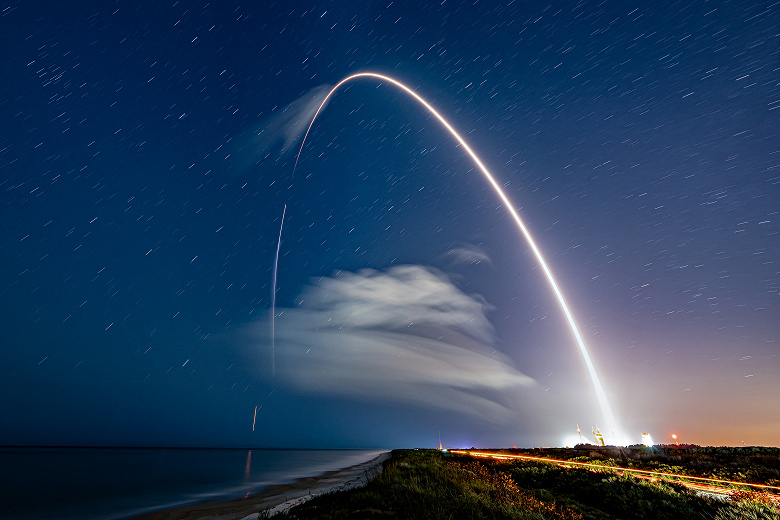
In a powerful demonstration of its operational prowess, SpaceX has successfully launched two more batches of its Starlink satellites, adding 53 spacecraft to its burgeoning internet constellation. The back-to-back missions were highlighted by a new industry record for rocket reuse, with one of the Falcon 9 boosters completing its 33rd successful flight and landing. This achievement underscores the maturity of SpaceX’s reusable rocket technology, a cornerstone of its strategy to reduce launch costs and increase access to space.
A Record-Setting Day on Two Coasts
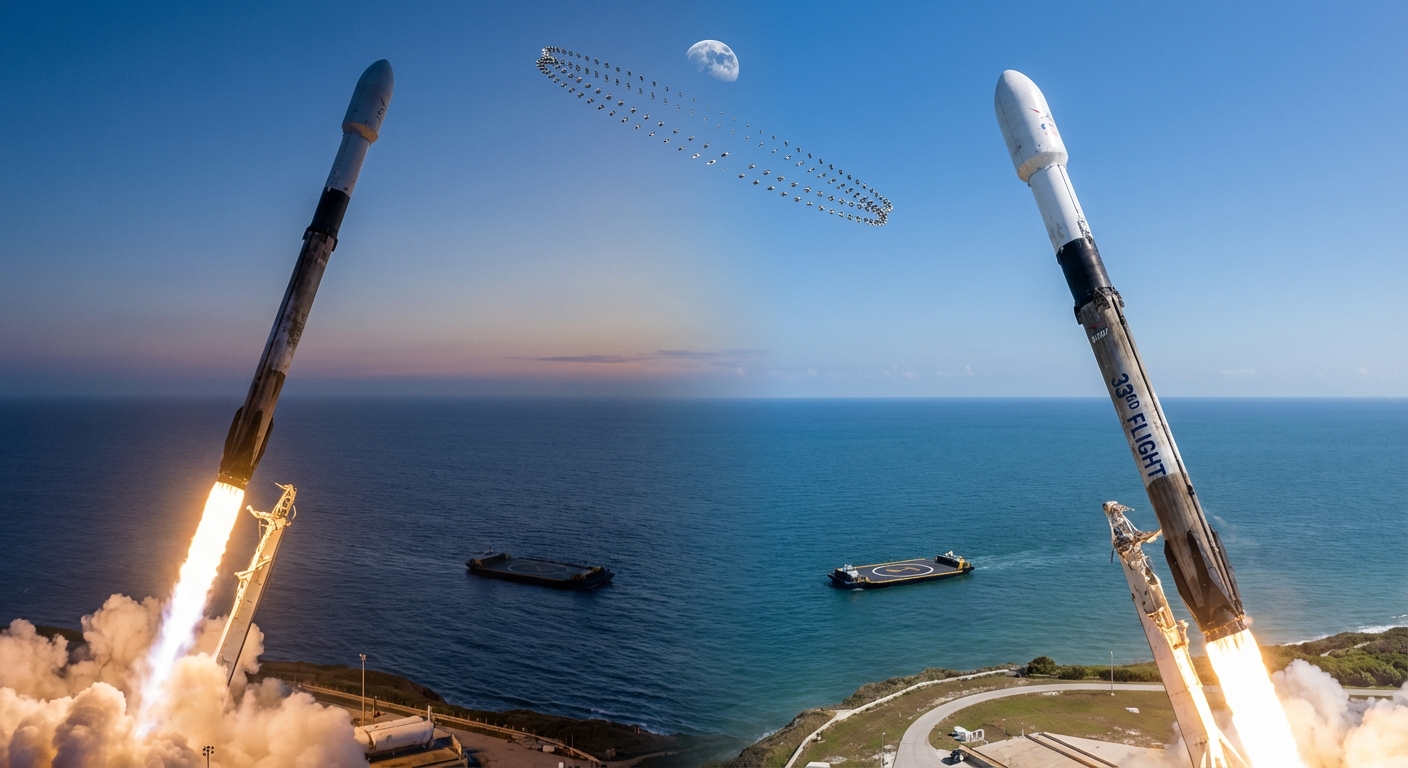
The first launch of the day took place from Space Launch Complex 4 East (SLC-4E) at Vandenberg Space Force Base in California. A Falcon 9 rocket, powered by the first-stage booster B1063 on its 31st mission, lifted 25 Starlink satellites into orbit. Following stage separation, the booster executed a flawless landing on the autonomous droneship Of Course I Still Love You, stationed in the Pacific Ocean.
Later, from the opposite side of the country, another Falcon 9 rocket ascended from Space Launch Complex 40 (SLC-40) at Cape Canaveral Space Force Station in Florida. This mission was carried by the veteran booster B1067, which set a new reusability record with its 33rd flight. It delivered 28 Starlink satellites before returning for a successful landing on the A Shortfall of Gravitas droneship in the Atlantic.
The Economics of a Reusability Revolution
The relentless pace of Falcon 9 flights-these being the 21st and 22nd of the year-is made possible by the reusability of its first stage, which accounts for approximately 60% of the rocket’s total manufacturing cost. By recovering and reflying these boosters dozens of times, SpaceX has fundamentally altered the economics of space launch, enabling a launch cadence that was previously unimaginable. This industrial-scale approach has allowed SpaceX to launch the vast majority of all payload mass delivered to orbit in recent years.
Starlink’s Unprecedented Growth
With these latest additions, SpaceX’s Starlink megaconstellation now features more than 9,700 active satellites in low Earth orbit. The network provides high-speed, low-latency internet to millions of subscribers across the globe, particularly in rural and underserved areas. The company has approval to launch up to 12,000 satellites and has filed for permission for tens of thousands more, signaling its ambition to create a truly global communications ecosystem.
A Look at the Competitive Landscape
While Starlink is the clear leader, it is not without competition. Amazon’s Project Kuiper (recently rebranded Amazon Leo) is poised to begin commercial service in 2026, backed by a $10 billion investment and the power of Amazon Web Services. Other players like Eutelsat OneWeb and Telesat Lightspeed are primarily targeting enterprise and government customers. However, SpaceX’s significant head start in both satellite deployment and launch capability presents a formidable barrier to entry for its rivals.
What’s Next for SpaceX and Starlink?
Looking ahead, SpaceX plans to continue its aggressive launch schedule to expand Starlink’s capacity and coverage. The revenue generated by the satellite internet service is a critical funding source for the company’s ultimate goal: the development of its next-generation Starship vehicle and the colonization of Mars. With Starship, SpaceX aims to deploy larger, more capable V3 Starlink satellites, which will dramatically increase the network’s capacity and enable new services like direct-to-cell phone connectivity.