



Google Forges ‘Digital Ring’ Around Southern Hemisphere with New Subsea Cables
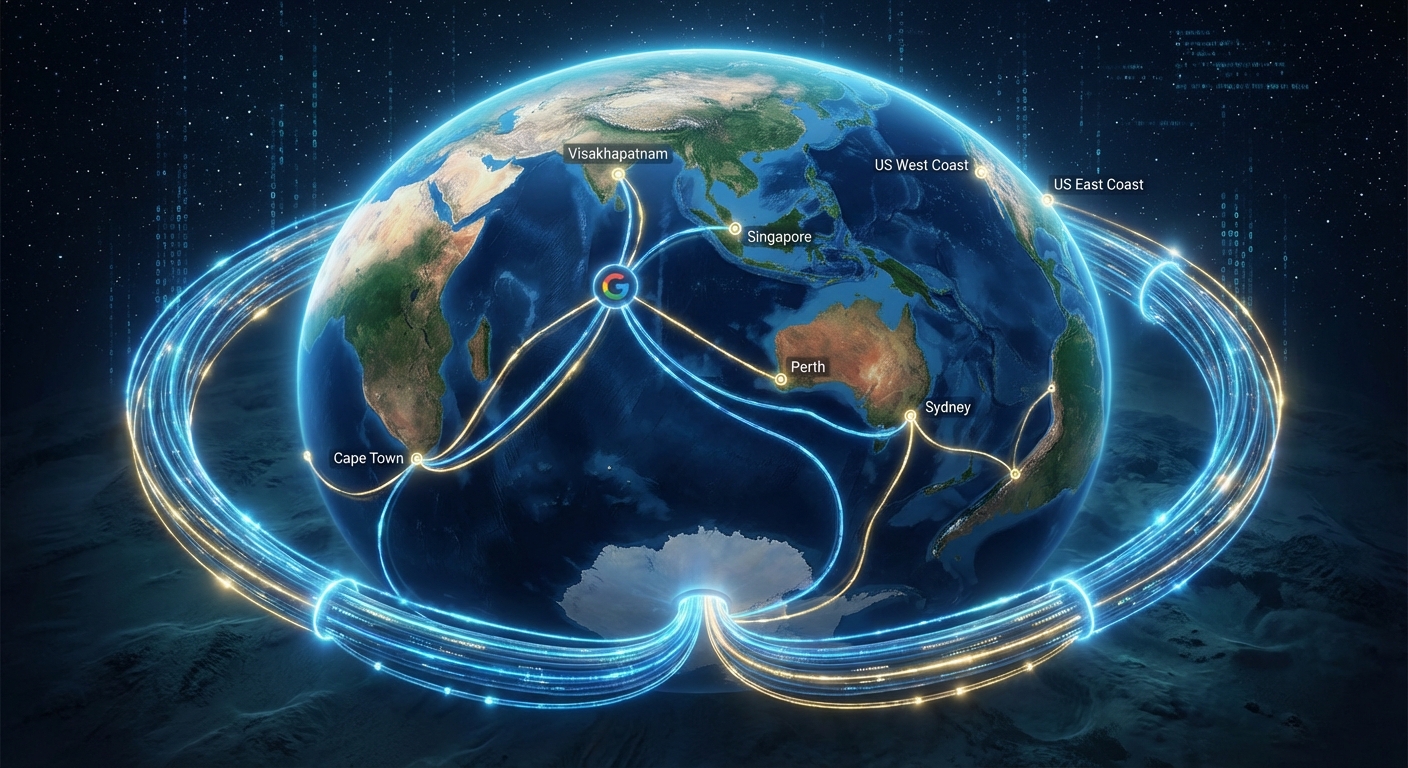
Google has officially announced a large-scale project called “America-India Connect,” a multi-billion dollar initiative to build a network of new subsea and terrestrial fiber-optic lines connecting the United States, Asia, Australia, and Africa. The primary goal is to create high-speed, redundant data transmission routes to ensure the stable operation of internet and AI services, particularly in the Southern Hemisphere. A key component of this new infrastructure will be the city of Visakhapatnam on the east coast of India, positioning it as a central communications hub.
The initiative, part of a $15 billion investment in India over five years, aims to bolster network resilience and capacity as the demand for cloud computing and AI workloads accelerates. This move is designed to reduce dependency on traditional data traffic chokepoints and enhance the diversity of routes between India and the US.
A ‘Digital Ring’ for Global Connectivity
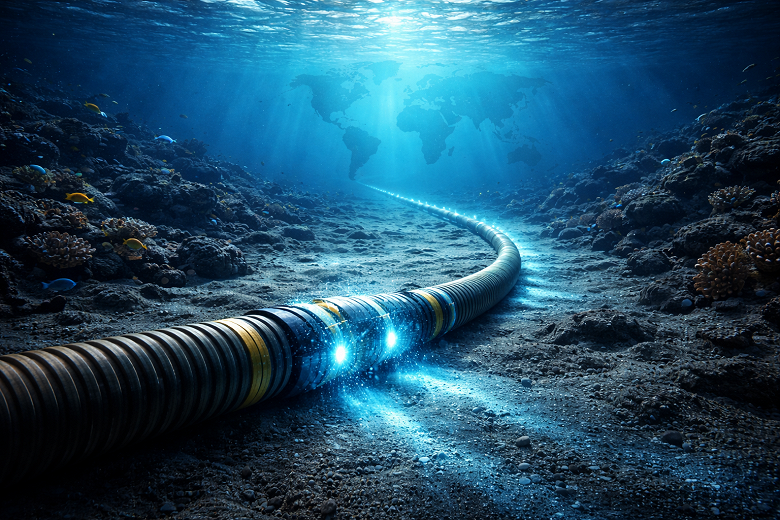
The new infrastructure creates what can be described as a “digital ring” around the planet, allowing traffic to be rerouted through alternative paths, significantly increasing the fault tolerance of the global network. The project consists of several key routes:
- India – South Africa Link: A new cable will connect Visakhapatnam and Chennai with South Africa. This branch will merge with the existing Equiano and Nuvem systems, creating a direct high-speed corridor from the eastern coast of the U.S. to India via Africa.
- Pacific Trunk Line via Singapore: Visakhapatnam will gain a direct link to Singapore, which, through the Bosun and Tabua systems, will connect the U.S. West Coast with India via Australia and the South Pacific.
- Mumbai-Australia Pacific Route: A cable will be laid from Mumbai to Western Australia. In conjunction with the TalayLink and Honomoana systems, this will form another independent path between India and the U.S. West Coast.
Strategic Importance and Geopolitical Context
Currently, a significant portion of data traffic from the U.S. to India passes through the Red Sea, a region that has highlighted the vulnerabilities of subsea cables. Recent damage to major cables in the area has caused significant internet disruptions, underscoring the critical need for route diversification. Google’s new configuration bypasses these traditional chokepoints, ensuring more stable and resilient connectivity. This strategic diversification is crucial for maintaining a reliable network, especially for a region that has historically experienced high-impact outages.
Fueling AI and Cloud Growth in India
This massive infrastructure investment is directly linked to Google’s plan to establish a major AI hub in Visakhapatnam. The project includes the development of a gigawatt-scale data center campus to handle the immense computing power required for AI and machine learning workloads. By ensuring high-capacity, low-latency connectivity, Google is laying the groundwork for India to become a significant player in the global AI landscape, supporting the country’s surging demand for digital services.
The Competitive Undersea Landscape
Google is one of the largest private investors in subsea fiber networks, but it is not alone. Other tech giants like Meta, Microsoft, and Amazon are also heavily investing in their own subsea cable systems to support their global cloud services. Meta’s 2Africa cable, for instance, is another massive project aimed at encircling the African continent. This competitive environment is leading to a rapid expansion of the global internet backbone, driven by the insatiable demand for data from cloud and AI services.
A Look into the Future
The “America-India Connect” initiative represents a significant shift in global data infrastructure, with long-term implications for the digital economy of the Southern Hemisphere. By creating new, resilient data corridors, Google is not only securing its own services but also fostering economic growth and digital inclusion in India, Africa, and Southeast Asia. The establishment of Visakhapatnam as a major international gateway will diversify India’s digital backbone, enhance its economic security, and pave the way for a new era of AI-driven transformation.