





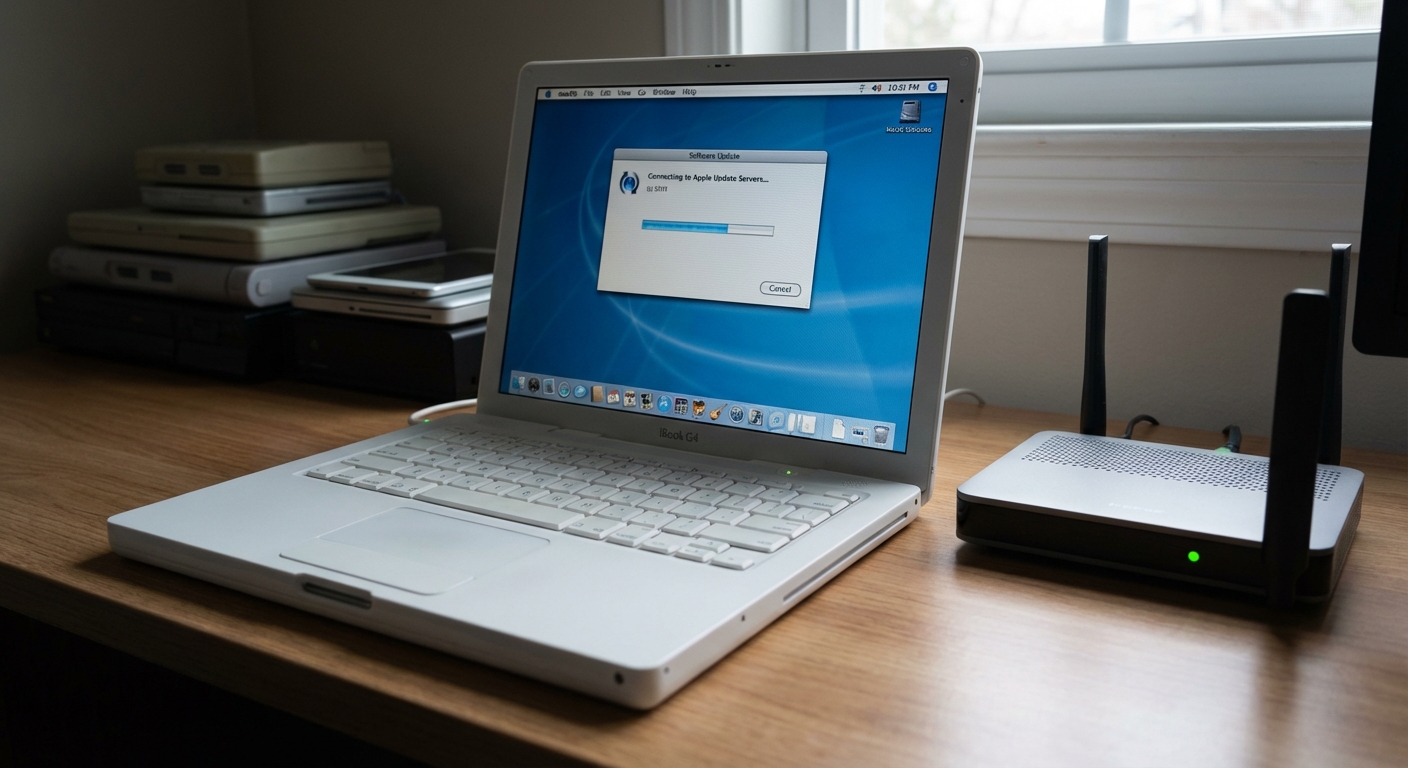

Despite being released over two decades ago in 2003, the Apple iBook G4 can, it turns out, still connect to Apple’s official servers and download software updates. While official security support for this model ceased back in 2011, Apple continues to store and distribute old patches for users who decide to fire up the classic laptop decades later. This highlights a long-term support philosophy that stands in stark contrast to practices seen elsewhere in the tech industry.
A Surprising Discovery in the Tech Community
The observation gained traction when users noted that the vintage notebook could successfully fetch updates for its operating system, a version of macOS more than twenty years old. It’s crucial to distinguish this from active support; these are not new security patches but the final updates released for the platform. Still, the mere availability of these files on official servers is remarkable. For comparison, attempting to update a system like Windows 98 through Microsoft’s official servers today would be unsuccessful, as that support infrastructure was decommissioned in 2011. While community-run projects to restore access exist, they are not official.
Unexpected Modern-Day Compatibility
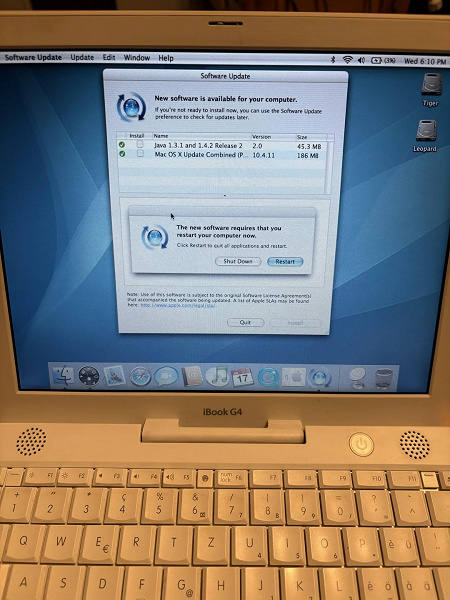
Beyond accessing legacy updates, users also pointed out another significant fact: the iBook G4 can connect to modern Wi-Fi networks without any hardware modifications. This is possible because its original AirPort Extreme card supports the 802.11g standard and, more importantly, the WPA2 security protocol. While WPA3 is the current standard, WPA2 remains widely used on most modern routers, allowing the 20-year-old machine to get online with surprising ease.
Why Apple Maintains This Digital Archive
Apple’s decision to keep these old update servers operational raises questions about the company’s strategy. Several factors could be at play. Firstly, it reinforces the brand’s image of longevity and reliability, suggesting that its products, even when obsolete, remain part of a stable ecosystem. Secondly, the cost of hosting these relatively small files on a modern content delivery network (CDN) is likely negligible for a company of Apple’s scale. This practice effectively creates a functional digital archive, invaluable for collectors, enthusiasts, and researchers. This long-term accessibility provides a level of confidence that even as current devices age, a pathway to restore them to their original final state may remain open for years to come, showcasing a commitment to product history that is rare in the fast-paced tech world.