

A Milestone in Sustainable Energy Storage
In a significant advancement for sustainable energy, Chinese researchers have developed the first practical organic lithium battery, boasting high energy density and remarkable resilience to extreme temperatures. A team led by Professor Xiong Yinghua of Tianjin University and Professor Huang Fei of South China University of Technology introduced their work in the journal Nature, presenting a technology with the potential to reduce reliance on traditional, resource-intensive battery materials. Unlike conventional lithium-ion batteries that depend on inorganic cathodes containing cobalt or nickel, this new battery utilizes an innovative n-type conducting polymer, poly(benzodifurandione) (PBFDO), as its cathode material. This approach leverages abundant, environmentally friendly organic materials, addressing growing concerns over the scarcity and ethical sourcing of metals like cobalt.
Technical Specifications and Performance
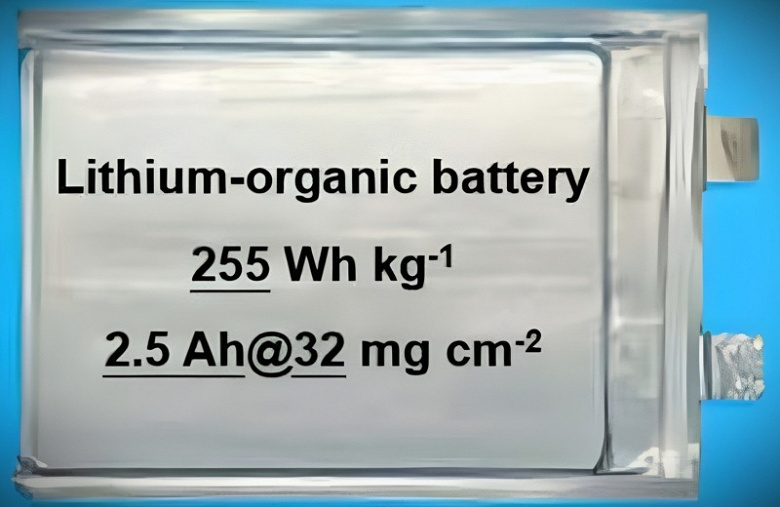
The prototype demonstrates performance metrics that position it as a viable competitor to mainstream lithium-ion technologies. The researchers fabricated 2.5 Ah practical pouch cells that achieved an energy density exceeding 250 Wh/kg, a figure comparable to many commercial lithium-ion batteries which typically range from 250-300 Wh/kg. What sets this organic battery apart is its extraordinary operational temperature range, functioning effectively from a frigid -70°C to a blistering 80°C. This far surpasses the capabilities of standard Li-ion batteries, which often see significant performance degradation below -20°C and above 60°C. The PBFDO polymer is key to this success, enabling fast lithium-ion transport, high electronic conductivity, and limited solubility-factors that have previously hindered the practical application of organic batteries.
Beyond Performance: Safety and Flexibility
The organic nature of the battery offers significant advantages in safety and mechanical durability. The research team reported that the cells maintained their structural integrity and full capacity when subjected to bending, stretching, and compression. Furthermore, the battery passed rigorous safety trials, including needle puncture tests, without deforming or experiencing thermal runaway-a critical safety risk in traditional lithium-ion batteries. This inherent flexibility and safety make the technology a promising candidate for future applications in flexible electronics and wearable energy storage devices.
The Broader Context and Future Outlook
Research into organic batteries is a global effort, with teams in Japan, Korea, and Europe exploring sustainable alternatives to metal-based chemistries. However, previous efforts have largely been confined to materials-level improvements without producing robust, high-density practical cells. This work is notable for demonstrating a functional prototype with performance that rivals conventional systems. While still in the prototype stage, this organic battery technology aligns with the broader industry trend of diversifying energy storage chemistries to meet sustainability and performance goals. By eliminating costly and ethically problematic metals like cobalt and nickel, this new organic pathway could lead to cheaper, safer, and more environmentally friendly batteries for everything from electric vehicles to grid-scale storage.