



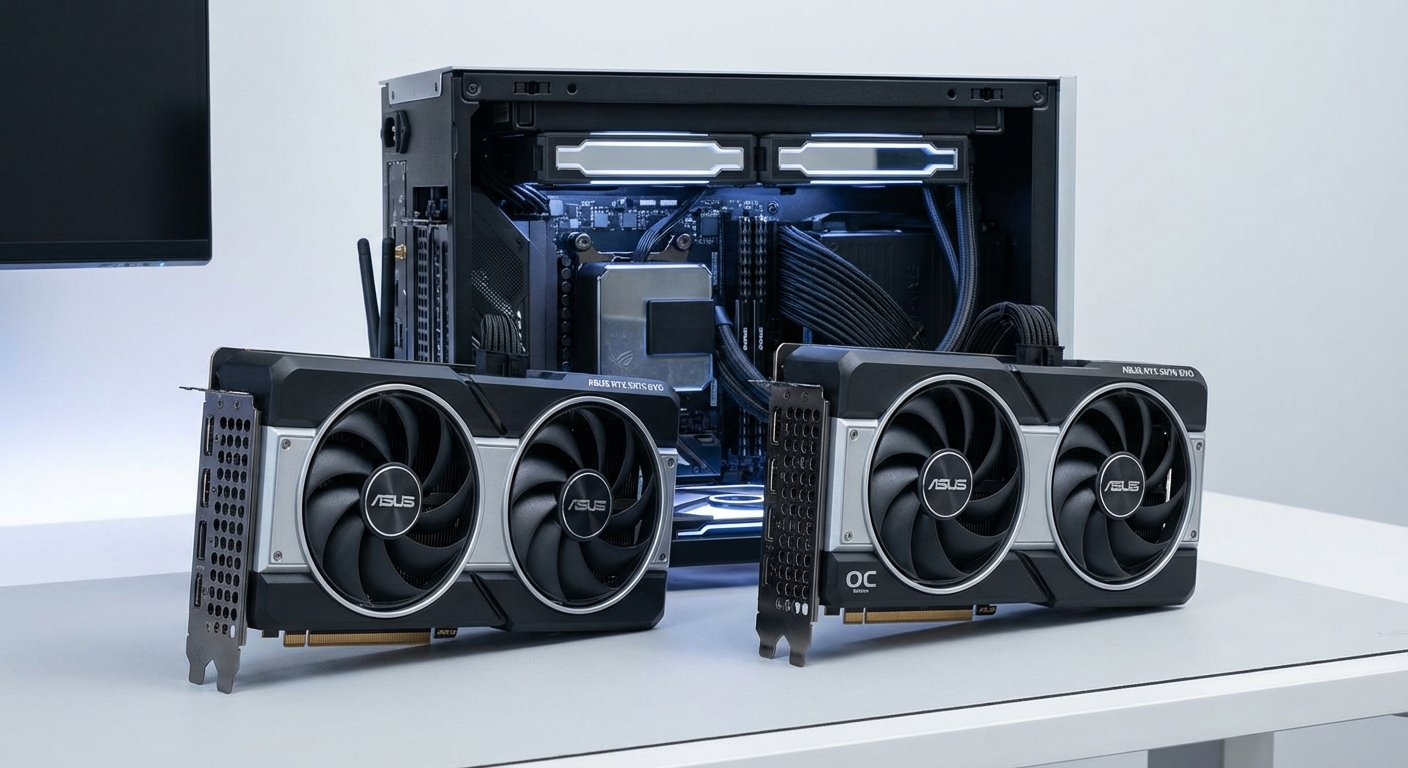

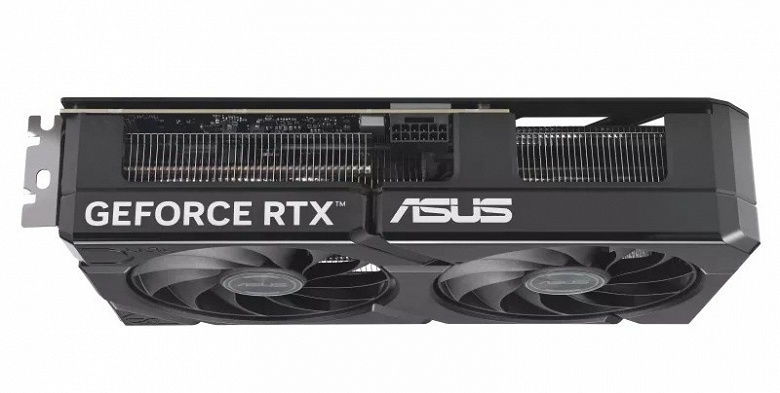
ASUS has officially launched a new series of two graphics cards, the RTX 5070 Evo and RTX 5070 Evo OC, specifically targeting the growing market for compact Small Form Factor (SFF) and ITX builds. These cards deliver next-generation performance in a condensed design, making high-end gaming more accessible for space-constrained systems. The key innovation lies in a significant reduction in size compared to previous Dual models, with dimensions shrinking from 249 x 126 x 50.6 mm to a more accommodating 229 x 120 x 50 mm. The card’s thickness has also been trimmed from 2.53 to a clean 2.5 slots, enhancing compatibility within tight enclosures.
Engineered for Compact Power
The trend towards powerful yet compact PCs has been gaining momentum, with enthusiasts seeking desktop-level performance in smaller, more aesthetic packages. NVIDIA has actively supported this movement with its SFF-Ready initiative, which helps builders identify components that are guaranteed to fit in compact cases. The new ASUS RTX 5070 Evo cards are a direct response to this demand, providing a powerful solution without the large footprint of typical high-end GPUs. This allows for the creation of potent gaming machines that can comfortably fit in a living room entertainment center or on a small desk.
Advanced Cooling in a Smaller Footprint
To manage thermals within the smaller chassis, ASUS has equipped the RTX 5070 Evo series with a dual axial-tech fan system featuring more robust blades than standard models. This design is engineered to maximize airflow and pressure on the heatsink. A critical feature for quiet operation is the inclusion of 0dB technology, which allows the fans to stop spinning entirely under light workloads when the GPU temperature is low, resulting in a completely silent experience. Further enhancing heat dissipation, the card incorporates a perforated backplate that allows hot air to escape more efficiently.
Performance and Power Specifications
The RTX 5070 Evo series comes in two variants to cater to different performance needs. Both models are powered by a single 16-pin 12V-2×6 connector, with ASUS recommending a 750W or 850W power supply for stable operation. The clock speeds for the two models are as follows:
- RTX 5070 EVO: Base clock of 2512 MHz / Boost clock up to 2542 MHz.
- RTX 5070 EVO OC Edition: Base clock of 2542 MHz / Boost clock up to 2572 MHz.
Market Context and Future Outlook
The release of the ASUS RTX 5070 Evo series places it in direct competition with other manufacturers who are also developing compact solutions for the latest generation of GPUs. Competitors like Gigabyte with their Windforce and Aero lines, and MSI with its Ventus series, are also vying for a share of the SFF market. The introduction of powerful, compact cards like the RTX 5070 Evo is significant for the industry. It signals a shift away from the belief that top-tier gaming performance requires a massive tower PC. As these smaller, more efficient cards become more prevalent, consumers can expect to see a new wave of innovative and powerful pre-built and custom SFF systems that don’t compromise on performance.