


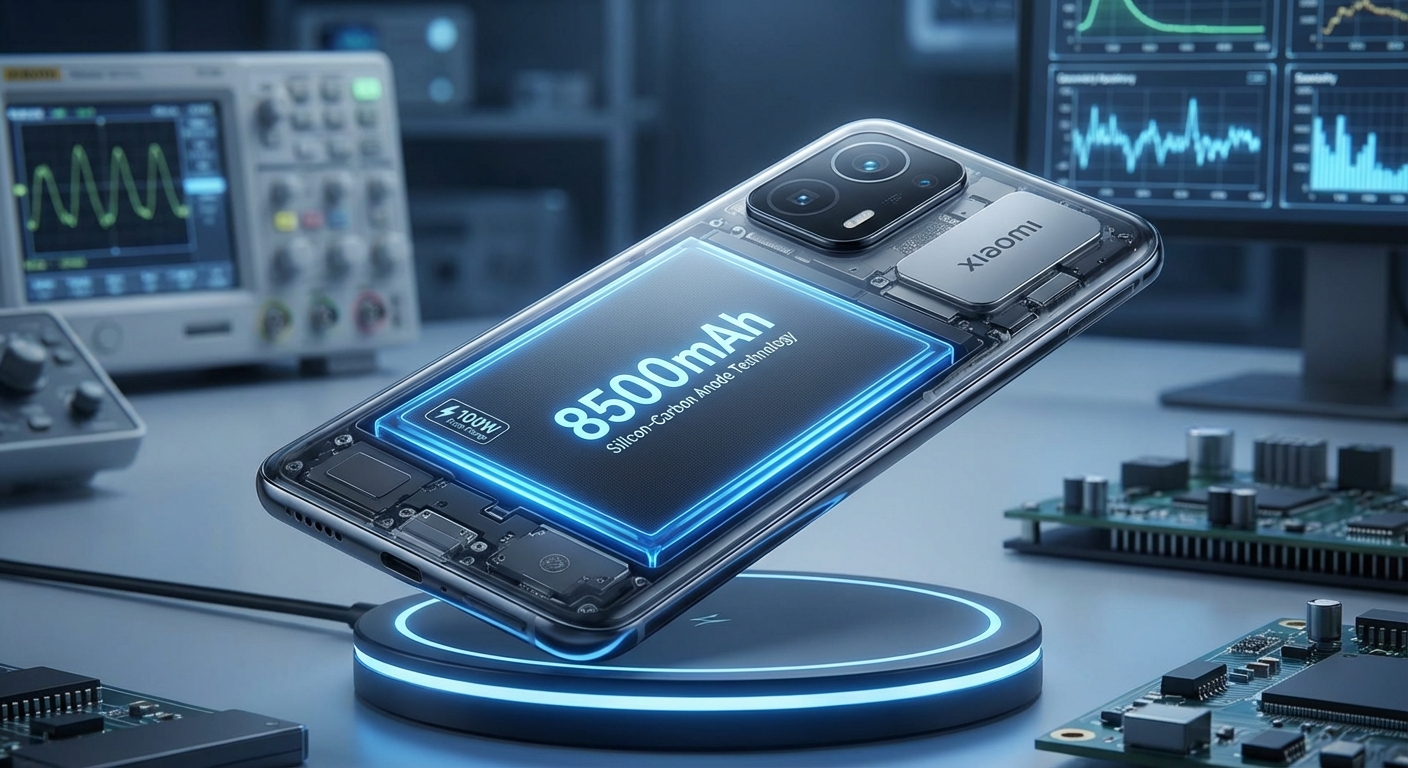

Xiaomi has initiated trial production of two groundbreaking single-cell silicon batteries with typical capacities of 8000mAh and 8500mAh, a move poised to redefine battery life expectations for flagship smartphones. According to the well-regarded leaker Digital Chat Station, these next-generation power cells are also expected to support 100W fast charging, promising to refill these massive reserves with impressive speed. The insider specified that the batteries are destined for “new flagship phones with high-performance single-chip systems,” hinting at their integration into top-tier devices.
The Silicon Anode Revolution
The core of this innovation lies in the use of silicon anode technology. Unlike traditional lithium-ion batteries that rely on graphite anodes, silicon can hold significantly more lithium ions, leading to a much higher energy density. This allows for a substantial increase in capacity without a proportional increase in physical size, a critical advancement as phone designs remain slim. While the theoretical capacity of silicon is about ten times that of graphite, managing its tendency to swell during charging cycles has been a major engineering hurdle. Xiaomi’s move, along with competitors like Honor and OnePlus, indicates that the industry is making significant strides in overcoming these challenges.
Market Context and Future Devices
When a user commented that the new battery capacities were smaller than their Redmi Turbo 5 Max, the insider clarified, “These two devices – are of a higher class, with a more massive corpus.” This suggests the batteries are not for mid-range phones but for premium flagships, possibly a new “Max” or “Ultra” model where a slightly thicker or heavier build is acceptable in exchange for multi-day endurance. Leaks already point towards a potential Xiaomi 17 Max featuring an 8000mAh battery, a flat display, and a powerful Snapdragon 8 Elite Gen 5 processor. This aligns with the trend of Chinese manufacturers pushing battery boundaries, with some brands already testing cells with up to 30% silicon content.
A user commented: “The battery is not that big, even smaller than my recently purchased Redmi Turbo 5 Max.” The insider replied: “These two devices – are of a higher class, with a more massive corpus.”
A Glimpse into the Future
If Xiaomi successfully integrates these 8000-8500mAh batteries into its 2026 flagships, it could trigger a significant shift in the smartphone market. For years, battery life has been an incremental game, but a jump to such capacities would represent a monumental leap, potentially ending “battery anxiety” for good. This would put immense pressure on competitors like Samsung and Apple, who have been more conservative with battery technology, to accelerate their own research into silicon anodes and other next-gen solutions. The credibility of Digital Chat Station, who has a strong track record of accurate leaks regarding Xiaomi and other brands, lends significant weight to this development. The era of the multi-day flagship smartphone may be just around the corner.