
SpaceX is poised to dramatically accelerate the expansion of its Starlink satellite internet constellation, with CEO Elon Musk revealing plans to launch over 10,000 satellites per year. This ambitious goal, aimed at growing the network to well over 10,000 operational satellites, is critically dependent on the company’s next-generation Starship rocket. The massive payload capacity of Starship is the key to multiplying the deployment speed, significantly enhancing the coverage and throughput of the global internet service.
As of early 2026, the Starlink service is already a dominant force in the satellite internet market, connecting over 10 million active customers in approximately 160 countries and territories. This represents a staggering growth, with the user base more than doubling in 2025 alone. The rapid adoption highlights the global demand for high-speed, low-latency internet in underserved and remote regions.
The Starship Game-Changer
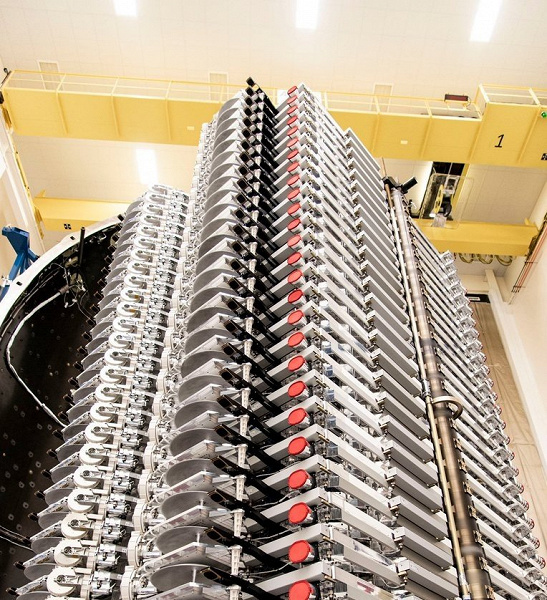
The transition to Starship for satellite deployment marks a pivotal shift in SpaceX’s strategy. While the reliable Falcon 9 rocket has been the workhorse for building the constellation to its current size of over 9,000 satellites, its capabilities are dwarfed by Starship. Musk has stated that the next-generation Starlink satellites are so large that only Starship can launch them. A single Starship launch is expected to deploy 50-60 of the new, heavier V3 satellites, adding about 60 Tbps of capacity to the network. This is more than 20 times the capacity added by a Falcon 9 launch carrying the current V2 Mini satellites.
Next-Generation Satellites: The Power of V3
The first launch of Starlink’s Version 3 (V3) satellites is anticipated later this year, promising a revolutionary leap in performance. Each V3 satellite is designed to offer a staggering 1 Tbps of downlink bandwidth, a tenfold increase over the V2 models. This upgrade is engineered to deliver gigabit-per-second connectivity directly to user terminals, increasing the network’s total capacity by a factor of 20 and significantly reducing congestion. These larger, more powerful satellites, weighing nearly 2,000 kg each, are the cornerstone of SpaceX’s plan to provide a truly global, high-speed internet service.
A Competitive and Evolving Market
While Starlink has a commanding lead, it is not without competition. Several major players are developing their own low-Earth orbit (LEO) constellations.
- Amazon’s Project Kuiper: Backed by a multi-billion dollar investment, Amazon is aggressively deploying its constellation, with plans to begin commercial service in 2026. It aims to compete on speed and affordability, leveraging its vast AWS infrastructure.
- Eutelsat OneWeb: With over 630 satellites already in orbit, OneWeb primarily targets enterprise, government, and maritime markets, focusing on providing high-throughput connectivity to these sectors.
- Other Players: Companies like Telesat with its Lightspeed network and China’s national GuoWang project are also entering the fray, indicating a dynamic and competitive future for satellite internet.
Future Outlook: Beyond Broadband
The massive expansion enabled by Starship will have profound implications for global connectivity. The increased capacity and coverage will not only improve service for existing users but also connect millions more in the most remote corners of the world. Furthermore, SpaceX is expanding its services with Direct-to-Cell technology, which aims to provide seamless mobile phone coverage anywhere on Earth, effectively creating the largest 4G provider in the world. As Starlink continues its exponential growth, it moves closer to fulfilling its primary mission: funding SpaceX’s long-term goal of making humanity a multi-planetary species.