







New details have emerged about AMD’s next-generation Zen 6 processor architecture, codenamed “Morpheus,” which is anticipated to launch in 2026. According to information shared by industry insider HXL (@9550pro), the upcoming Ryzen series will feature a broad range of core counts from 6 to 24, signaling a significant leap in performance and scalability for the AM5 platform. This move suggests AMD is preparing a comprehensive top-to-bottom refresh of its desktop CPU lineup, targeting every segment from entry-level gaming to high-end content creation.
A New Era of Core Configurations
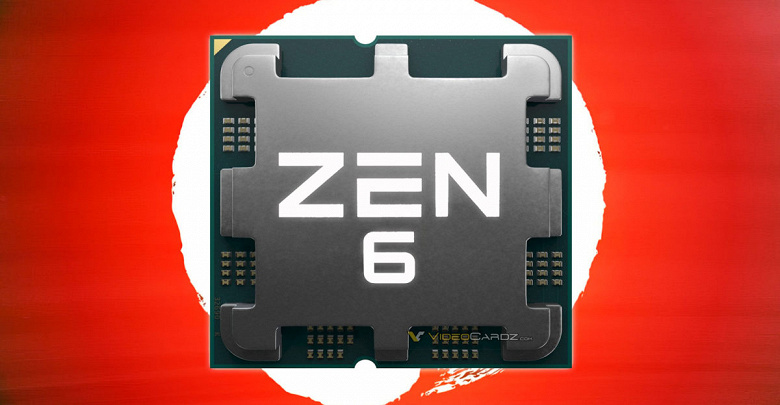
The latest leak outlines a detailed SKU stack based on a redesigned chiplet structure. For the first time in a standard desktop lineup, AMD is expected to introduce a 12-core Core Complex Die (CCD), a 50% increase over the 8-core CCDs used since the Zen 2 architecture. This fundamental change allows for a more versatile product family. The single-chiplet models will reportedly be available in 6, 8, 10, and 12-core variants. Meanwhile, the dual-chiplet processors will offer 16 (8+8), 20 (10+10), and a flagship 24-core (12+12) configuration. By continuing to offer new six-core models, AMD appears committed to bringing its latest architectural improvements to the budget-conscious segment, a strategy that contrasts with competitors who sometimes relegate older architectures to lower-tier products.
Architectural Leap Beyond Core Count
The Zen 6 architecture is more than just an increase in core density; it represents a ground-up redesign built on advanced manufacturing processes like TSMC’s 2nm or 3nm nodes. This enables not only more cores but also significant improvements in efficiency and clock speed potential. Alongside the core count increase, each 12-core CCD is rumored to feature 48 MB of L3 cache. This means the top-end 24-core model will boast an impressive 96 MB of L3 cache even before the application of any 3D V-Cache technology. Furthermore, official documentation suggests Zen 6 will introduce support for new instructions, including native FP16 handling, which will accelerate AI and machine learning workloads.
Market Positioning and the Competitive Landscape
With the introduction of a 24-core processor on the mainstream AM5 socket, AMD is effectively blurring the lines between high-end desktop (HEDT) and consumer platforms. This move positions Zen 6 to compete directly with Intel’s upcoming Arrow Lake and Panther Lake architectures. The wide array of core options allows AMD to challenge Intel at every price point, from the popular mid-range to the enthusiast-grade performance segment. The increased multi-threaded performance will be a major draw for professionals and creators, while the underlying architectural improvements and large cache sizes will appeal to gamers seeking the highest frame rates.
A Glimpse into the Future
The Zen 6 architecture is shaping up to be one of AMD’s most significant updates, with a clear focus on multi-threaded throughput and next-generation workloads. The potential for future X3D models is particularly exciting, with some speculation pointing towards dual-chiplet CPUs featuring a staggering 288 MB of total L3 cache. If these rumors hold true, AMD is poised to continue its strong trajectory in the CPU market, setting a new performance benchmark and intensifying the competition for the processing power that will define the next generation of computing.