





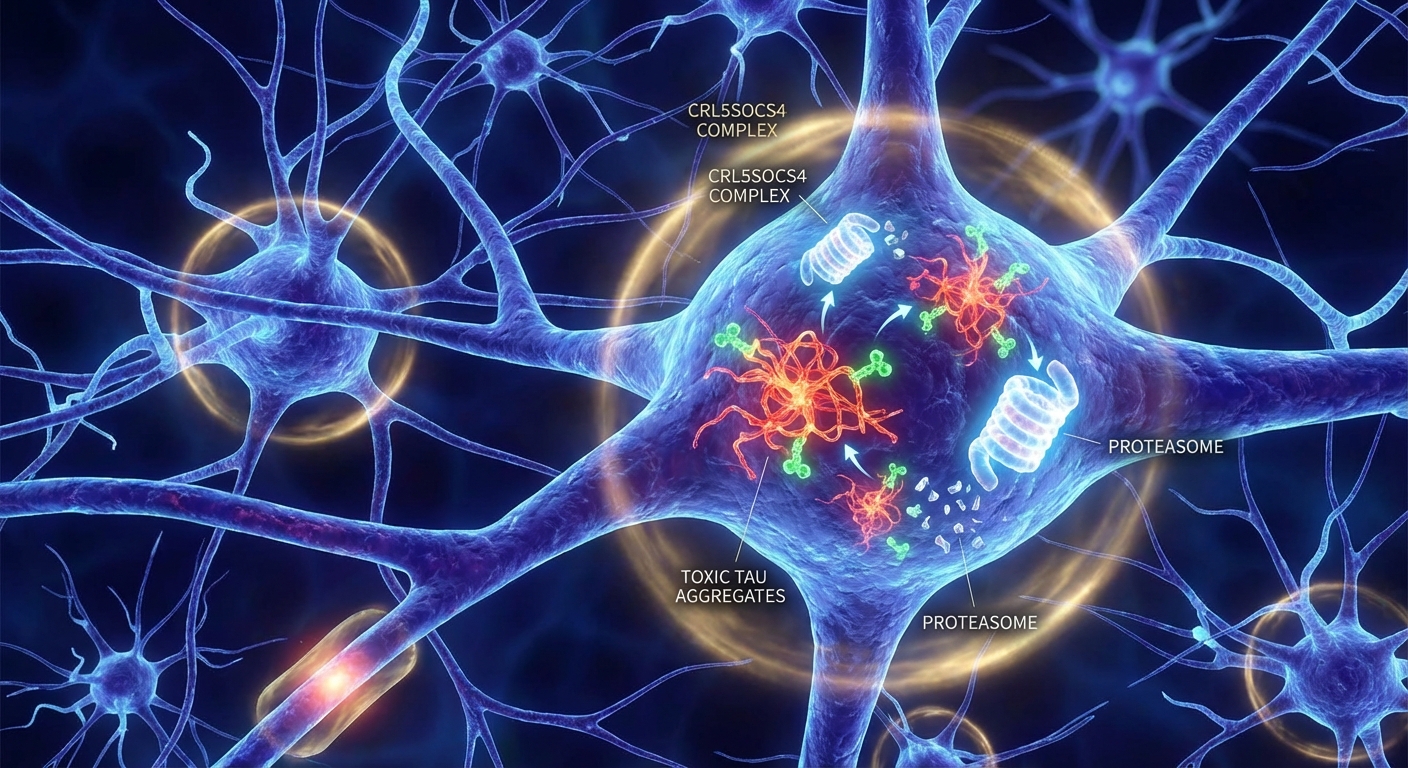

A groundbreaking study by researchers from UCLA and UCSF has identified why some neurons are naturally more resilient to the toxic protein buildup that characterizes Alzheimer’s disease and other dementias. The team discovered a crucial protein complex, CRL5SOCS4, that acts as a cellular quality control system, tagging harmful tau proteins for disposal and preventing their accumulation. This insight into the brain’s innate defense mechanisms opens promising new avenues for the prevention and treatment of neurodegenerative diseases.
The Science Behind Neuronal Resilience
The core problem in many dementias is the tau protein, which can misfold and aggregate into toxic clumps, or tangles, inside neurons, ultimately leading to cell death. A long-standing mystery has been why certain neurons succumb to this process while others resist. To investigate this, the scientific team employed a sophisticated CRISPR-based genetic screening technique on human neurons grown in a lab. These neurons carried the MAPT V337M mutation, which is known to cause the aggregation of tau protein.
By systematically deactivating nearly 20,000 genes, the researchers were able to pinpoint which ones influenced the accumulation of toxic tau. While over 1,000 genes were found to be involved, the CRL5SOCS4 complex emerged as a key player. This complex functions by attaching a specific molecular tag to the toxic tau proteins. This tag serves as a signal for the cell’s waste disposal machinery, known as proteasomes, to identify and destroy the dangerous protein aggregates before they can cause harm.
From Lab to Human Brain
Crucially, the study’s findings were validated by analyzing brain tissue from deceased Alzheimer’s patients. The analysis confirmed that neurons with higher natural levels of the CRL5SOCS4 complex were more likely to have survived the disease’s progression. This provides a direct link between this protective mechanism and its real-world impact in the human brain.
The Role of Cellular Stress
The research also uncovered a critical link between mitochondrial dysfunction and tau toxicity. Mitochondria, the energy powerhouses of the cell, can become less efficient with age, leading to oxidative stress. This stress was found to not only impair the function of the proteasomes but also to promote the creation of toxic tau fragments. These fragments are now considered an important biomarker for Alzheimer’s disease, highlighting the multifaceted nature of the condition.
A New Horizon for Dementia Therapies
This discovery marks a significant shift in the potential approach to fighting neurodegenerative diseases. Instead of focusing solely on clearing existing protein clumps, future therapies could aim to bolster the brain’s natural defenses. Two primary strategies are emerging from this research:
- Developing drugs to enhance the activity of the CRL5SOCS4 complex, thereby improving the brain’s ability to clear toxic tau.
- Creating treatments that protect proteasomes from oxidative stress, ensuring the cellular “garbage disposal” system remains efficient even under stress.
By focusing on promoting cellular resilience, scientists hope to develop more effective strategies to slow or even prevent the onset of dementia, offering new hope to millions affected by these devastating conditions.