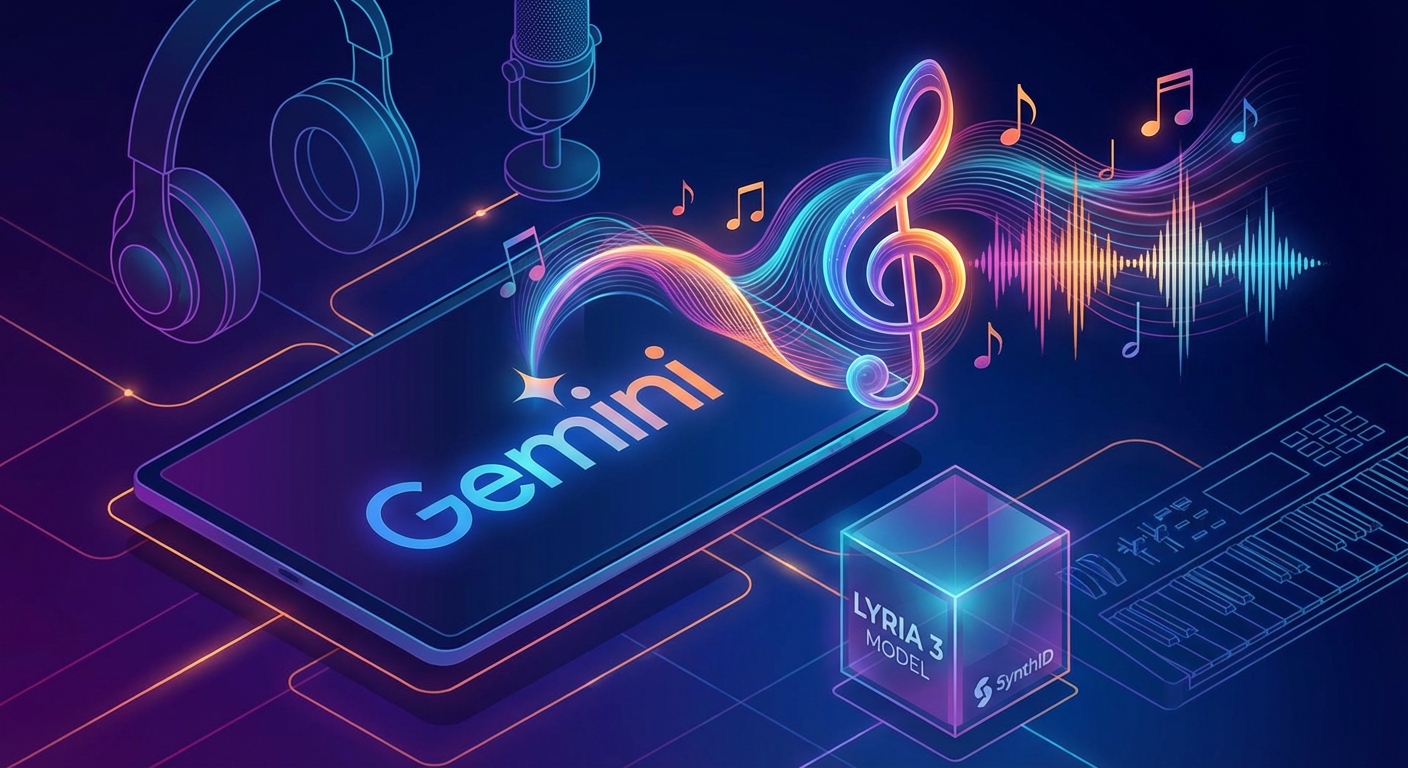

Google has officially integrated an artificial intelligence-based music generation feature into its Gemini application, ushering in a new era for content creation. Users worldwide can now create unique 30-second tracks, complete with lyrics and cover art, simply by describing their ideas-for example, “a comedic R&B song about a sock that found its mate.” This move places Google alongside AI music leaders like Suno and Udio, but with a distinct focus on integration into its vast ecosystem.
How It Works: From Idea to Finished Track
The music creation process in Gemini is designed to be intuitive. A user inputs a text prompt describing the genre, mood, instruments, or theme of the song. It’s also possible to upload a photo or video as a basis for the soundtrack, and the AI will compose music to match the image’s mood. The service provides tools for further customization: users can change the style, vocals, and tempo, and even ask to imitate the mood of a favorite artist. However, special filters prevent direct copying of their voice or style to protect copyrights.
Each generated track is 30 seconds long and comes with generated lyrics and unique cover art created by the Nano Banana model. The new feature is already available globally to users over 18 and supports English, German, Spanish, French, Hindi, Japanese, Korean, and Portuguese.
The Technology Under the Hood: Lyria 3 and the SynthID Watermark
The musical component is powered by the advanced Lyria 3 model from Google DeepMind. According to the company, it is capable of creating more complex, high-quality, and realistic compositions compared to previous versions. Lyria 3 was developed with input from producers and musicians to better understand musicality, from rhythm to arrangement.
A key feature of Google’s approach is transparency. All generated tracks are marked with a special, inaudible SynthID watermark. This technology embeds a marker directly into the audio file, which persists even after compression or editing. This allows any user to upload a track and verify if it was created with AI, an important step in distinguishing between human-made and machine-generated content.
Expansion for Creators: Dream Track Goes Global
In parallel with the Gemini update, Google is expanding access to Dream Track, a tool designed for YouTube creators. Previously available only to a select group of creators in the US, it is now accessible worldwide. Dream Track allows video creators to generate unique, royalty-free soundtracks for their Shorts and other videos, solving the problem of finding licensed music. This could significantly simplify the workflow for bloggers and small studios.
A Look to the Future: A New Era of Music or a Threat to Artists?
The integration of powerful music creation tools into popular applications like Gemini democratizes the creative process. Now, anyone without a musical background can experiment with sound. However, this also raises concerns within the music industry about the potential devaluation of the work of professional composers and artists. Google is attempting to strike a balance by focusing on originality and transparency through SynthID, emphasizing that their goal is to provide a tool for creativity, not for copying the style of specific artists.