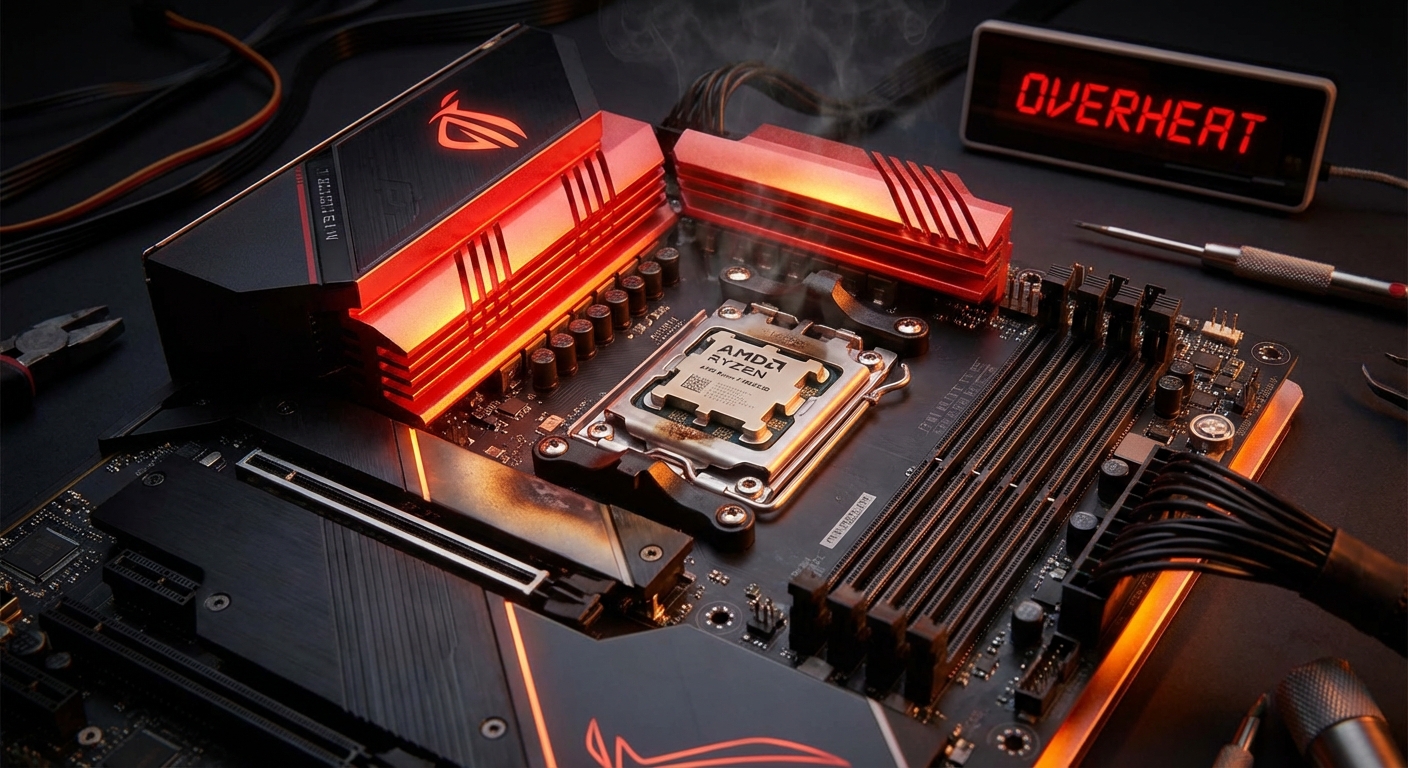

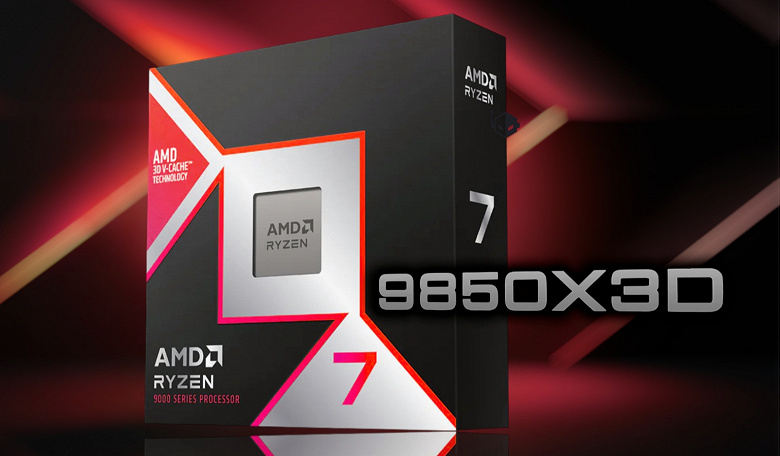
Troubling news for owners of the latest AMD processors with 3D V-Cache technology. It appears the burnout problem that previously affected the Ryzen 7 9800X3D chips has now extended to the flagship Ryzen 7 9850X3D. The first documented case was published on Reddit, where a user shared a story that raises serious concerns about quality control at AMD and its partners.
A Repeat of Old Mistakes?
A user by the nickname “unlucky_builder” reported that his gaming system, built around a Ryzen 7 9800X3D processor, failed after just one week of use. After returning the faulty chip, he decided to invest in a more powerful model-the Ryzen 7 9850X3D. However, to his disappointment, the new processor met the same fate a few weeks later. In both instances, an Asus TUF X870P WIFI motherboard was used, once again drawing attention to the manufacturer’s products.
The Ghost of the SoC Voltage Problem
This situation is painfully reminiscent of the crisis with the Ryzen 7000X3D series processors that erupted a few years ago. Back then, the cause of widespread chip failure was excessive voltage to the memory controller (SoC), especially when EXPO memory overclocking profiles were activated. The problem was exacerbated by faulty BIOS on motherboards from Asus and ASRock, which allowed unsafe voltage levels to be applied.
In response to that crisis, AMD and motherboard manufacturers released urgent AGESA and BIOS updates that capped the SoC voltage at a safe level of 1.3V. Many analysts at the time believed the issue was permanently resolved. However, this new incident with the Ryzen 9000 generation casts doubt on the effectiveness of those measures. Experts from Gamers Nexus, who investigated the original problem in detail, have not yet commented on the new case, but the community is already actively discussing a possible recurrence.
What This Means for the Industry and Consumers
If this case turns out not to be an isolated one, AMD’s reputation as a manufacturer of reliable processors could be seriously damaged. The 3D V-Cache technology, which provides unprecedented gaming performance, risks becoming synonymous not only with speed but also with risk. For consumers, this means exercising extreme caution when selecting components, particularly the motherboard.
“We take all reports of malfunctions seriously and are already investigating this incident. We urge all users to ensure they have the latest BIOS version from their motherboard manufacturer installed,” a hypothetical comment from an AMD representative might read.
A Look to the Future: Lessons Not Learned
The recurrence of such a problem with a new generation of processors points to a possible systemic failure in communication between AMD and motherboard manufacturers. While competitors like Intel also face stability issues on their flagship platforms, the systematic failure of components due to voltage is a more severe failure. In the long run, this could force AMD to revise its validation protocols and tighten requirements for its partners to restore user trust. In the meantime, owners of Ryzen 9000X3D-based systems can only hope that their expensive components do not become the next victim.