



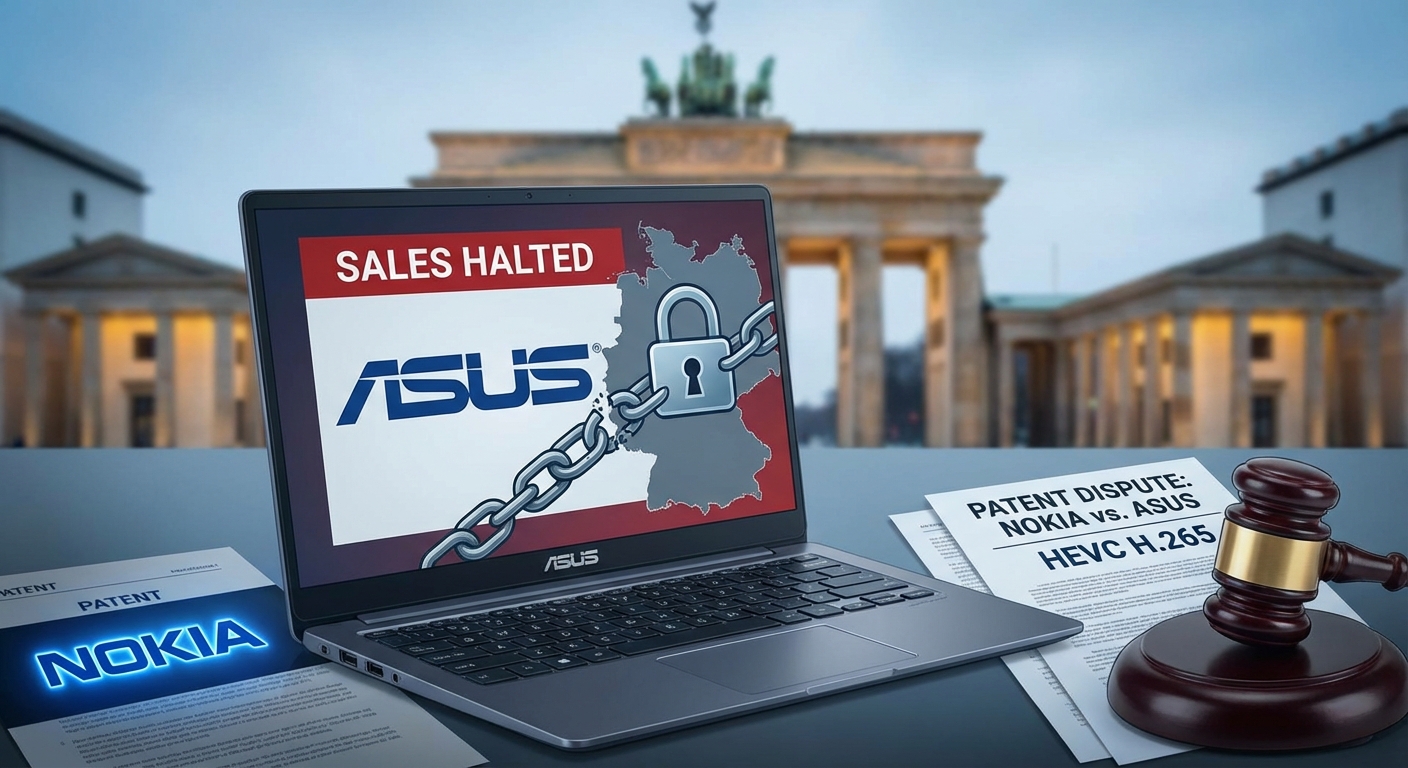

Asus has confirmed the shutdown of its official website and brand online store in Germany. This drastic measure is a direct consequence of a ruling by the Munich Regional Court in a patent dispute with Nokia. The core of the Finnish company’s claim is the alleged illegal use of HEVC (High Efficiency Video Coding) H.265 video compression technologies. The temporary injunction affects key product categories for the brand, including personal computers, laptops, and other devices that support hardware decoding of HEVC video.
The Heart of the Conflict: HEVC and Standard-Essential Patents
The dispute centers on patents for High-Efficiency Video Coding (HEVC), also known as H.265, a crucial technology for compressing high-resolution video. This standard is fundamental for modern digital life, underpinning everything from streaming services and video conferencing to the functionality of integrated and discrete graphics processors. Nokia holds numerous standard-essential patents (SEPs) for this technology, meaning it’s virtually impossible to create a modern computer without using their intellectual property. As the owner of SEPs, Nokia is obligated to license its technology under Fair, Reasonable, and Non-Discriminatory (FRAND) terms. However, the Munich court determined that both Asus and Acer had not acted as willing licensees under this framework, leading to the sales ban.
Market Impact and Industry Reactions
While Asus has suspended direct sales, service, warranty repairs, and technical support in Germany will continue uninterrupted. The company’s legal team is already preparing an appeal and exploring ways to resolve the conflict. It’s important to note that the court’s injunction applies to the manufacturers, not third-party retailers. This means that existing stock at retailers like Amazon, MediaMarkt, and Saturn can still be sold, but replenishment may be difficult if direct shipments are halted for an extended period, potentially leading to shortages in the medium term.
Asus is not alone in this struggle; fellow Taiwanese manufacturer Acer has faced a similar sales ban in Germany over the same Nokia patents. In contrast, other major players like Dell and HP have adopted a different strategy to avoid litigation and hefty licensing fees. They have chosen to disable hardware support for the HEVC codec in some of their products, particularly in budget and business-oriented models. This move, while saving on licensing costs that can amount to millions annually, effectively blocks a portion of the processor’s capabilities for the end-user. [HOLDER:]
A Look into the Future
This case is part of Nokia’s broader strategy to monetize its extensive patent portfolio, a key revenue stream since the company shifted away from mobile phone manufacturing. The Finnish tech giant has previously launched similar legal actions against other major companies like Amazon and OnePlus. For Asus and Acer, the path forward likely involves intense negotiations to reach a licensing agreement with Nokia, which experts believe is the most viable solution to resume normal sales. While they pursue appeals, the ongoing legal battle could impact their market share in one of Europe’s largest economies. The situation highlights a significant challenge for the tech industry: balancing the rights of patent holders with the need for accessible, standardized technology for manufacturers and consumers.