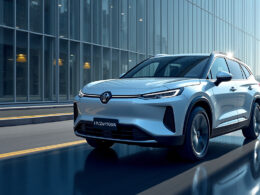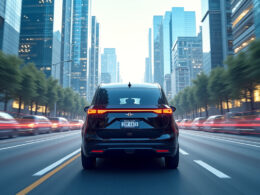


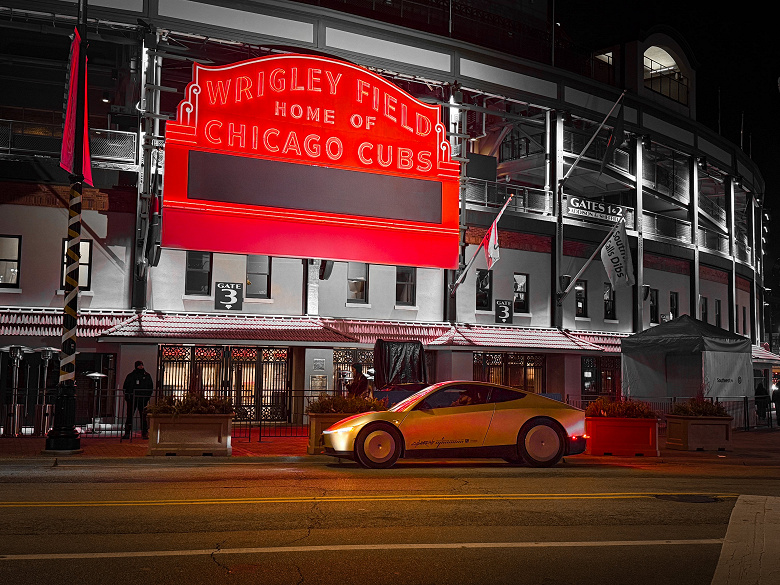
Elon Musk has reaffirmed that Tesla’s fully autonomous robotaxi, the Cybercab, is slated to begin production in April of this year. In a significant confirmation, the CEO stated the vehicle will be manufactured entirely without a steering wheel or pedals, cementing its design as a purpose-built autonomous vehicle. This move signals Tesla’s confidence in its self-driving technology and its ambition to revolutionize urban transportation.
A Radical Design for a New Era
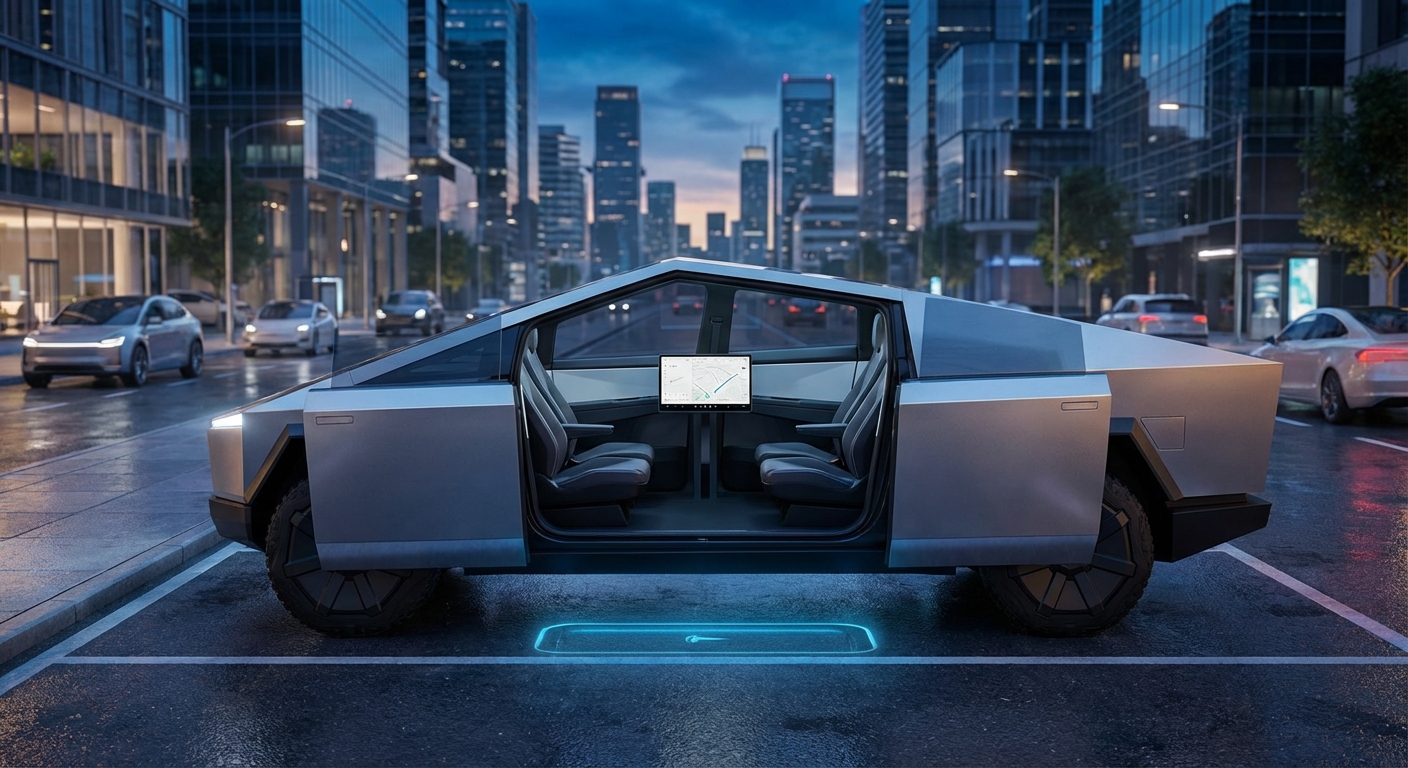
The Cybercab is engineered from the ground up for a driverless future. Its futuristic aesthetic, inspired by the Cybertruck, features distinctive butterfly-wing doors and a compact, two-passenger cabin. The interior is minimalist, dominated by a large 20.5-inch central touchscreen for passenger entertainment and communication. In a departure from conventional car design, the vehicle will have no rear window or side mirrors, relying completely on its sensor suite for environmental awareness. A key feature for autonomous operation is its support for wireless inductive charging, which allows the Cybercab to recharge automatically at designated stations without human intervention.
The Technological Bet: A Vision-Only Approach
At the core of the Cybercab’s operation is Tesla Vision, the company’s advanced system that uses only cameras and sophisticated artificial intelligence to navigate. This strategy starkly contrasts with competitors like Waymo and Cruise, which utilize a combination of cameras, radar, and LiDAR (Light Detection and Ranging) for redundancy and depth perception. Tesla argues that a vision-based system, which mimics human sight, is sufficient for achieving full autonomy and is more scalable and cost-effective than LiDAR-equipped alternatives. The success of the Cybercab hinges on the continued development and regulatory approval of Tesla’s Full Self-Driving (FSD) software.
The Competitive Landscape
While Tesla’s plans are ambitious, it is entering an increasingly active market. Companies like Waymo (owned by Alphabet) and Zoox (owned by Amazon) are already operating commercial robotaxi services in select cities. These established players have logged millions of driverless miles, providing them with valuable data and operational experience. The primary technological differentiator remains Tesla’s reliance on cameras versus the multi-sensor approach of its rivals, a debate that has significant implications for the future of autonomous technology.
A Look to the Future: Challenges and Opportunities
Musk has been consistent about the April production timeline, though he has also tempered expectations, noting that the initial production ramp-up will be “agonizingly slow” due to the vehicle’s novel design and manufacturing process. The long-term goal is to achieve an extremely high volume of production. Beyond manufacturing hurdles, Tesla faces significant regulatory challenges and the need to build public trust in a vehicle without manual controls. The successful deployment of the Cybercab could drastically lower the cost of ride-hailing, potentially disrupting services like Uber and Lyft and creating a new economic model where Tesla owners could have their personal vehicles participate in an autonomous ride-sharing network.