





An analysis by WCCF Tech, combining various data on gaming graphics cards, paints a stark picture for consumers and gamers. The core issue is a fundamental shift in the priorities of major manufacturers like Nvidia and AMD, driven by the booming artificial intelligence (AI) market. This has led to a situation where gaming, once a primary focus, is now taking a backseat, resulting in higher prices and fewer affordable options for PC builders.
The AI Gold Rush: A Shift in Revenue and Priorities
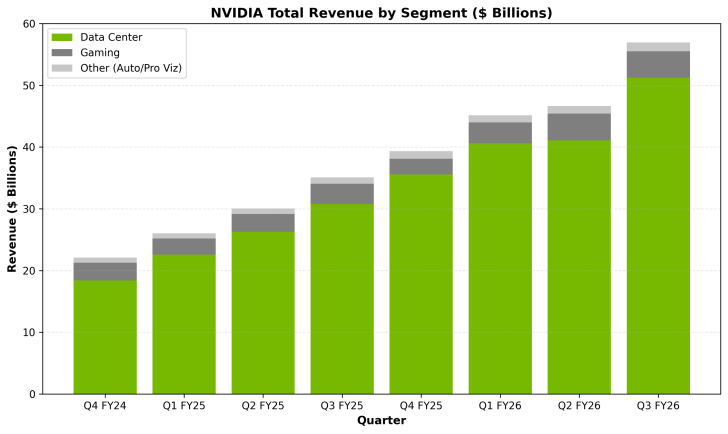
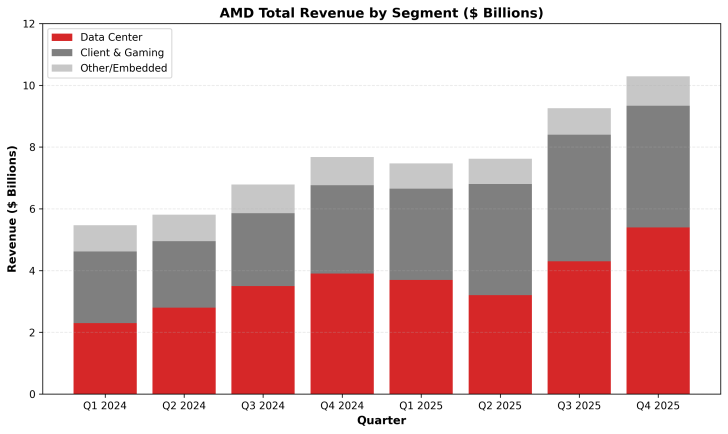
For Nvidia, revenue from gaming products has become such a minor part of its overall income that completely abandoning the gaming sector would not significantly impact the company’s bottom line. Recent financial reports underscore this, showing that the Data Center division, responsible for AI accelerators, generates nearly ten times more revenue than the gaming division. In one recent quarter, the data center segment brought in a staggering $51.2 billion, while gaming accounted for just $4.3 billion. This strategic shift is a response to the insatiable demand for computing power for AI, a market far more lucrative than gaming.
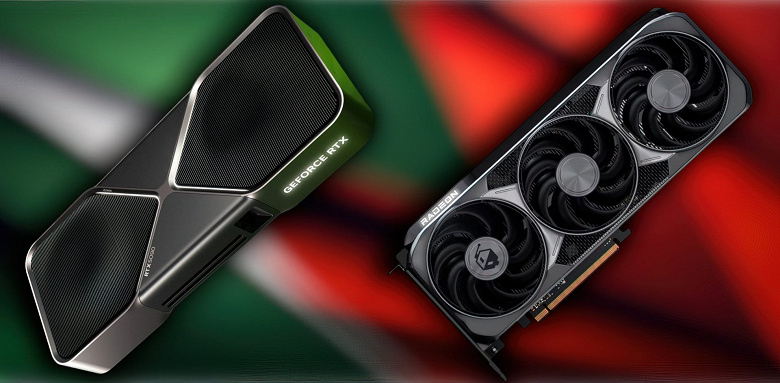
AMD is on a similar trajectory. While the company has a more diversified portfolio with its successful line of CPUs, it is also increasingly focusing on the AI accelerator race to compete with Nvidia. Although its gaming division, which includes Radeon graphics cards, has seen revenue decline, the server and AI segments are growing rapidly. This pivot means that for both giants, the high-margin corporate AI sector is the new priority, leaving gamers to deal with the consequences.
The Squeeze on the Mid-Range
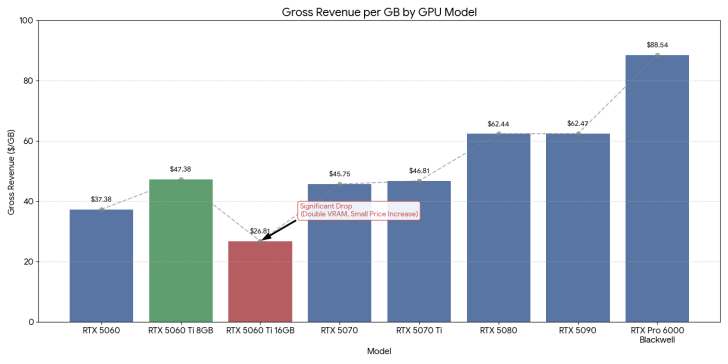
The manufacturers’ new focus is directly impacting product strategy and pricing, particularly for the latest GeForce RTX 50 series. An analysis of the profit per gigabyte of video memory reveals a difficult situation for mid-range cards. For example, a model like the RTX 5060 Ti with 16GB of VRAM becomes economically unappealing for the company to produce at a competitive price. This has led to a pricing paradox where the RTX 5060 Ti 16GB is now almost as expensive as the more powerful RTX 5070, making it a poor value proposition for gamers.
This strategy effectively pushes consumers up the price ladder, creating a significant value gap in what was once the most popular segment of the market. The pressure is exacerbated by a global memory shortage, driven by AI’s demand for high-bandwidth memory, which is expected to keep prices high well into 2026.
Generational Price Creep is the New Norm
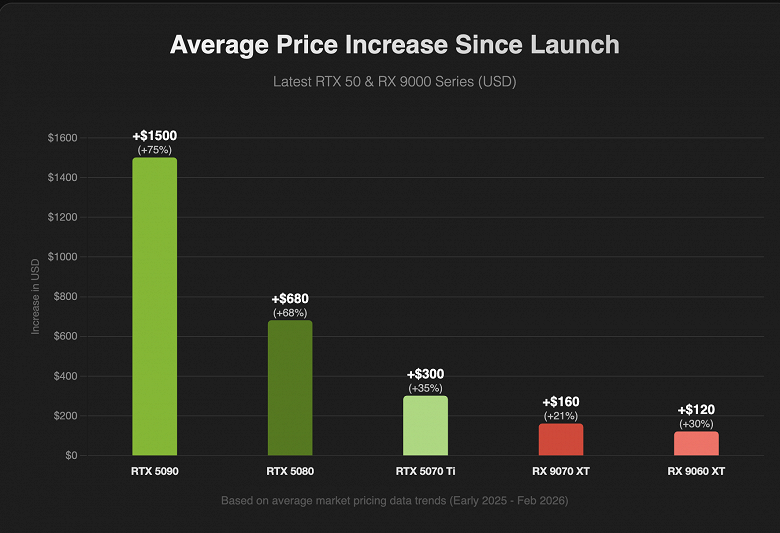
A final chart highlights a troubling trend: the significant increase in graphics card prices since their launch. Analysis from sources like Hardware Unboxed confirms this on a larger scale, showing that GeForce cards, in particular, have become less cost-effective over time. Over the last few months of 2025 and into 2026, the flagship RTX 5090 has seen price hikes of up to 32%, with other cards in the RTX 50 series seeing increases between 9% and 25%. In contrast, AMD’s Radeon cards have seen more moderate increases, averaging around 10%. This consistent generational price creep means that each new series of GPUs is less affordable than the last.
A Test of Patience for Consumers
The data clearly indicates that the best strategy for consumers facing the current graphics card shortage is patience. With major manufacturers not planning significant new gaming releases until at least 2027, buyers are stuck with the current, overpriced generation. The combination of supply chain issues and the strategic pivot by Nvidia and AMD to prioritize AI means that acquiring a new graphics card at a reasonable price is nearly impossible today. Consumers are advised to wait for the market to stabilize, however long that may take.